Trump administration wants to remove regulations on a super planet-heating gas
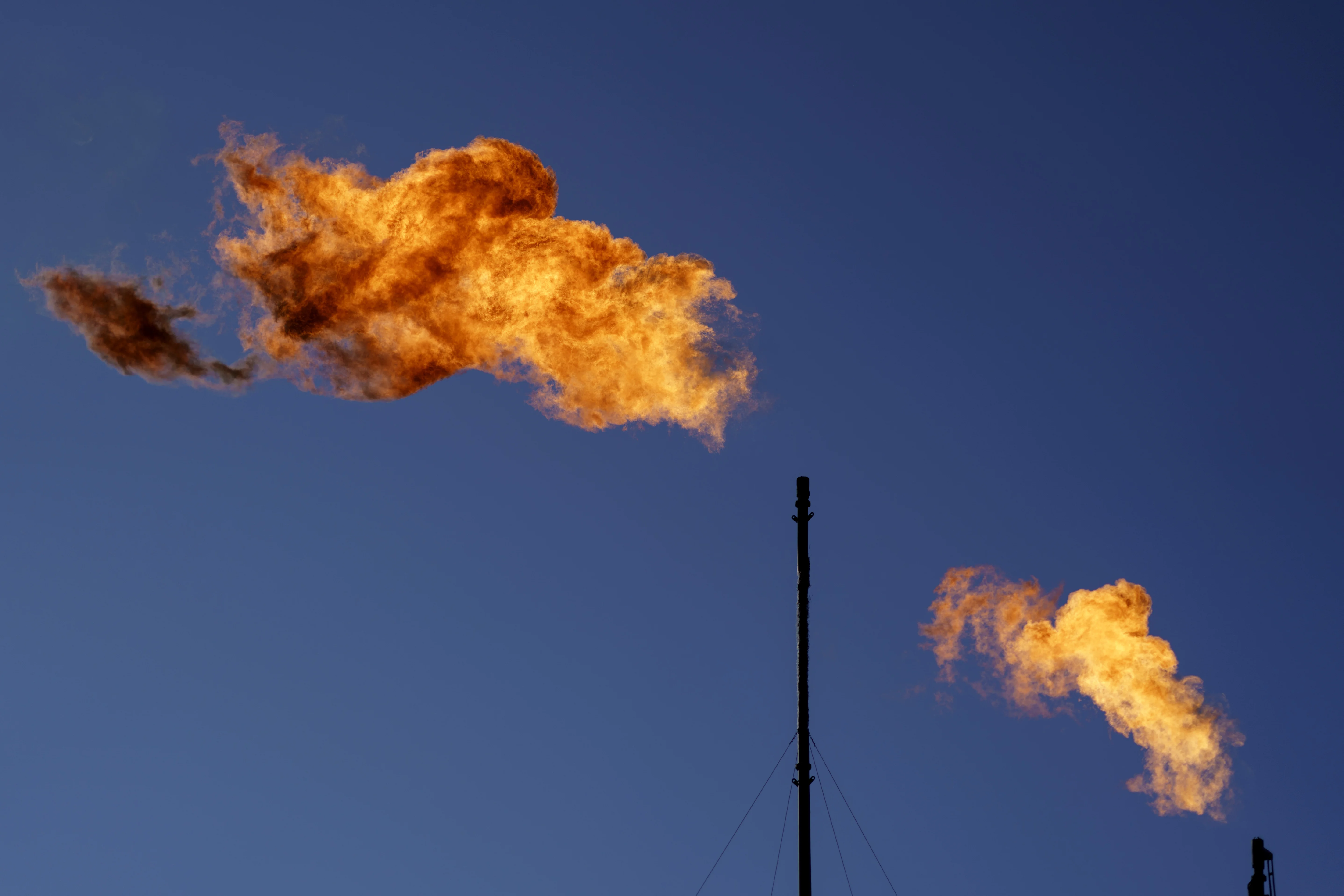
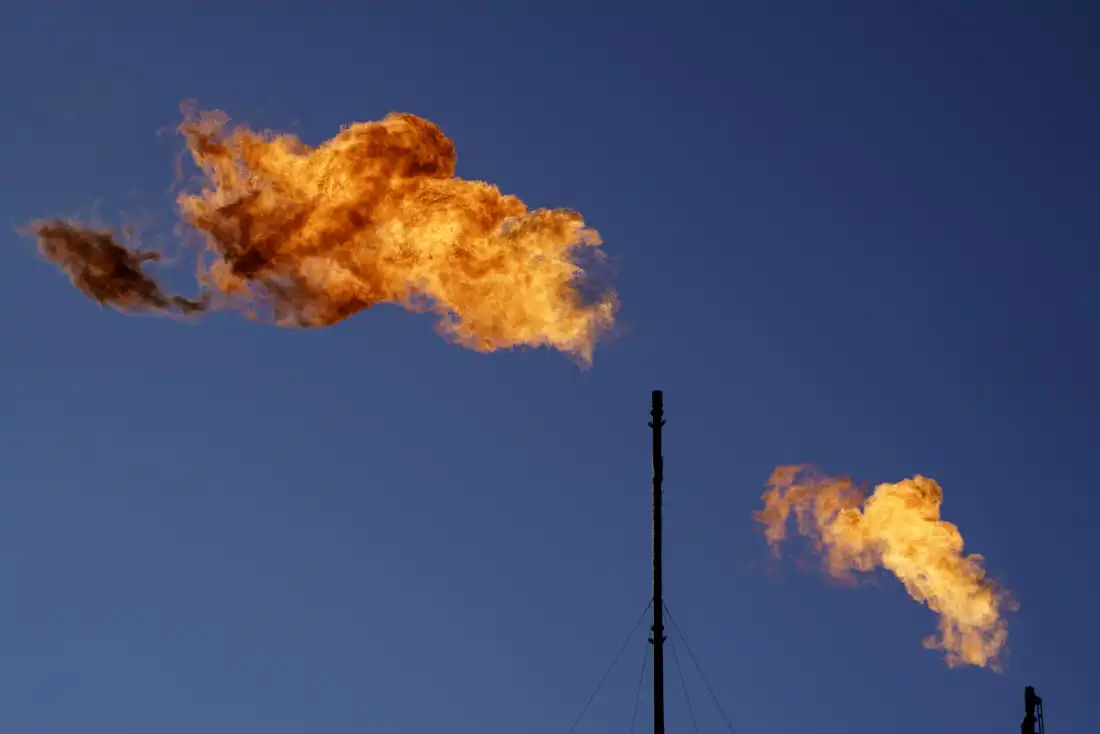
Flares burn off methane and other hydrocarbons at an oil and gas facility in Lenorah, Texas, Oct. 15, 2021. David Goldman/AP hide caption
David Goldman/AP
The Trump administration is proposing to dramatically scale back a Biden-era rule that aimed to cut methane emissions from the oil and gas industry at drilling sites nationwide.
Methane is a major contributor to climate change and is estimated to be 80 times more planet-warming than carbon dioxide in a twenty-year time frame. In 2023, the Biden administration finalized rules that were meant to rein in methane emissions from the oil and gas sector.
President Trump made the announcement while campaigning in Lubbock, Texas, Tuesday, saying his administration's revision, under the Clean Air Act, would save the industry billions in production costs and spur more domestic drilling. The proposal comes as Republicans face a backlash from voters over high gas prices heading into the midterms.
"Behind every barrel of oil and every cubic foot of natural gas produced in the U.S. are millions of workers, businesses, and the heartbeat of this nation's economy. The Biden EPA destructively targeted all this," EPA Administrator Lee Zeldin said in a press release.
The oil and gas industry, which vigorously opposed the 2023 rules, said EPA's proposed rollback will address some of the challenges companies have faced in trying to comply with the regulations.
"We look forward to working with the Trump administration on a more workable approach that supports American energy production, provides greater regulatory certainty and advances continued emissions reductions," Dustin Meyer, vice president at the American Petroleum Institute, a trade organization for the U.S. oil and gas industry, said in a statement.
But environmentalists say this may end up actually costing the industry more.
"Methane is natural gas, or natural gas is methane," says Jon Goldstein, associate vice president at the Environmental Defense Fund. "And so if you're capturing more natural gas, you're not allowing it to leak out, you're not allowing it to be flared, you have more product that you can sell. And so that offsets a lot of the costs."
"That is harmful to our energy security, and it's harmful to taxpayers that ought to be seeing royalty and tax revenue collected off of this gas that's going to waste," Goldstein adds.
One of the regulations the EPA wants to cut is the "Methane Super Emitter Program." Across the U.S., oil and gas pipelines, refineries, and other energy facilities sometimes have huge leaks of methane. But methane is invisible and difficult, not to mention expensive, to detect. The super emitter program is supposed to take effect in January 2027. It would allow the government to delegate monitoring for big methane leaks to certified third parties, including private and nonprofit methane satellite programs.
"The easiest way to think about it is that if the government is alerted to a big leak, then if it's reported by certified third parties, then they could use that information," says Paasha Mahdavi, a political science professor at UC Santa Barbara who studies the oil industry.
"[The government] needs help from other people to say, 'Hey! You're breaking the law!' so they're able to prosecute," Mahdavi adds.
If that program goes away, Mahdavi says it will be harder for the government to spot large leaks of the planet-heating gas from oil and gas facilities. "And we need that because it's really hard to see this stuff," he says.
The EPA's announcement would also loosen regulations on methane leaks coming from low-volume "marginal" oil wells that are considered "marginally economic," meaning they don't make much money.

"People assume marginal well must equal small emissions," Goldstein says. But he says satellites and new technology find that's not true. "These old sort of end-of-life wells nearing the end of their production life are actually responsible for the lion's share of methane pollution from the [oil and gas] production sector," Goldstein says.
The EPA plans to hold at least a 45-day public comment period, including a public hearing, once the proposed rule changes are published in the Federal Register.
Ver nota original ↗
¿Querés un resumen rápido de esta noticia, hecho por nuestra IA?