Texas Republicans sound alarm over early voting as JD Vance rallies supporters in North Texas
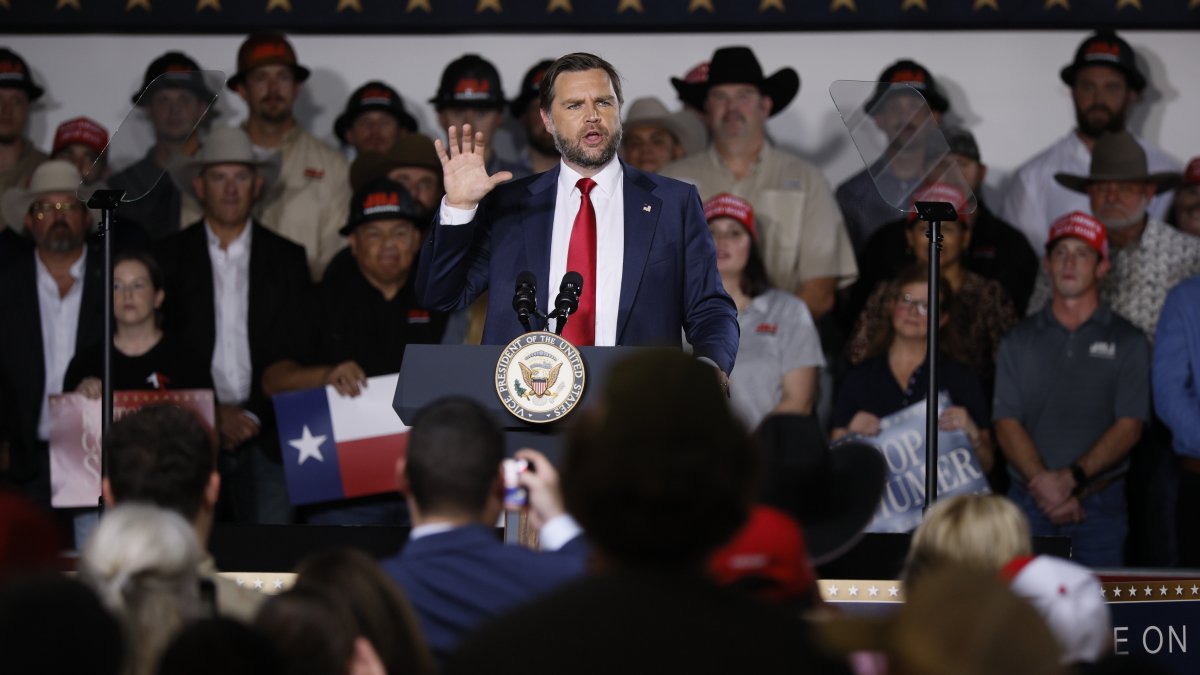
With approximately 6 million votes already cast in Texas, Republicans are sounding the alarm over early voting trends that suggest an unusually competitive election, prompting Vice President JD Vance to travel to North Texas on Thursday to urge GOP supporters to head to the polls.
Early voting data analyzed by Republican researchers shows that voters who previously participated in Democratic primaries have cast approximately 70,000 more ballots than those with Republican primary voting histories.
The figures do not indicate how those voters cast their ballots in the general election, but the narrow margin represents a departure from the advantage Republicans typically hold among voters with identifiable partisan histories in Texas.
The numbers have raised concerns among Republican candidates and campaign officials as the state approaches Election Day on Tuesday, Nov. 3.
Texas Comptroller Don Huffines warned supporters that the early voting trends were not favorable for Republicans.
“Right now, it is not going well. You need to know that. And you need to be scared and you need to be concerned. The early vote is not in our favor,” Huffines said.
More than 1 million voters identified as reliably Republican have not yet cast ballots, according to the figures cited during the campaign.
Vance traveled to Parker County on Thursday to encourage Republican voters, particularly those in rural and suburban communities outside major cities, to participate in the election.
“So I’m asking you a question, Texas, because I need you. I need you to get out there for my family and for yours. I need you to get out there and vote for Ken Paxton. Are we ready to do it?” Vance told the crowd.
The vice president urged supporters to vote Friday, the final day of early voting, or on Election Day.
Joshua Blank, research director of the Texas Politics Project, said the early voting patterns are unusual for a state where Republicans have historically maintained a significant advantage.
“It’s ahistorical. It’s not something that we normally see. Usually Republicans have a significant advantage in those voters that we can identify as partisan in one way or another at this time in the race,” Blank said.
Blank suggested that dissatisfaction with the economy and consumer prices could be contributing to weaker Republican participation.
He said voters often hold the party occupying the White House responsible for economic conditions, particularly during midterm elections.
“It’s always a challenge for the incumbent party in the White House to perform well during midterm elections. And it’s harder still when people feel like the economy is performing poorly. That’s the state that we’re in,” Blank said.
Democrats are also working to mobilize supporters as the election approaches.
State Rep. Gina Hinojosa, the Democratic candidate for governor, visited Plano on Thursday to encourage voters to participate.
Hinojosa pointed to turnout in traditionally Republican areas, including Collin County, as a sign of growing political engagement.
“Unusual, historic voter turnout, even in Collin County. It’s a good thing. People are understanding they have the power to make change,” Hinojosa said.
The statewide contest has been described as the most expensive in Texas history, adding to the stakes for both parties as they compete for voters.
Although the early voting figures suggest a closer contest than Texas has historically experienced, they do not establish which candidates are leading. Voters’ previous primary participation does not necessarily reflect their choices in the general election.
The final day of early voting is Friday, Oct. 30. Election Day is Tuesday, Nov. 3.
Ver nota original ↗
¿Querés un resumen rápido de esta noticia, hecho por nuestra IA?