’He’s out, and I’m terrified’: North Carolina family outraged over deadly drunk driving sentence

EDGECOMBE COUNTY, N.C. (WBTV) - Crystal Tipton’s photos cover the wall of her daughter Rebecca’s home, looking down on grandchildren who still remember her as Mimi.
“She was my best friend,” Rebecca Simms said, wiping tears.
Two years ago for the first time in Rebecca’s adult life, her mom was moving close to Rebecca’s young family. Throughout the day and evening on Nov. 25, 2024, Rebecca texted and called with her mom as Crystal neared completion of her trip from Maryland to North Carolina, her new home.
“I told her that I would see her soon and that I loved her,” Rebecca said of their last phone call.
Her mother Crystal was supposed to arrive late that night. At a quarter till midnight, Rebecca’s stomach started turning. She called, then called again.
No one answered.
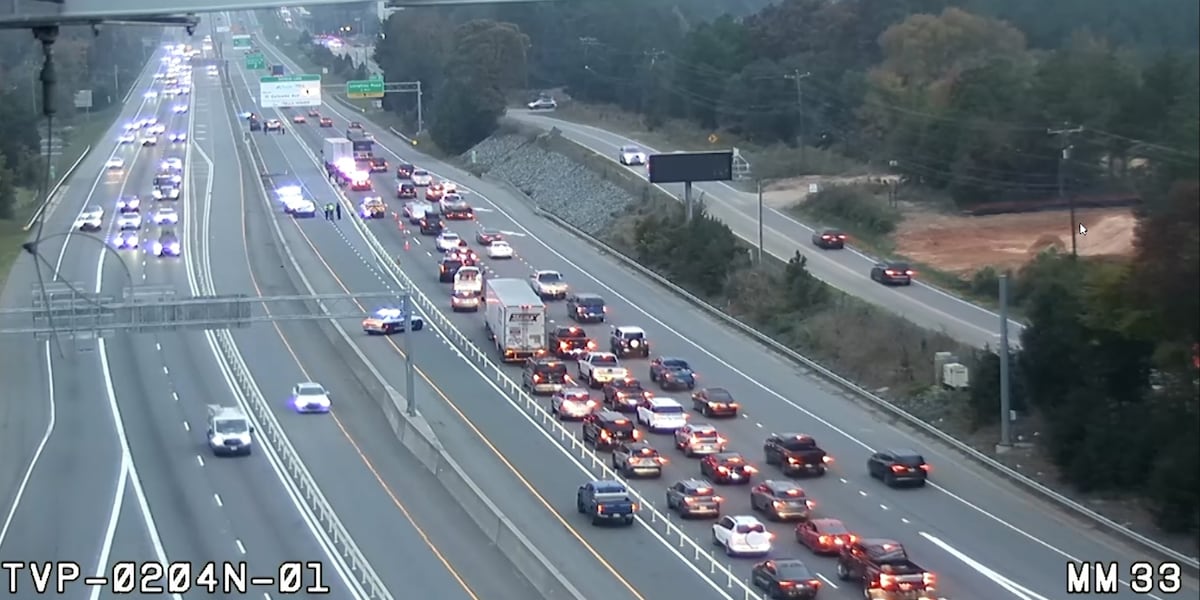
About thirty minutes from Rebecca’s home along Highway 64, firefighters were battling a burning vehicle near the edge of the woods at exit 486.
By the time fire fighters arrived, medical records reported the flames were so intense that they couldn’t attempt a rescue of the woman in the passenger’s seat. A man had walked away from the driver’s side.
The woman was unrecognizable, and records say the man wouldn’t give her name. No one called Rebecca; it would take days before dental records could positively identify Crystal Tipton.
But by the following morning, the pit inside Rebecca’s stomach knew the truth.
That morning, the family started sleuthing themselves. They discovered Crystal’s boyfriend, who had been driving her that night, had been arrested, but they couldn’t figure out why.
They started calling tow yards, trying to find the car. They found a yard with what the family thought was the right car, which was brought in overnight.
An employee told them, “I can’t tell you what color it was, but the car was burned so bad ... I don’t think the person that was in there survived.”
“I dropped down on the floor and I screamed so loud,” Rebecca said. “I just remember my kids crying, calling my name.”
Rebecca didn’t know what caused the crash at that point, but Crystal had become one of 361 people killed in drunk driving crashes in North Carolina in 2024.
When Todd Persell was driving Crystal to her daughter’s home in North Carolina, he was still wanted on a bench warrant for disorderly conduct in Maryland.
Several times in multiple states, he’d been caught and pleaded guilty — or was ruled guilty after not appearing in court — to driving without a license, among other driving offenses.
Court records allege he didn’t have a license that fateful night either, and had resisted arrest with state troopers; those charges were later dropped as part of his plea deal.
He’d had multiple domestic violence restraining orders taken out against him, according to court records WBTV reviewed.
He’d been charged with felonies in the past, but faced no convictions.
That is why, despite dozens of citations, run-ins with police, and some low-level crimes, he was considered as having a prior record of zero when he was charged with felony death by vehicle for the crash that killed Crystal.
The charge is used in North Carolina when a driver causes a deadly crash while under the influence. Court records said Persell’s blood alcohol level was at least twice the legal limit.
Rebecca hadn’t been comfortable with Todd’s relationship with Crystal. Her move to North Carolina meant Crystal would be splitting up soon with Todd, Rebecca said; court records show he had recently lived in both Maryland and Pennsylvania.
The family had difficulty getting information about the process as his case moved through the court system, Rebecca said.
So, when he was sentenced to a minimum of five years and a maximum of seven, they weren’t fully briefed on the second part of his sentence: the “split” sentence where a judge, because of his lack of prior record, suspended the sentence and instead imposed 18 months of incarceration to be followed by 30 months of probation.
In practice, that meant Todd Persell was released from prison earlier this year, just two months after receiving his sentence. A judge had counted into his time the 16 months he’d served in a North Carolina jail while waiting for his case to complete.
“I was OK with him serving seven years,” Rebecca said. “I was like, OK, that’s fine. He can’t do this to anybody. He can’t hurt anybody ... But now he’s out, and I’m terrified.”
Persell had benefitted from a carve-out in North Carolina’s felony laws that allow for an exemption in felony death by vehicle charges.
It’s the only felony in its class, Class D, where the law allows what’s known as a “split” sentence in some circumstances – such as when a defendant is deemed to have a low prior record, like Persell.
“It’s called a split sentence, because it’s kind of a mix of incarceration and probation,” said UNC School of Government professor James Markham, an expert in North Carolina’s sentencing laws.
“Felony death by vehicle is unique in that it is allowed for first offenders, essentially people who don’t have a lot of prior criminal history,” Markham said.
For the felony death by vehicle charge, that means a record that includes no past felony convictions or driving under the influence misdemeanors.
Out of 73 sentences for felony death by vehicle last year, a new report from the North Carolina Sentencing and Policy Advisory Commission found that 13 of those cases were given an intermediary sentence.
Rebecca struggles with how the past accusations against Persell that didn’t materialize into convictions now impacted the sentence he served for causing the crash that took her mother’s life.
“Somebody like that shouldn’t be walking around,” she said. “They should be sitting behind bars.”
Her other ask, though, is to everyone who reads her mother’s story.
It’s a request we’ve all heard, but one that maybe hasn’t sunk in for all.
“Please don’t drink and drive.
Don’t do it.
It’s not worth it."
Ver nota original ↗
¿Querés un resumen rápido de esta noticia, hecho por nuestra IA?