Daylight saving time ends soon. Here's when clocks change
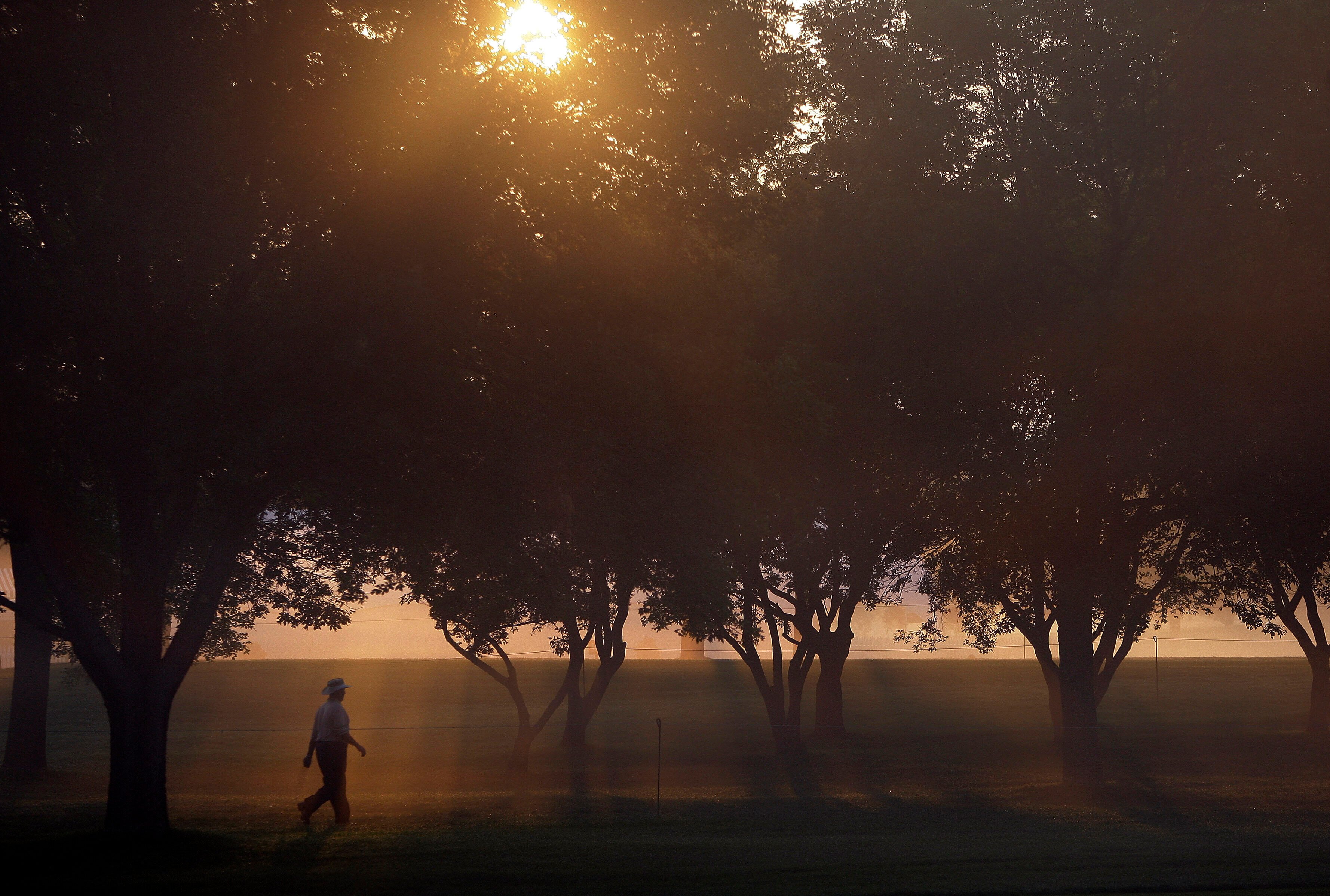
Autumn is here, and that means it’s time for the twice annual time change.
This year, the end of daylight saving time coincides with Halloween. That means an extra hour of festivities, trick-or-treating or sleeping the next day. This rare overlap won’t happen again until 2036.
Here’s what you need to know:
When does daylight saving time end?
Daylight saving time starts on the second Sunday of March, when clocks spring forward an hour.
On Sunday, Nov. 1, at 2 a.m. local time the clocks turn back an hour to 1 a.m., giving you an extra hour of sleep.
Why is there daylight saving time?
Daylight saving time was first formally enacted in the U.S. in 1918 and was put in place to give an extra hour of sunlight during the summer months. It was repealed after World War I, reinstated during World War II and then repealed again before the standardization of time was established in 1966.
Before President Lyndon B. Johnson signed the Uniform Time Act in 1966, which established a uniform daylight saving time, local governments could start and end daylight saving time as they desired. For five weeks a year Boston, New York and Philadelphia were not on the same time as Washington, D.C., Cleveland or Baltimore. Different daylight saving times also caused confusion for travelers going from the Midwest to Northeast.
In 2005, President George W. Bush extended the daylight saving time for an extra four weeks through an energy bill. Since 2007, daylight saving time has begun on the second Sunday of March and ended on the first Sunday of November.
Which states do not follow daylight saving time?
Hawaii and Arizona (with the exception of the Navajo Indian Reservation) are the only two states that do not observe daylight saving time.
The U.S. territories of Puerto Rico, Guam, American Samoa and the U.S. Virgin Islands also do not follow daylight saving time.

Can daylight saving time be repealed?
Yes, and there a couple of ways a state can get out of daylight saving time.
First, according to the Uniform Time Act of 1966, states are allowed to exempt themselves from daylight saving time by passing a law in their state.
A second way is for the federal government to pass a law either abolishing daylight saving time or making it permanent, avoiding the need to change clocks.
Every year, there’s talk in Congress about ending the time change. The nation even tried it in the 1970s, but it lasted less than a year after a public outcry.
The latest attempt occurred in July, when the House of Representatives voted 308-117 to pass the Sunshine Protection Act, which would allow states to make daylight saving time permanent, with the option to opt out.
Supporters of the bill, including President Donald Trump, cited economic benefits like boosted tourism and outdoor recreation. Proponents, meanwhile, voiced concerns that the measure would negatively impact health.
The Sunshine Protection Act’s momentum comes after the House Energy and Commerce Committee overwhelmingly passed the measure 48-1 in May. A month earlier, Trump had urged Congress to end time changes and “push hard for more daylight at the end of a day.”
The bill remains stalled in the Senate. It must pass both the House and the Senate before Trump can sign it into law.
Does daylight saving time affect your health?
Sleep experts say that daylight saving time impacts people’s circadian rhythm, which is the body’s 24-hour rhythm that determines when your body becomes sleepy.
Loss of sleep is also linked to health issues, including heart disease, cognitive decline, obesity and numerous other problems.
When clocks “spring forward” in March, causing people to lose an hour of sleep, research has shown that a spike in fatal car accidents take place in the days immediately afterward. Studies have also shown an uptick in heart attacks and strokes after the March time change.
When it comes to the fall time change, some people with seasonal affective disorder, a type of depression usually linked to the shorter days and less sunlight, often struggle.
Ver nota original ↗
¿Querés un resumen rápido de esta noticia, hecho por nuestra IA?