Beyond the diagnosis: How patient navigators help breast cancer patients find their way
A breast cancer diagnosis can begin with just a few words. What follows can be a maze of appointments, unfamiliar medical language, financial questions, and fear.
For many patients, there is someone whose job is to help them find their way through it.
They are called patient navigators.
“Cancer is a lonely disease. Breast cancer can be very lonely,” said Tina Withrow, a community navigator who works with the Frisco-based National Breast Cancer Foundation. “And the moment that someone is diagnosed, yes, they get that diagnosis. But what are those next steps?”
Withrow said those questions can quickly multiply. Patients may wonder how their diagnosis will affect their children, how they will pay for treatment, what tests they need, and how they will manage other health issues while undergoing cancer care.
Navigators help patients tackle those questions and the barriers that can stand between them and care.
“Patient navigation is breaking down those barriers to care — financial, spiritual, social, economic,” Withrow said.
She began working in patient navigation in 2001 after cancer touched her own family. Her sister was diagnosed with breast cancer, and Withrow eventually met Dr. Harold P. Freeman, often credited in his field with creating patient navigation. She had the opportunity to work with him in Harlem before her work ultimately led her to the National Breast Cancer Foundation.
“It’s been a beautiful, wonderful experience to help people when they need it most,” Withrow said.
A BRIDGE OF HOPE
National Breast Cancer Foundation spokesperson Ashley Miller says their mission is walking alongside women throughout their breast health journeys.
“We like to say that we come alongside a female, we take her hand, and we guide her across what we call the bridge of hope,” Miller said.
Sometimes the obstacles are financial, but Miller said barriers to care can also include fear, misinformation, transportation, and language.
NBCF works with hospitals across the country, including hospital partners in North Texas, to help address needs in their individual communities. Miller said some hospitals identify patient navigation as a major gap, which is why they help fund the navigators for patients whose insurance or lack of insurance doesn’t cover that service.
“Something that National Breast Cancer Foundation is really passionate about is that your ZIP code should not dictate the level of health care that you receive,” Miller said.
The foundation was also involved in the patient navigation movement as it listened to hospitals and patients to understand why some women who received cancer diagnoses were not returning for care, Miller said.
“Women were coming into hospitals all throughout the country, and they were getting that cancer diagnosis, and then they weren’t coming back,” she said.
She recalled visiting Parkland in Dallas and seeing women sitting in the breast health center with young children at their feet during the school day. She learned from a navigator that, in some cases, children were there because their mothers needed them to help overcome a language barrier while receiving a cancer diagnosis.
For other patients, the problem might be getting to the hospital in the first place. A bus voucher, Uber or Lyft could make the difference, Miller said.
Once a patient is receiving care, navigators can help keep track of the process, explain medical terminology, and sometimes accompany patients to appointments.
“They’re your accountability partner to make sure that you show up and that it’s as effective and as efficient of a process as it could possibly be,” Miller said. “They’re there to decipher the medical jargon.”
Click here for more information on NBCF’s patient navigator program.
FILLING THE NEED
Withrow said community navigation can reach beyond the walls of a hospital.
A community navigator may help someone who is struggling to pay a phone bill, arrange transportation, or find support between medical appointments.
“Community navigation is seeing the need, filling the need, and getting it done,” Withrow said.
That personal connection can be particularly important in a health care system where patients may otherwise feel overwhelmed or alone.
Withrow said navigators spend time getting to know patients and their families and helping them prepare questions before appointments.
“Meeting one-on-one, meeting with a navigator, really getting to know that patient, what they’re about, breaks down another barrier to care so that they don’t feel like they’re on an island all by themselves,” she said.
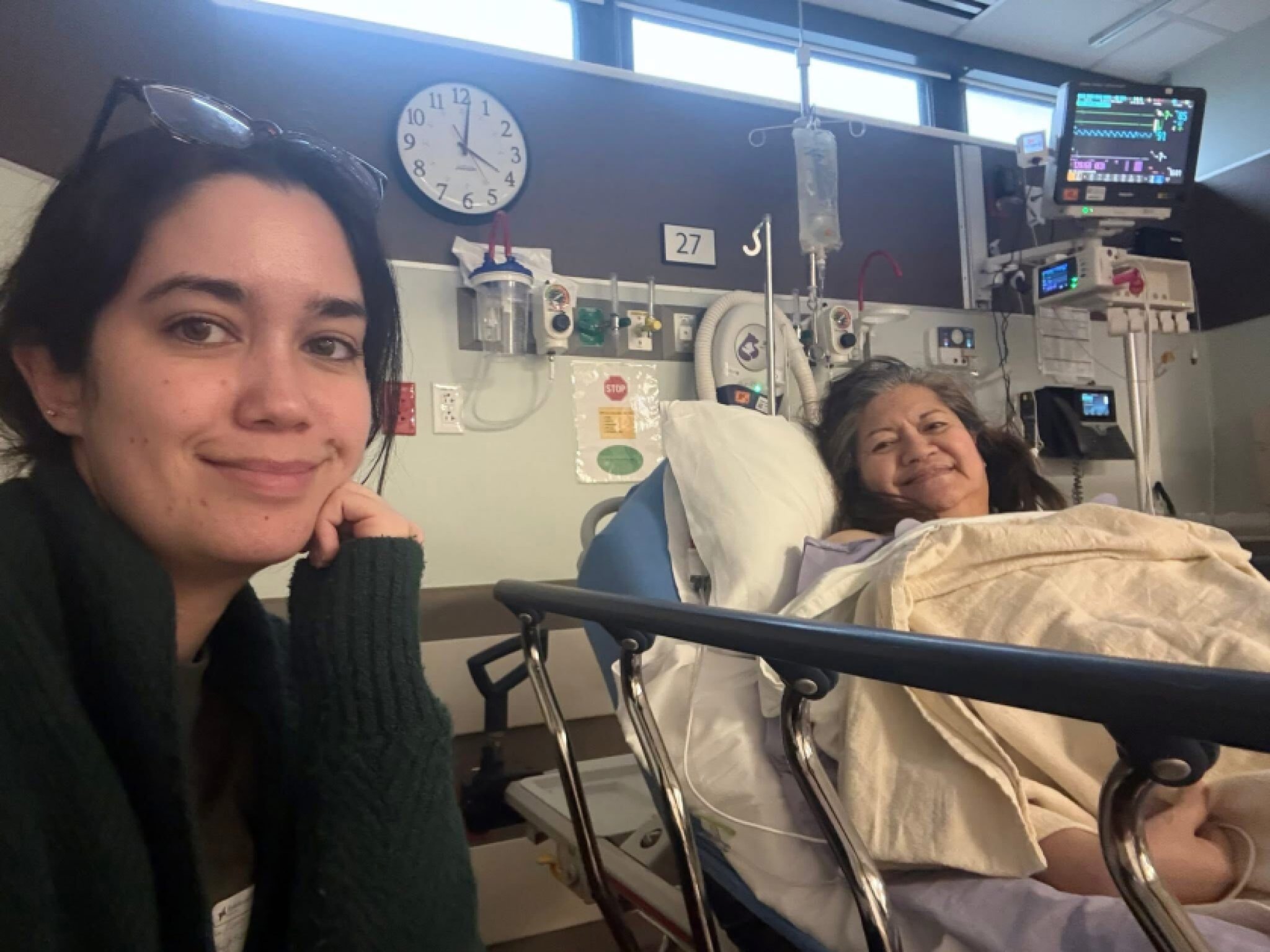
For me, that part of this story is personal. My mother was diagnosed with Stage 1 breast cancer after a routine mammogram led doctors to catch the disease early. My grandmother, her mother, also had breast cancer.

My mom went through surgeries and radiation, and during her treatment, our family had a breast cancer navigator of our own. At one point, I missed a call from a doctor’s office about test results. The office left a voicemail, and among the words I heard was “invasive.”
When I tried calling back, the office had closed early.
But our navigator was still available. She was able to pull up my mom’s records, explain the results, and help calm our fears before we could speak with her medical team again. For our family, she was a source of information and, in a frightening moment, reassurance.
“We’re those people that are on the phone after hours,” Withrow said. “We’re that pickup call.”
FROM CAREGIVER TO PATIENT
Breast cancer survivor Shona Sowell understands how different a cancer journey can look depending on which side of it you are on.
Her mother was diagnosed with breast cancer in 2005 and survived for 17 years as a Stage 4 patient.
“She thrived. And so my sisters and I were caregivers for her,” Sowell said. “You experience what she’s going through, but you’re not the one going through it.”
Then, in 2022, a routine mammogram led to Sowell’s own breast cancer diagnosis.
Suddenly, she was the patient.
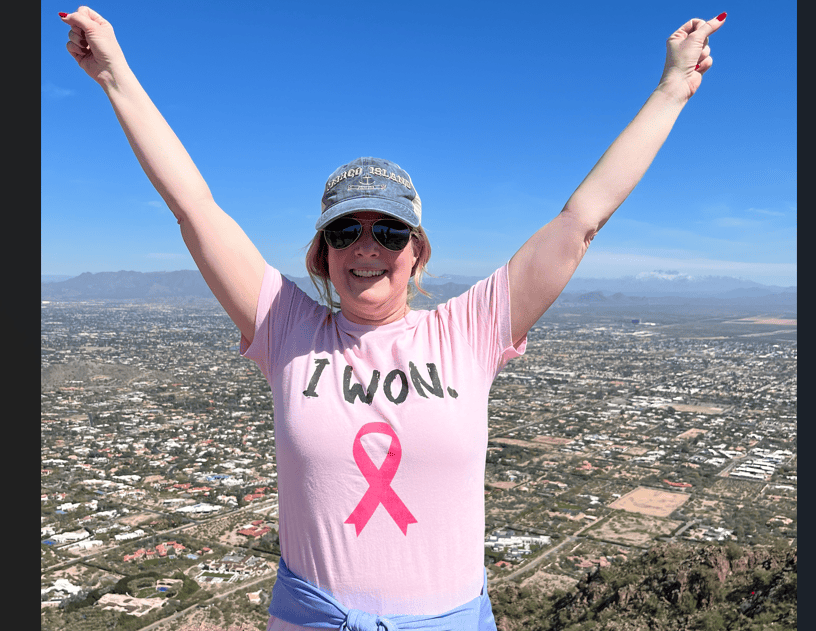
“When you’re first diagnosed, you are really in this hurricane, truly,” Sowell said. “It is a storm because you’re immediately thrust into … a myriad of doctor’s appointments, and you’re having to make a lot of decisions very quickly, and that’s overwhelming and frightening.”
Sowell had two daughters and two stepsons. Her youngest daughter was a senior in high school at the time of her diagnosis.
Her experience also changed her understanding of what her mother had faced years earlier.
Family support was invaluable, Sowell said, but there were parts of the experience only another person who had gone through breast cancer could fully understand.
“In the last two decades, a lot of how we take care of breast cancer has changed, which is great,” she said.
Sowell eventually joined a support group at the National Breast Cancer Foundation.
“When I walked into the room for Support Group, and I didn’t realize that I needed it as much as I did, I looked around in that room, every woman that I looked at understood my journey and could give me the grace that I needed, could give me the support that I needed, could answer my questions,” she said.
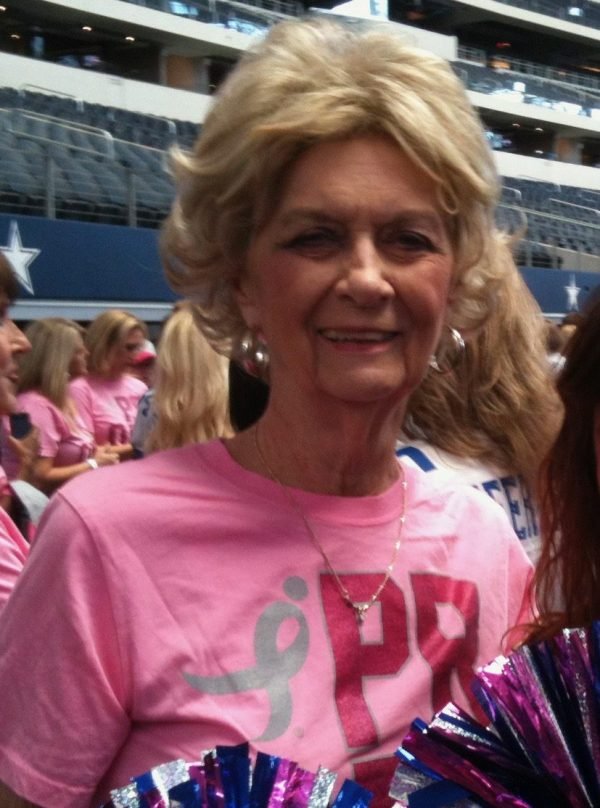
There, she discovered an unexpected connection. Withrow, her support group facilitator, had also been her mother’s support group facilitator more than 20 years earlier.
Sowell said just seeing other women at different stages of the journey gave her more hope.
“It was just comforting knowing that not only were there women who were at all different stages and had all different experiences, but they were surviving it,” she said.
Navigators and support systems can also remain important after medical treatment ends.
Sowell said she initially believed making it through treatment meant she had everything she needed. Instead, she found herself struggling with what came next.
“I thought I had all the support, I thought I had all the answers, I thought I had all that I needed, and I got finished with the journey, and I wasn’t OK,” she said.
That experience showed her that surviving cancer involves more than completing treatment.
“I think what the navigator does is it helps to walk through, again, all those medical questions, but then how do you get back into life? The goal is not just to survive,” Sowell said. “The goal is to survive and then get back to life.”
Today, Sowell said she is four years out from her diagnosis, has no evidence of disease, and is thriving.
Now, she hopes the experience that once overwhelmed her can become something she uses to help the next woman needing that light, including her own family.
“My goal is that my daughters never hear those words,” she said. “When another woman comes in that door, I can turn to her and be the hope that those other women were for me when I walked in the door.”
It is a continuation of the example her mother set more than two decades ago.
“I think that’s what we’re missing in some of these key understandings of breast cancer is it’s really a trauma situation. You’ve experienced a really difficult diagnosis and a really difficult thing, regardless of whether it was stage one or stage four. And now we need to work on that support, too,” Sowell said. “We’re thriving. And we’re going to continue to do so.”
If you are looking for more information on NBCF’s breast cancer support groups like Sowell’s, click here.
Ver nota original ↗
¿Querés un resumen rápido de esta noticia, hecho por nuestra IA?