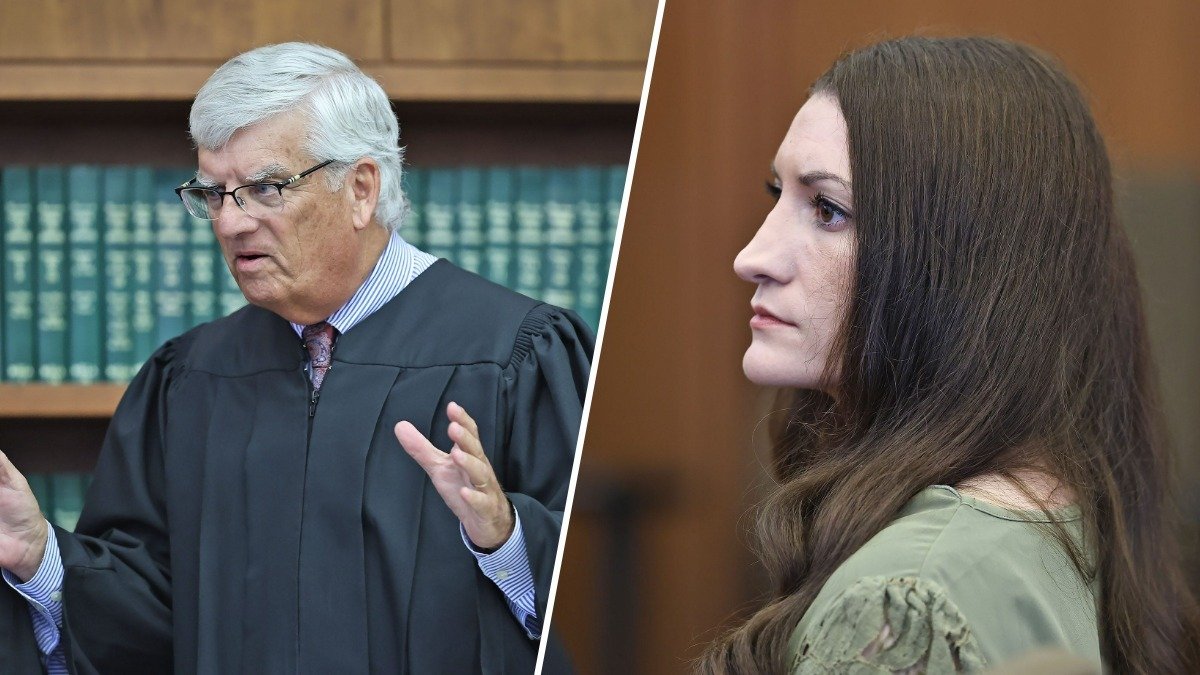
Recap: Here's everything we learned at Tuesday's Lindsay Clancy hearing

Lindsay Clancy was back in court Tuesday for a pivotal hearing, where the judge heard motions about whether to find her not guilty based on what the defense as described as insufficient evidence in the case, and whether sidebar conversations and jury notes should be made public.
Clancy’s first murder trial ended Sept. 4 with a deadlocked jury. A judge declared a mistrial after the jury was unable to reach a unanimous verdict.
Sullivan moved the conversation on to scheduling a potential new trial.
The prosecution said selecting a trial date may be premature based on what is still needed on motion rulings and appellate arguments. Reddington agreed. He also said based on his obligations in other cases, it might be June of 2027 before he is free.
Sullivan pushed back on that, wanting to "get this thing moving." He told attorneys to be prepared to discuss trial dates at the Nov. 2 hearing.
Court is now in recess.
Outside of court afterward, Reddington was asked about his comments about a possible retrial date.
"I just have other cases that are really jammed up," he said. Asked about the June 2027 date he mentioned in court, he said, "Maybe longer. Maybe later."
After discussing the motions, Reddington asks to be heard and launches into a conversation surrounding language about his conduct surrounding the issue of the holdout juror.
"I am so tired of hearing "persecution, attacking," I am doing all these terrible things to this juror. I have filed one motion and said nothing," he said.
Sullivan said the focus of this hearing is the current motions and moves on.
An attorney representing the Boston Globe and WBZ was called forward to make arguments on their own motion to release information from sidebar conferences, which is similar to the argument we just heard from Weinberg.
The attorney makes two points - one about whether the defendant agreed to information being discussed in sidebars, and how detailed sidebar conferences can go.
"When does holding a substantive argument at sidebar essentially undo the rule of public trials?" he asked.
"Helping the public better understand what has happened in this case and what will happen in the future in this case and to promote the legitimacy of and acceptance of the criminal judicial system all of that is served by people being able to, those willing to, educate themselves by hearing the arguments of counsel and questions of the court," he added.
The next issue is whether to release information from sidebar conferences and jury notes to the public.
Weinberg is arguing for the defense, making a constitutional argument about why the information should become public and saying there could still be limited redactions as needed.
ADA Sprague countered with an argument that keeping that information impounded is necessary to protect the integrity of the jury system.
"What has been happening with this case outside of court, in press conferences, has had a chilling effect on whether a juror would even want to serve on a case in this commonwealth," she said.
Sullivan also takes this motion under advisement.
Buckingham then turned to the argument that Clancy was experiencing psychosis when the children were killed.
"The fact that counsel wants to argue that defense counsel wants to argue that she was psychotic is an argument. And he can make it. That doesn’t mean that the commonwealth hasn’t proven otherwise," Buckingham said in defense of the prosecution's case.
She also pointed out that previous cases have established that simply suffering from mental illness does not mean a defendant is automatically not criminally responsible.
Judge Sullivan said he will take the motion under advisement.
Ver nota original ↗
¿Querés un resumen rápido de esta noticia, hecho por nuestra IA?