The saga of a sweet turnip
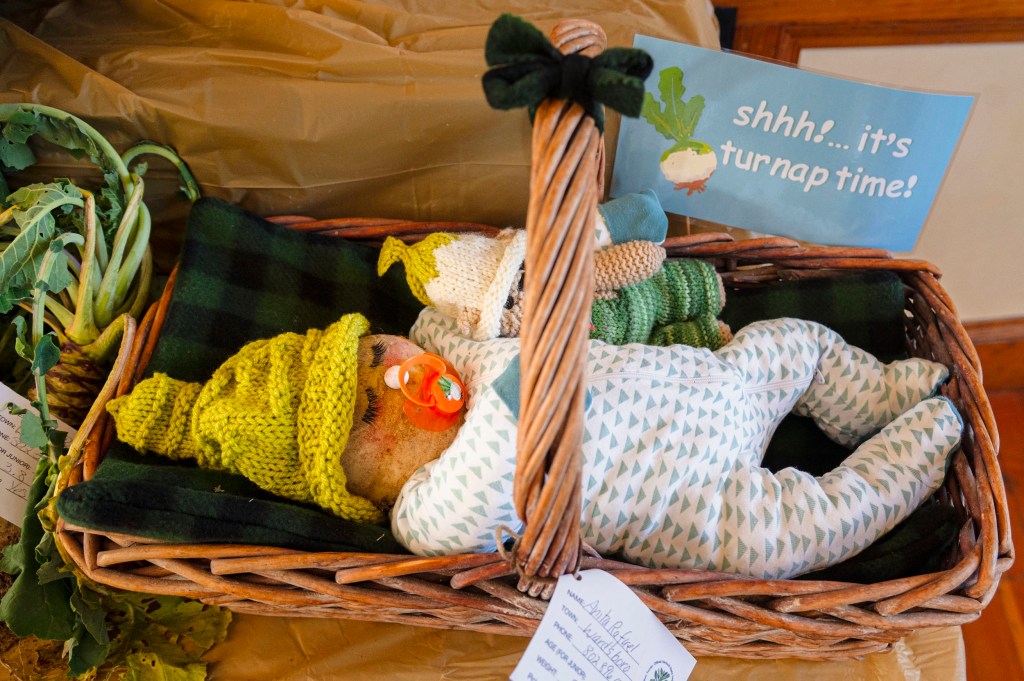

A turnip dressed as a baby seen as it vies for “best dressed” in the Turnip Contest during the Gilfeather Turnip Festival in Wardsboro on Saturday, October 24, 2026. Photo by Glenn Russell/VTDigger 
Jess Shapiro sports a turnip cap during the Gilfeather Turnip Festival in Wardsboro on Saturday, October 24, 2026. Photo by Glenn Russell/VTDigger 
Patrons line up for turnip-based offerings at the Turnip Cafe during the Gilfeather Turnip Festival in Wardsboro on Saturday, October 24, 2026. Photo by Glenn Russell/VTDigger 
Volunteers ladle out bowlfuls of hot turnip soup during the Gilfeather Turnip Festival in Wardsboro on Saturday, October 24, 2026. Photo by Glenn Russell/VTDigger 
Babara Loftus’ creation, Madame Gilfeather, won the Best Dressed award in the Turnip Contest during the Gilfeather Turnip Festival in Wardsboro on Saturday, October 24, 2026. Photo by Glenn Russell/VTDigger 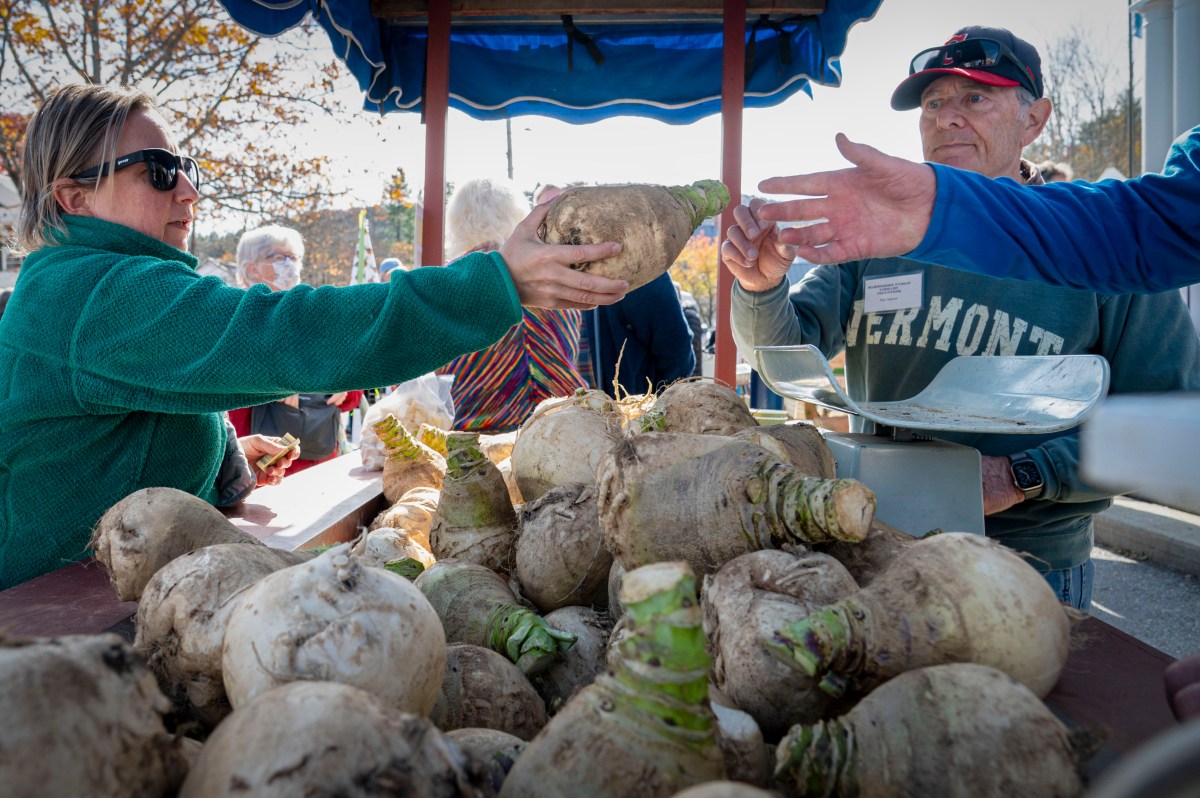
Turnip sales are brisk during the Gilfeather Turnip Festival in Wardsboro on Saturday, October 24, 2026. Photo by Glenn Russell/VTDigger 
People examine turnips entered in various categories for the Turnip Contest at the Gilfeather Turnip Festival in Wardsboro on Saturday, October 24, 2026. Photo by Glenn Russell/VTDigger 
Vermont Agriculture Secretary AnsonTebbets films turnips on display during the Gilfeather Turnip Festival in Wardsboro on Saturday, October 24, 2026. Photo by Glenn Russell/VTDigger 
State Rep. Laura Sibilia, I-Dover, left, and U.S. Rep. Becca Balint, D-Vermont, announce the winners of the Turnip Contest during the Gilfeather Turnip Festival in Wardsboro on Saturday, October 24, 2026. Photo by Glenn Russell/VTDigger 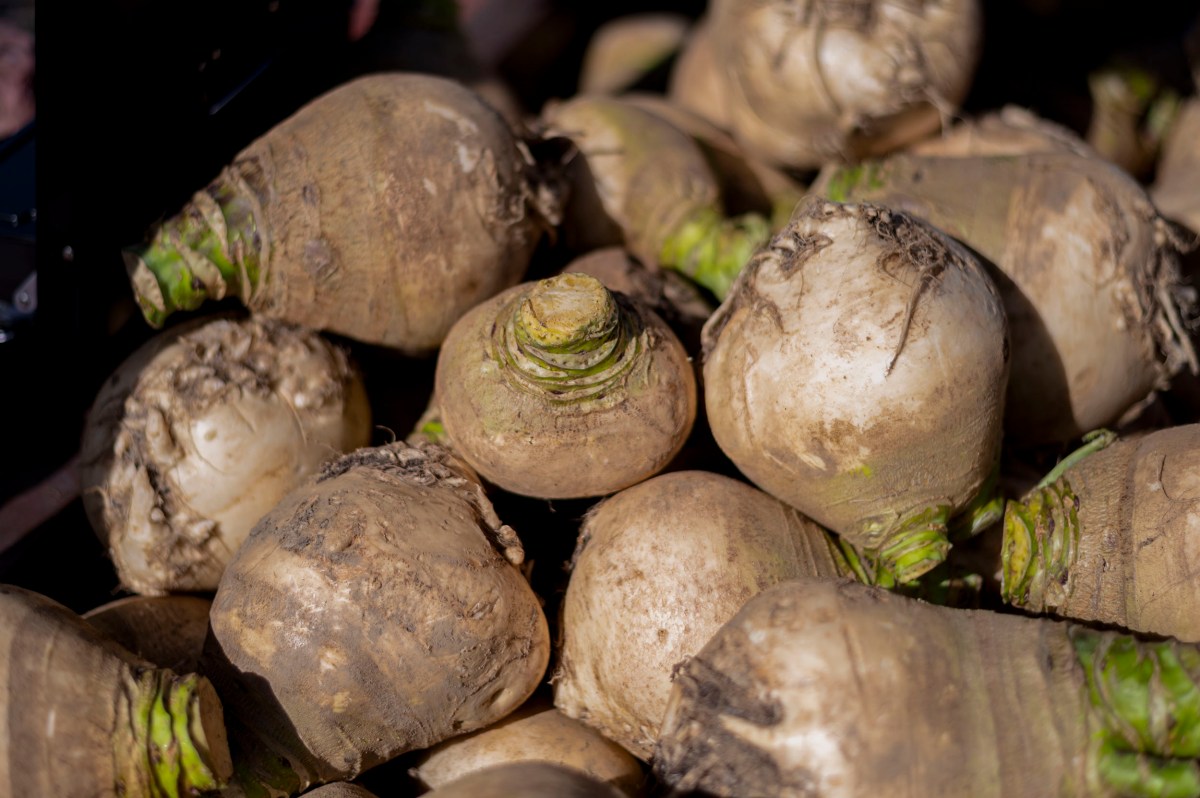
Turnip sales are brisk during the Gilfeather Turnip Festival in Wardsboro on Saturday, October 24, 2026. Photo by Glenn Russell/VTDigger
WARDSBORO — Every year, Anita Rafael climbs a hill near downtown Wardsboro to place a turnip on John Gilfeather’s grave.
The slope is a short distance from the site of last Saturday’s Gilfeather Turnip Festival, an event featuring a turnip-judging contest, legendary turnip soup and “Turnip Talks” by Rafael herself.
At the festival, children wrapped in fleeces and sweatshirts wandered around, carrying chalkboard signs advertising raffle tickets. Clusters of festivalgoers traipsed up and down the street, showered in bright Vermont sunlight and bundled up against the chill.
This year, they were blessed with blue skies. But the festival, one of the biggest annual celebrations in Wardsboro, goes on each year regardless of weather complications.
As sunset colors start to spread through Vermont’s foliage, fall festivals turn local traditions into reasons to gather and splurge. Visitors buy specialty foods and crafts, nonprofits raise money for local services, and communities celebrate the features that make them unique. Wardsboro’s Gilfeather Turnip Festival shows how those purposes intertwine.
In Wardsboro, the word “turnip” is synonymous with community.
The story begins with John Gilfeather, Rafael told the guests assembled for one of the “Turnip Talks” by the freelance writer and Wardsboro resident. Gilfeather was an enterprising farmer in Wardsboro in the late 1800s and early 1900s who claimed to have a turnip unique to his farm.
Sweetened by the first frosts of fall, these turnips seemed impervious to the bitter taste that plagued the rest of their species. The special turnips were jealously guarded by Gilfeather. Before selling them, he would cut the roots and tops off each vegetable so no one else could seed the plants.
Still, by the time of Gilfeather’s death, enough seeds had spread across Wardsboro’s community to continue his legacy. For decades, word of the turnip spread only by hearsay, until a Wardsboro couple named William and Mary Lou Schmidt worked with the U.S. Department of Agriculture, the University of Vermont and the state to certify the vegetable as an “heirloom variety” and sell it under the name of the Gilfeather turnip.
The Gilfeather turnip was officially declared the state vegetable in 2016 in an effort championed by Wardsboro schoolchildren.
In the early 2000s, Wardsboro residents realized that their turnip legacy could bring more than pride to their community. It could bring a source of revenue to keep their town library afloat.
Wardsboro isn’t the only town to see the benefits of festivals like these. Rutland is home to two annual Art in the Park festivals, which are the biggest fundraising opportunities to keep Rutland’s Chaffee Art Center going throughout the year.
The two festivals occur in August and October, with the October event dubbed the Art in the Park Fall Foliage Festival. The events attract people from all over the nation and even some international visitors, according to Sherri Birkheimer Rooker, executive director of the center.
Festivals like these allow rural Vermont communities to connect with people from all over the map, she said.
“They’re beautiful towns, but they’re not, it’s not like New York City or Boston, right?” she said. “So I think the festivals are a way to bring in people, either a repeat because they had such a great time, right, or bring in people who are looking for fun things to do and have never been.”
Festivals are common across Vermont year-round, according to Susan Evans McClure, executive director of the Vermont Arts Council. But foliage season is a powerhouse, according to a 2024 study by the University of Vermont that analyzed the impact of a solar eclipse in April 2024 on Vermont tourism. Even though the eclipse attraction brought in $34.8 million, that amount was equal to less than 10% of Vermont’s visitor spending in the foliage season.
Jay is another town that found a way to capitalize on the beauty of Vermont’s autumn. It hosts the annual Jay Community Recreational Centre Oktoberfest, where proceeds go toward trail maintenance and development projects in the community. The event is very kid friendly, according to Sally Rivard, one of the coordinators. It includes pumpkin launching, alpaca petting, a haunted gingerbread house contest and the annual Pumpkin Pi(e) Run/Walk, so named because the race is exactly 3.14 kilometers.
“Oktoberfest brings people to town, they visit the local businesses and celebrate autumn beauty all while helping us raise funds for our trail maintenance and development projects,’’ Rivard wrote in a text to VTDigger. “Community supporting community.”
Wardsboro’s turnip festival has also brought in crucial funding for its host town. Revenue peaked before Covid-19 hit, Rafael said, after gradually growing for around two decades. It was bringing in upwards of $10,000, she estimated, and funding a massive portion of the library’s operations. But the festival’s momentum stalled during the pandemic, and now the town is working to bring it back.
Organizers have had successes through enlisting the Boy Scouts and the Wardsboro School Club, which receive portions of the funds as well, she added.
At this year’s festival, crowds gathered and vendors sold everything from gourmet salsa to silver jewelry spread out on black velvet displays. One tent sold homemade turnip hats with knitted leaves sprouting where a pompom would normally sit.
Central to the event was the soup stand, where volunteers filled cups for a revolving line of customers. An old-fashioned cart with wooden wheels stood just a stone’s throw away, full to the brim with turnips for sale.
One trio — Jim and Leona Kee, from New Hampshire, and Mickey Goldman, from New York — stood near the town hall steps, scraping the sides of their soup cups to retrieve the creamy liquid. The turnip festival had been on Leona Kee’s bucket list for about a year, she said, after she fell in love with the Gilfeather turnip soup sold at Dutton’s in Brattleboro.
When a festival starts to appeal to out-of-town visitors, Evans McClure said, the economic payoffs get higher. Vermont participated in a national study in 2023 that found that while cultural event attendees in Vermont spent $34.53 per person on average, apart from admission fees, nonlocal guests spent an average of $51.69 per person.
“If you’re from out of the region, you stay at a hotel, you go out to lunch. You pay for parking,” Evans McClure said. “Maybe if it’s an evening event, you pay for a babysitter. There’s all of these associated expenditures.”
Later in the day, festivalgoers trooped to the town hall’s upstairs room for the much-anticipated turnip-judging contest.
The vegetables competed in various categories, from the heaviest to the most creatively dressed. Rafael’s entry was swaddled in a blanket and placed in a bassinet like a baby.
Another costume sent a woman speeding down the town hall steps, shouting that someone had dressed up a turnip as Dolly Parton.
“As they should,” chuckled a woman seated on the porch.
Typically the festival ends with costumed turnips left behind, Rafael said, which organizers collect and donate to the local food pantry. But she has other plans for her turnip. She will take the vegetable out of its bassinet and carry it up to Gilfeather’s grave to leave her yearly tribute to his memory.
Read the story on VTDigger here: The saga of a sweet turnip.
Ver nota original ↗
¿Querés un resumen rápido de esta noticia, hecho por nuestra IA?