Barberton voters divided over tax levy as district faces fiscal emergency
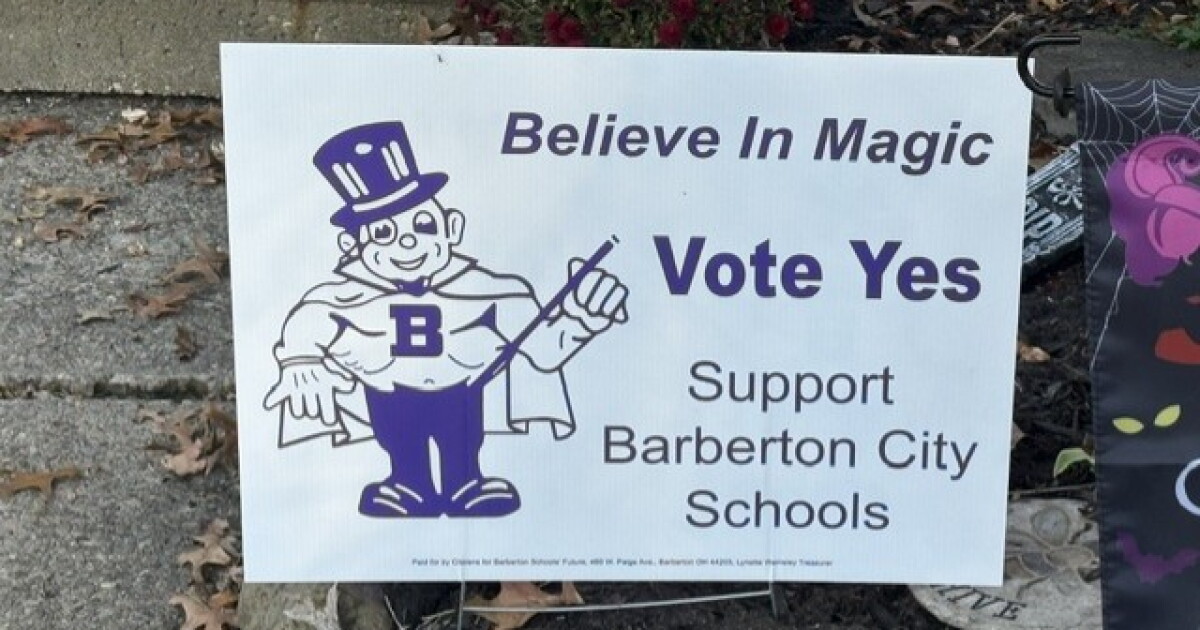
Barberton voters will decide Tuesday whether to approve a new earned income tax for the city school district, which is already under fiscal emergency and warning that additional cuts could affect sports, extracurricular activities, art, music, preschool and transportation.
Issue 5 would create a 1% earned income tax for Barberton residents. According to the district, the levy would generate approximately $4.73 million a year for five years.
The issue follows voters' rejection of an 11-mill property tax levy in May, and the district subsequently made about $7 million in cuts.
Those reductions included eliminating about 70 teacher and teacher's aide positions. But the cuts were not enough to balance the district's budget, and in September, following a request from the school board, the Ohio Auditor placed Barberton City Schools in fiscal emergency, the most severe level of state fiscal oversight.
WATCH MORE ABOUT THE FISCAL EMERGENCY: Barberton City Schools asking state to declare fiscal emergencyRELATED: Barberton City Schools asking state to declare fiscal emergency
With Election Day approaching, residents are divided over whether another tax is the answer.
"I have to say I'm against it. It's just a bad idea," Barberton resident Steve Despot said.
Despot said increasing household expenses, along with higher property taxes, make it difficult for him to support an additional tax.
"It's gonna cost me about $55 a month. I would be on the hook to fix their mistake, and I just don't think that's right," Despot said.
Barberton resident Gail Klusty sees it differently.
Klusty, who graduated from Barberton schools, as did her son and grandson, said she initially planned to vote against the levy but changed her mind.
"Because it's so important and vital for our kids because a lot of them don't have a lot of structure in their life but school," Klusty said.
Superintendent Jason Ondrus said several factors contributed to the district's financial problems, including changes in state funding, rising health care costs, inaccurate expense assumptions and the loss of federal COVID-era funding.
"I think COVID funding across the state provided a false sense of revenue for districts," Ondrus said.
The district points out the state requires it to develop a balanced budget while it is under fiscal oversight. District officials say that will require a combination of spending reductions and additional local revenue.
After the May property tax levy was defeated, the school board took a different approach for Issue 5.
Instead of an additional property tax, the November proposal is a 1% earned income tax. It would also last five years rather than being continuous.
According to information provided by Barberton City Schools, the tax would apply to earned income, including:
Employee wages Salaries Tips Self-employment earningsThe district says income from Social Security, pensions, 401(k) and IRA distributions, investments, dividends, interest and unemployment benefits would not be subject to the levy.
That means a retiree whose income comes solely from those sources would not pay the new tax.
The levy also would not increase property taxes because it is an earned income tax, not a property tax.
If approved, the tax would remain in effect for five years. It would then expire unless voters approved another tax in a future election.
The district said additional reductions would be necessary if the levy fails because it must balance its budget under state fiscal oversight.
Potential cuts identified by the district include:
Eliminating athletics and extracurricular activities at the middle and high school levels Eliminating preschool programs Eliminating or significantly consolidating career technical education programs Reducing elective classes, including art and music Reducing student transportation to state minimumsUnder the transportation scenario outlined by the district, high school busing would be eliminated, while students in grades K-8 would receive transportation only if they live more than two miles from their assigned school.
Ondrus said decisions about further reductions would be made with the state commission overseeing the district.
"We're certainly looking at areas that are required versus not required," Ondrus said.
For residents such as Klusty and Despot, the decision comes down to competing concerns about what Barberton families can afford and what its schools can afford to lose.
"You gotta ask yourself, can you afford another monthly bill? Most people are gonna say no," Despot said.
Klusty argues the potential effects on students outweigh the additional cost.
"We really need to push this levy through for the kids," she said.
Ver nota original ↗
¿Querés un resumen rápido de esta noticia, hecho por nuestra IA?