Maritime archaeologist talks about discovering Shackleton's ‘Endurance' at Perot Museum
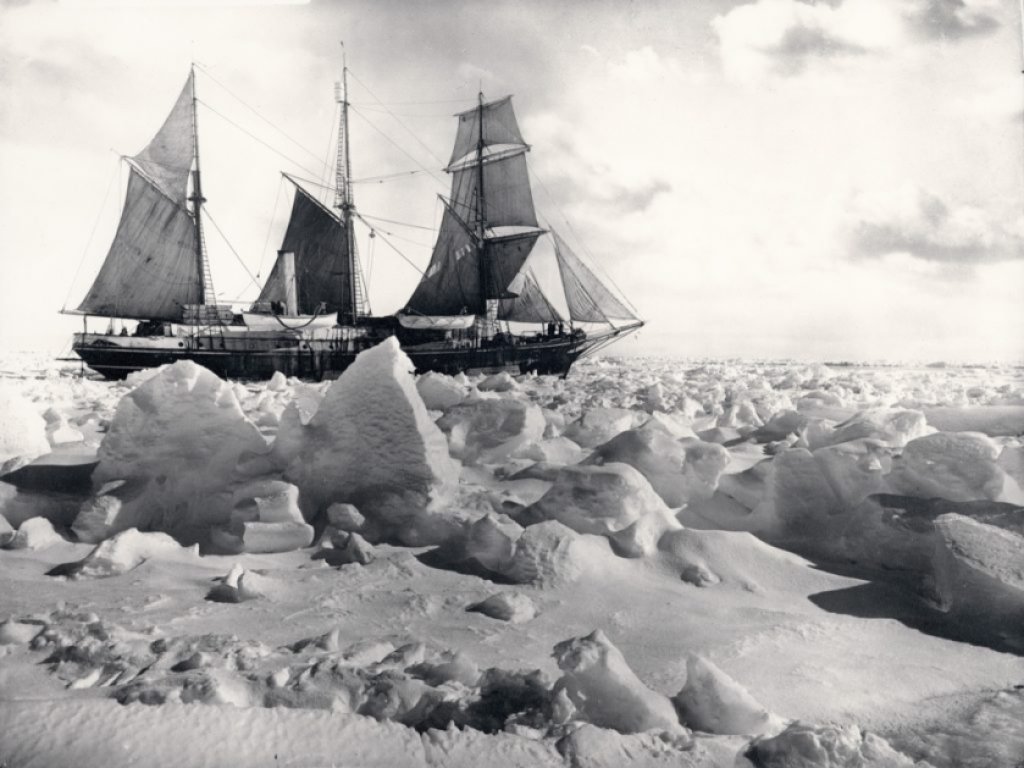
On November 21, 1915, Sir Ernest Shackleton’s ship, Endurance, was crushed by ice and sank to the bottom of Antarctica’s Weddell Sea. More than 100 years after the sinking and the rescue of Shackleton and his crew, an expedition led by British maritime archaeologist Mensun Bound discovered the wreck in March 2022. Bound will recount the historic 35-day search for the Endurance as a special event at 1:30 p.m. on October 31 at the Perot Museum of Nature and Science in Dallas.
Bound discusses the importance of finding the wreck, the condition of the ship 100 years after its sinking, what modern technology Shackleton probably wished he had on his expedition and why modern-day explorers are still drawn to Antarctica.
NBC DFW: Why was it important to find Endurance?
Mensun Bound (MB): The Endurance was the wreck that everybody wanted to find. It gripped everyone’s imagination. It was the most storied wreck ever. It was protected by depth and the pack and conditions that would devour anyone. Shackleton said it was the worst spot of the worst place on earth. Not for nothing was it known as the ‘unreachable’ Endurance. It therefore follows that any search for the Endurance would be the greatest wreck hunt ever. And it was. Two brutal searches, a tonne of money, and the best subsea technology on the planet.
However, the way technology was developing it was obvious that it would one day be found. The Falklands Maritime Heritage Trust and Ocean Infinity that collaborated on the search, wanted it found by a responsible organisation that would then protect the site from depredation.
The fear is that it might be found by a rogue organisation that might then strip the wreck for its own purposes. We could not let that happen.

NBC DFW: What can we learn from shipwrecks like Endurance?
MB: To be frank, there is not much about the design and construction of the Endurance that we do not already know, because, in the course of our research we found all the builders’ plans. But there is so much inside the Endurance that would be so exciting to find. The scientific instrumentation, the samples they took, the books they read, and the music, or records, they listened to are all still there.
Then there is Shackleton’s cabin which contains all but one of his suitcases. All this illuminates better than anything else, the whole inspirational Shackleton / Endurance saga.
And then there are all Benthic communities and various eating guilds on the wreck. The Endurance is the only wreck in the central Weddell Sea, so they are unique.
NBC DFW: Sir Ernest Shackleton was part of the Heroic Age of Antarctic Exploration. Why were explorers of that era drawn to Antarctica? Why are modern explorers still drawn to Antarctica?
MB: There is something within the human condition which always has us reaching for the unknown. Pushing to expand our boundaries. Explorers have always been drawn to the unknown and back then the biggest geographical unknown was the south pole and the great white continent of Antarctica. Its lure for people like Shackleton was irresistible.
Modern explorers are still drawn to Antarctica, but it is very different. Yes, it is a place where young toffs seeking to make a name for themselves like to go to challenge themselves and the environment, but more important is the scientific exploration that goes on in Antarctica. Because of our cretinous behaviour our world has taken a swerve into the unknown. We have to know what is going on and nowhere is this more obvious, or easy to measure, than Antarctica because of its isolation from the rest of the world by the circum-polar current. Scientists never tire of telling us Antarctica is the canary in the coal mine. What happens down there happens in the rest of the world next.
NBC DFW: What piece of modern technology would Shackleton wish he could have had on his voyages?
MB: Shackleton did not take a radio transmitter with him, very likely because he did not want to be within reach of his creditors. But in view of what happened, he might have wished for an iPhone or similar modern communication device. Also, satellite intelligence so he could tell what the pack was doing and what weather was coming his way.
A drone might be useful to spot leads and open water. A digital camera with unlimited storage would have been helpful, as their photographer Frank Hurley could only save a limited number of his heavy glass plates.
Maybe a satellite phone so he could call the RGS. “Hello – slight problem with the ship. Could you possibly send me another one?” But, on second thoughts maybe not, because he would not then have had the greatest survival story ever told.
A cappuccino machine might have done wonders for morale.
NBC DFW: What can the next generation of explorers take away from Shackleton’s work and legacy?
MB: There is a lot the next generation can learn from Shackleton. Choose your team carefully, never underestimate the value of a good musician. Always have a plan B, and possibly C,D & E. And of course there is Shackleton’s courage, determination, teamwork and leadership.
He showed that even when things go wrong, it is important to stay positive, never give up and work together to overcome the challenges. Shackleton’s greatest achievement was not reaching his destination but bringing his crew home safely, that lives are more important than success. He had no GPS, no satellite phone, there was no help and nobody knew where he was, but he brought everyone home.
Never underestimate the human spirit.
Learn more:Perot Museum
Ver nota original ↗
¿Querés un resumen rápido de esta noticia, hecho por nuestra IA?