Record 2.8M early ballots cast in North Carolina, driven by unaffiliated voters and steady Democrats
The video above is a live stream of WBTV and affiliated programming, and may not be directly related to the article below.
CHARLOTTE, N.C. (WBTV) - North Carolina voters packed early voting sites in record numbers for the 2026 midterms, fueled by a rise in unaffiliated voters, young adults and steady turnout from registered Democrats.
State election data shows 2,816,821 people cast ballots during the 17-day early voting sprint — accounting for 35.7% of all registered voters across North Carolina.
This year’s early voter turnout marks a dramatic climb from four years ago, when turnout hovered at 29.0%.
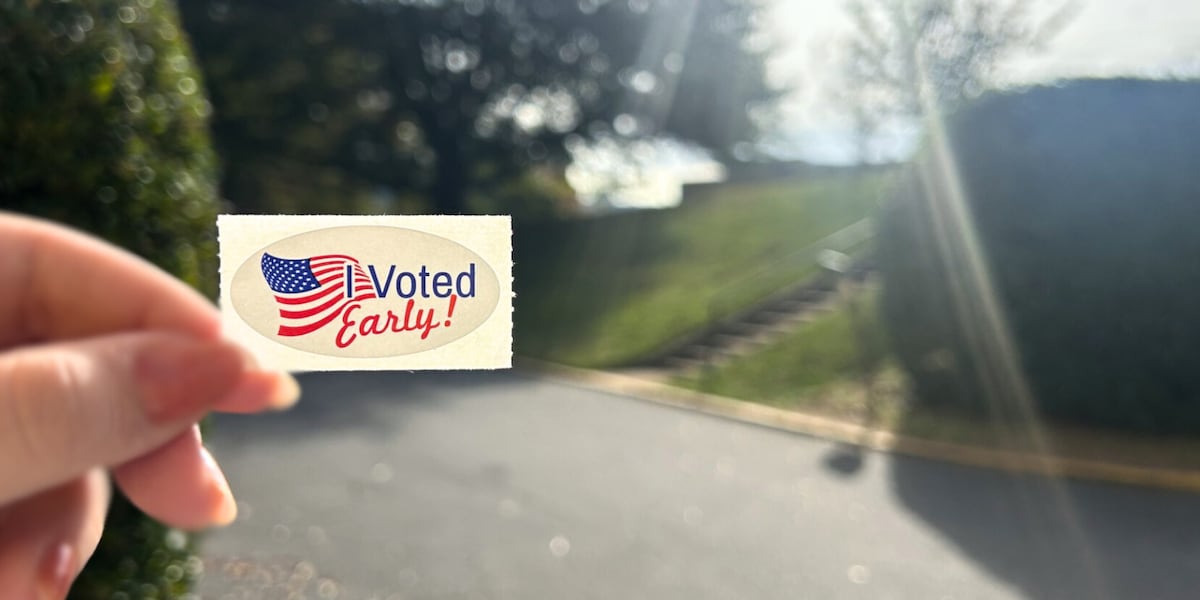
Millions of North Carolinians lined up at the polls to claim their “I voted early” stickers as in-person voting surged past 2.7 million ballots and mail-in turnout dropped compared to 2022.
Send us selfies with your “I Voted” sticker!
The record-setting early voting window slammed shut on Saturday, Oct. 31.
However, the final opportunity to cast a ballot comes on Election Day, Tuesday, Nov. 3. Polls open statewide at 6:30 a.m. and close at 7:30 p.m.
5% rise in unaffiliated voters, steady Democratic presence
Across the state, registered Democrats and unaffiliated voters accounted for nearly three-quarters of all early ballots.
Unaffiliated voters saw the most significant growth in turnout -- representing 35% of early ballots cast, up from 30% in 2022.
Registered Democrats held steady at 38% of the total vote. Meanwhile, registered Republicans dropped five percentage points, making up 26% of early ballots compared to 31% four years ago.
Early voter momentum spanned the state, with turnout running higher than 2022 in 97 of North Carolina’s 100 counties.
Wake County led the state with more than 300,000 ballots cast while Mecklenburg County followed closely behind with 275,954 early voters.
North Carolina 2026 voter guide: Here’s everything you need to know ahead of midterms
Minority voters turnout in staggering numbers
Within county lines, every demographic group saw increased turnout, though participation accelerated fastest among minority voters.
Turnout among Asian voters surged, with early ballots nearly doubling compared to 2022.
According to the North Carolina FreeEnterprise Foundation, the sharpest increase came from voters grouped under “all other races,” who cast ballots at 2.3 times their 2022 pace. Turnout among Black voters also jumped 1.5 times, reaching nearly 600,000 ballots.
Gen Z is showing up, and out at the polls
Younger generations also turned out at the polls in staggering numbers.
Ballots cast by voters aged 18 to 25 nearly doubled, surpassing 200,000. Turnout among voters aged 26 to 40 jumped by 50%, reaching more than 417,000 ballots.
Still, older North Carolinians made up the majority of the electorate.
Voters aged 41 to 65 cast 1.12 million ballots while those 66 and older cast 1.07 million ballots, together making up more than three-quarters of all votes.
Much like previous years, women continued to drive early voting in the state.
Female voters cast nearly 1.5 million ballots, representing 53% of the total. Male voters accounted for 1.15 million ballots, or 41%.
Read --> Election guide: Roy Cooper vs. Michael Whatley in Senate race that could decide Congress
Other details, such as third-party voter turnout, were not made available as of this writing.
Read below for more on voting in North Carolina for the 2026 midterms.
How to find your polling place in North Carolina
When voting on Election Day, voters must go to their assigned polling place.
Polling places are assigned based on your registered home address.
Click here to find your polling place in North Carolina using the state’s voter search tool.
Do I need a photo ID to vote in North Carolina?
Yes (with exceptions).
North Carolina voters will be asked to show photo identification when they check in to vote.
However, all voters will be allowed to vote with or without photo identification.
If a voter cannot show an acceptable photo identification when voting in person, they can still vote by filling an ID Exception Form.
Acceptable forms of photo ID include a North Carolina driver’s license, state ID, U.S. passport or passport card, college or university ID, military ID and more. Click here to learn more about acceptable IDs on the state’s website.
How to see a sample of your ballot
North Carolina voters can see a sample of their ballot using the Voter Search tool on the state’s website right here.
To use the tool, fill in the required fields and hit the “search” button. Find and click on your name, then scroll down to find “Your Sample Ballot.”
All registered voters can find a sample of their ballot ballots in the “Your Sample Ballot” section of the voter search profile.
You can also practice making your choices and download a copy of your sample ballot using “Option 4” on the NC Absentee Ballot Portal.
What’s on the ballot in North Carolina
Voters in North Carolina will be electing at the state level for an open seat on the U.S. Senate vacated by Rep. Thom Tillis and three statewide referendums. Locally, voters will decide on local judges, district attorneys, county sheriffs and Board of Education members.
There are several key races to keep an eye on in the Tar Heel State including the vacant seat on the U.S. Senate. Vying for the seat are Democratic nominee Roy Cooper and Republican nominee Michael Whatley.
Read --> Election guide: Roy Cooper vs. Michael Whatley in Senate race that could decide Congress
Cooper was the North Carolina governor from 2017-2025, and has been leading in most polls. Whatley was the Republican National Committee Chairman from 2024-2025. Whatley’s campaign message has been centered on backing Trump’s agenda.
Other races to keep an eye on include the races for two U.S. House seats in North Carolina. The state’s Congressional Districts 1 and 11 are viewed as toss-ups and could flip, according to CBS News.
Republican Chuck Edwards, who holds the seat for District 11, dropped his reelection bid after a sexual harassment investigation. Republican Rep. Jennifer Balkom replaced Edwards on the ballot and will face Democrat Jamie Ager.
Incumbent Democrat Don Davis, who holds the seat for District 1, will face Republican Laurie Buckhout.
Republicans enter the midterm election with a narrow 220-215 majority in the U.S. House.
Statewide referendums on the ballot
North Carolina voters will decide on three referendums statewide. Voters will vote either “for” or “against” proposed amendments to the state constitution.
The first proposed amendment is about voter identification. That amendment reads:
- “Constitutional amendment to require all voters, not just those presenting to vote in person, to present photo identification before voting.”
The second proposed amendment is about state income tax. That amendment reads:
- “Constitutional amendment to keep the State income tax rate from being raised higher than three and one-half percent (3.5%).”
The third proposed amendment is about property taxes. That amendment reads:
- “Constitutional amendment requiring limits on property tax increases by local governments.”
Watch more election explainers here
To help get Carolina residents ready to vote, WBTV streamed election explainers on each Tuesday in October.
Darrell Green and David Hodges have been breaking down referendums, major races, and more.
You can watch previous episodes by clicking on the links below:
- Breaking down 2026 US Senate races in North, South Carolina
- Breaking down North Carolina General Assembly, supermajority makeup this 2026 election
- Breaking down North Carolina’s voter ID referendum + more in Charlotte region
- Breaking down 2026 property, income tax referendums on the North Carolina ballot
Click here for more election news and information
Ver nota original ↗
¿Querés un resumen rápido de esta noticia, hecho por nuestra IA?