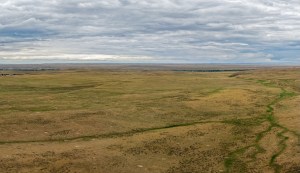
Campbell County residents weigh a second nuclear fuel facility

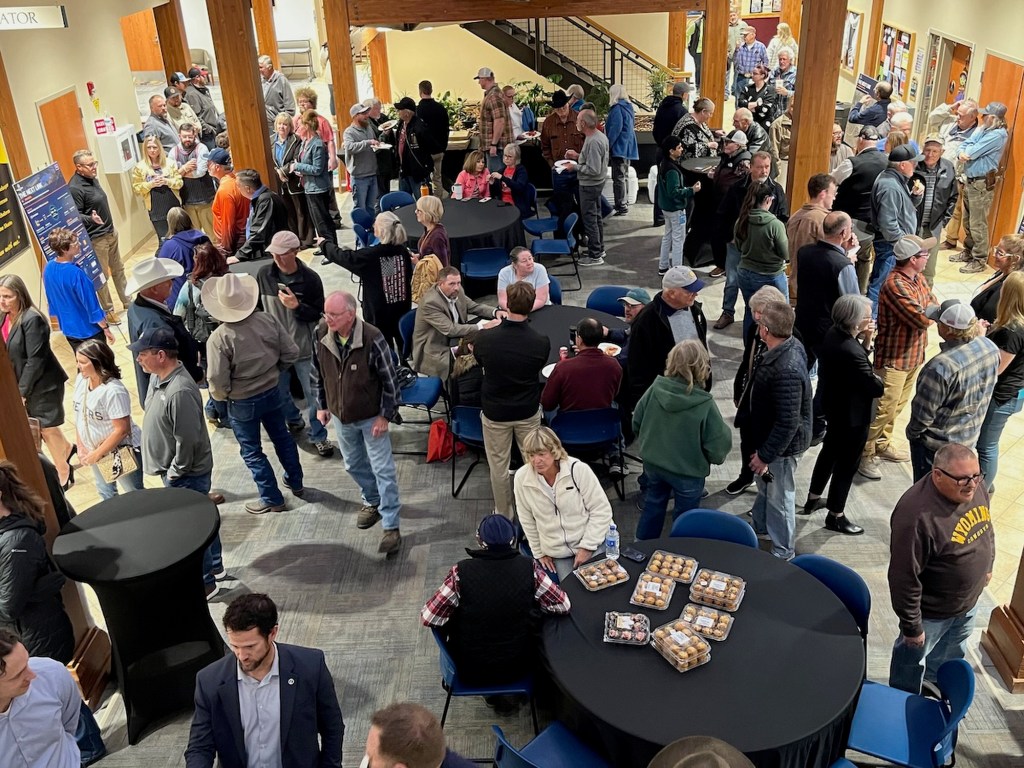
GILLETTE—A dark gray SUV parked at the entrance of Gillette College’s main building Wednesday evening to deliver dozens of pizzas from Pizza Carrello, a local favorite. Inside, residents began to fill the commons area with slices in hand and questions on their minds.
Calgary, Alberta-based Nucleon Energy invited the community to learn about its freshly proposed Fort Union Uranium Conversion Facility, a $575 million project to convert uranium to uranium hexafluoride — the gas that is then enriched to eventually fuel nuclear reactor power plants.
“Right now, there’s a lot of new industries coming to Gillette, so it seems like a good thing to keep abreast of it,” said David Freeman, a 20-something utility industry worker donning a wide-brimmed felt hat. He brought questions about how the conversion process works and told WyoFile he’s particularly curious about the economic viability of the project.
“That’s an issue that we see a lot in Gillette,” Freeman said. “We have a lot of industry, but it’s getting strangled.”

Known as the Energy Capital for its massive coal mines — the largest coal-producing complex in North America — and for its prolific oil and natural gas fields, residents here have witnessed coal production shrink by half since the 2000s. Dozens of schemes to market Powder River Basin coal beyond simply being burned to generate electricity, with the exception of one, have come and gone.
Yet uranium mining here, and throughout the state, is once again on the rise, putting Gillette and Campbell County in the sights of prospective nuclear energy developers. Last year, longtime U.S. Navy contractor BWXT proposed a $500 million TRISO nuclear fuel manufacturing facility — an unfamiliar lane even for Gillette, where residents embrace drilling and mining and take pride in their outsized role in powering the nation.
But Nucleon Energy, like BWXT, sees Gillette and its energy prowess as a perfect fit. The workforce here has the necessary skills, the region has the right industrial infrastructure, and many elected officials are eager for the prospect of adding another link in the nuclear fuel-chain in the state rather than shipping Wyoming mined U-3O8 to be processed elsewhere.
“We had looked at a number of different states, eventually [decided on] Wyoming, given its capabilities in uranium mining, its regulatory sophistication, the openness of the community, the community leaders, the industrial base, the types of companies that support the energy sector now and, of course, institutions like Gillette College,” Nucleon Energy Chief Development Officer and Co-founder Ryan Tourigny told WyoFile. “All of these things were big, attractive forces to us.”
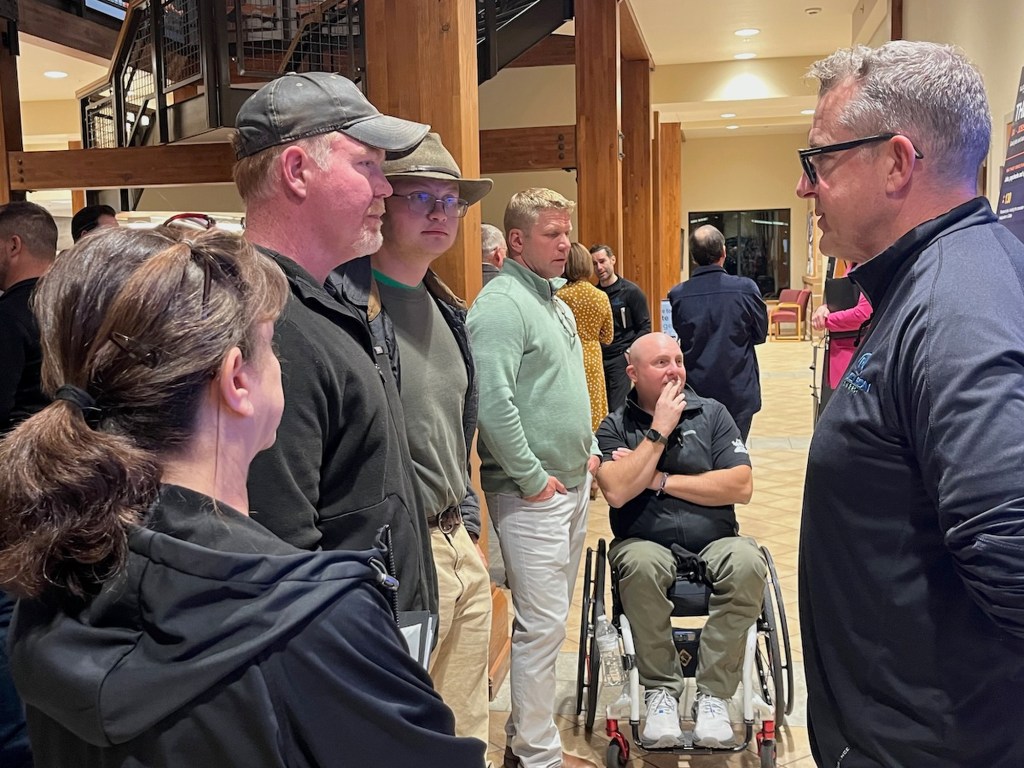
Meanwhile, residents at the event said they have a lot of questions, and some weren’t satisfied with responses.
“They wouldn’t answer my concerns about training,” Campbell County resident Kelley Boltin said. “What’s the risk of bringing it here? What happens if a spill occurs? What happens if it comes in contact with water? If there’s a cloud [of spilled hexafluoride] where does that cloud travel?”
“It’s not that I am antinuclear,” Boltin added. “But I think safety is No. 1. Before you set your shop up here, you should assure people of your safety protocols.”
The project
Nucleon, and its subsidiary Nucleon Fuel, envisions the first of potentially three conversion units, or “trains,” would be in operation by 2032, according to Tourigny. The facility, located at the Fort Union Industrial Park just north of town, would convert natural uranium — the U-3O8, or “yellowcake” that Wyoming mines produce — into uranium hexafluoride (UF₆). That’s the step before the material is enriched.
“The radiation of the product is exactly what’s being mined,” he said.
Right now, there’s only one commercial yellowcake-to-hexafluoride facility in the U.S., and that’s in Metropolis, Illinois. That’s where most of Wyoming yellowcake is trucked. Each phase, or train, at Nucleon’s conversion plant would have the capacity to convert about 5,000 metric tons.
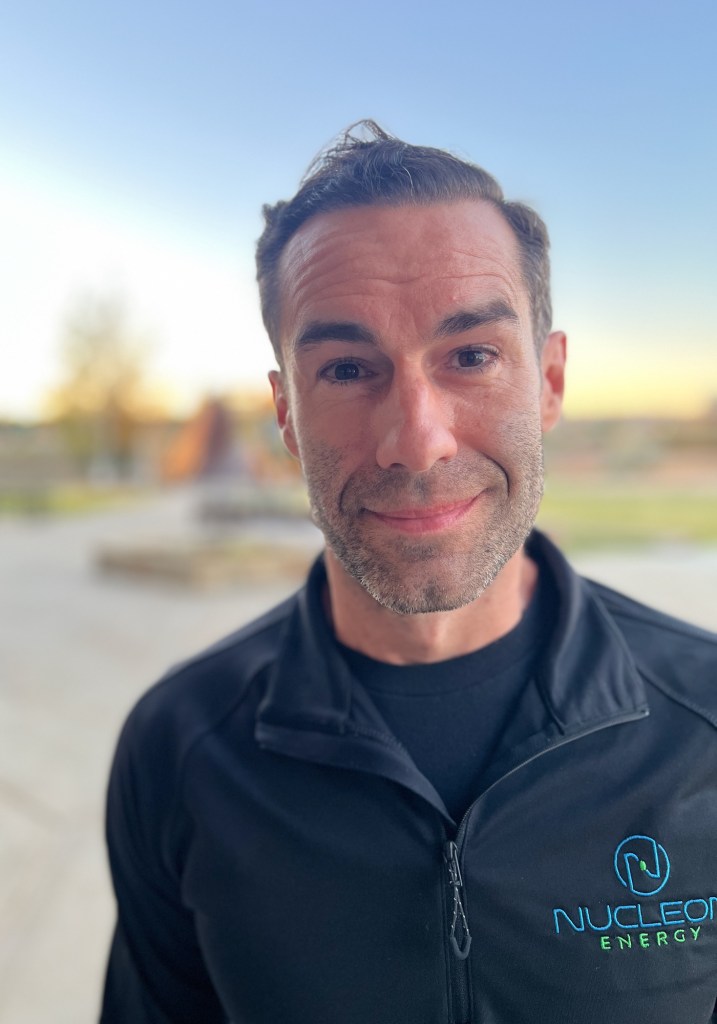
If all three trains are eventually built, it would double the nation’s current hexafluoride conversion capacity, Tourigny said.
From there, the hexafluoride — a gas packaged into vessels resembling large propane tanks — is typically shipped to an enrichment facility in New Mexico. After that, the material could potentially find its way back to Gillette at BWXT’s TRISO manufacturing facility.
“We have, of course, noticed that BWXT is considering making a TRISO facility in the area, and that’s interesting as well,” Tourigny said.
The Wyoming Energy Authority recently recommended Nucleon’s project for a $20 million Energy Dominance Fund grant to leverage matching dollars from others. Nucleon has indicated it may apply for an additional $10 million from the state program in the form of a loan.
In addition to state and federal agency reviews, the U.S. Nuclear Regulatory Commission is the primary authority to review, license and certify the facility, according to Tourigny. The company is already engaged in “pre-application” discussions with the commission and expects to begin filing formal applications to the regulatory agency in about a year, he added.
Initial impressions, questions
A lot of pizza was consumed Wednesday evening. But some attendees said they didn’t like the format of the event, which encouraged people to walk from station to station to ask Nucleon officials questions rather than a presentation where questions are fielded in front of the entire audience.
“They want to do it individually which, to me, I don’t think does service because nobody knows what they’re saying,” Campbell County resident Kyle Maretech said. “So I think a lot of people here are put off by that.”

Gillette resident Karin Ebertz said she was simply curious, adding that she’s “on the fence” about whether she’d like to see the project come to fruition.
“Production at the coal mines is decreasing,” she said. “It would be good to have some more economic development in our community, and I’m just really curious and interested in what this is.”
Rolf Arands, a chemical engineer and candidate for Gillette City Council, said he’d worked at a nuclear energy site in Europe and had a lot of questions about the chemical process and safety considerations.
“I’m not a nuclear expert, but I’ve been around the materials enough to know a lot of the safety protocols, and that’s what’s really on my mind.”
Nucleon is already sharing feedback from residents internally, “to ensure that the questions, comments and insights from neighbors are included as the project’s design progresses,” Tourigny told WyoFile following the event.
The post Campbell County residents weigh a second nuclear fuel facility appeared first on WyoFile .
Ver nota original ↗
¿Querés un resumen rápido de esta noticia, hecho por nuestra IA?