Utah lost the space shuttle 50 years ago. Now it has 2 spaceport sites
- Utah's Spaceport Exploration Committee spent a year assessing the viability of a space launch/reentry facility.
- The panel's findings suggest lawmakers should pursue the development of a new spaceport.
- Critics say an inland launch site is impractical and urge Utah leaders to focus on reentry and recovery.
While Utah’s vision for a local spaceport can be traced back to the Nixon administration, recent momentum has brought the project nearer to reality than ever before. However, a core debate has emerged regarding its primary function: whether the facility should serve as a launch site, a recovery location or combination of both.
Over 50 years ago, the state came up short in a national competition to host the launch site for the U.S. Space Shuttle program, losing out to Cape Canaveral’s Kennedy Space Center, which would distinguish itself as the starting point for all 135 shuttle missions before the program ended in 2011.

But state leaders gave the opportunity their best effort, including the Legislature’s passage of a 1971 proposal that created a “Space Port Committee,” made up of business representatives, elected officials, scientists and engineers. It was tasked with making the state’s best argument for becoming the new home for what was then the world’s first reusable spacecraft, one that launched on a rocket but landed back on Earth like an airplane. Unfortunately, the committee’s work product, a proposal to build a space center at Dugway Proving Ground, was bested by Florida’s pitch.
Since that time, the business of space has undergone a broad, transformative evolution. While it was once most notable as the exclusive domain of government entities, it’s now mostly driven by commercial enterprises. The sector, sometimes referred to as “newspace,” generates hundreds of billions of dollars in annual revenues. A 2024 report from McKinsey & Company projected the space economy growing at about twice the rate of global GDP is on pace to reach $1.8 trillion by 2035.
With an eye toward a burgeoning opportunity, Utah lawmakers rebooted a homegrown effort in 2025. The Legislature formed the Spaceport Exploration Committee, a modernized take on the 1970s plan, but this time aiming to assess the feasibility of a Utah-based facility that could play a broader potential role as a place to launch, land and even develop the next generation of space vehicles.
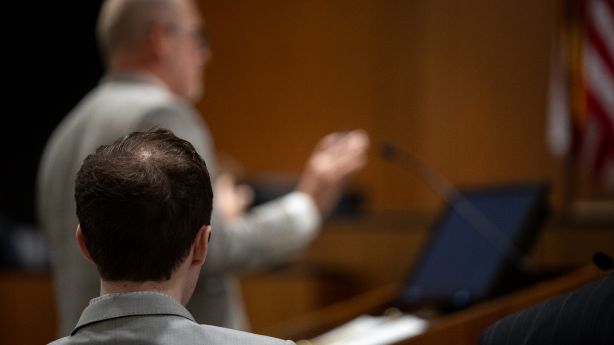
The committee completed its work last week, issuing a final report identifying two locations, Delta and Green River, for a potential new multimodal space facility and encouraging lawmakers to move forward with development efforts.

The committee winnowed a list of seven possible sites based on a set of metrics including capital costs, environmental impacts, economic potential and technical/operational considerations. Sites located near Delta and Green River easily outstripped other options in the screening process and the committee highlighted what set them apart.
Delta, located in Millard County, led all seven locations on market demand and on technical and operational factors, benefiting from Utah Test and Training Range military operating and restricted-airspace agreements, a favorable flight safety analysis, nearby major highways and a rail line and abundant Bureau of Land Management and state lands, according to the report. The proposed Black Hills National Guard Range would also complement site operations. Delta is also proximate to the Wasatch Front and Salt Lake City International Airport, presenting market advantages.
Green River, located in Emery County, led all seven sites in capital and operating costs and in proximity to population centers and resources. Its advantages include a favorable flight-safety analysis, historic launch heritage and a usable restricted corridor, per the report. It is also close to an interstate, major highways and a rail line, with abundant Bureau of Land Management and state lands. Its restricted airspace offers a potential advantage for point-to-point testing.

The 18-member committee, co-chaired by state Sen. Ann Milner, R-Ogden, and Utah Department of Transportation Commissioner Carlo Braceras, also issued four recommendations:
- Secure site control
- Begin Federal Aviation Administration licensing and related National Environmental Policy Act review
- Authorize the Utah Department of Transportation to lead ongoing development efforts
- Reauthorize the Spaceport Exploration Committee to oversee those efforts
The report concludes that both launch and reentry services are feasible in Utah and identifies launch and reentry routes that meet FAA safety requirements at both preferred locations.
But some industry experts and at least one committee member say Utah should set different priorities. They believe the most viable route for Utah to elevate its standing in the newspace sector is to focus on reentry and recovery and, for the time being, deprioritize the pursuit of a launch facility.
Making the case for a focus on reentry

Varda Space Industries co-founder and president Delian Asparouhov, who testified before the Spaceport Committee last year, argues the state’s geography and experience receiving returning spacecraft offer a stronger foundation for investment in reentry facilities over a commercial launch pad.
In a Deseret News interview, Asparouhov described Utah as poorly positioned for commercial rocket launches but particularly promising for landing vehicles returning from orbit. His central recommendation is that the committee concentrate its limited resources on the capability he believes Utah can realistically develop.
“There is a compelling case for investing in reentry infrastructure,” he said.
For Asparouhov, reentry infrastructure would support an emerging business model: manufacturing products in orbit and bringing them back to Earth. Varda’s work focuses on pharmaceutical processing in microgravity, where different conditions can change how existing therapeutic molecules crystallize. He distinguished that work from discovering entirely new drug molecules, describing its potential in terms of reformulation and delivery.

The company’s growth plans, he said, include more frequent missions and greater payload capacity. A dependable landing location is a practical business need, not just a long-term space ambition. Asparouhov said he sees an opportunity for Utah to build infrastructure that could serve Varda and other companies pursuing returning spacecraft.
Asparouhov’s interest is grounded in Varda’s experience. The California company returned its first space manufacturing capsule to Utah’s Dugway Proving Ground in 2024, but he described the process of securing the return as difficult. For subsequent missions, Varda moved to a private landing range in Australia, where he said the arrangements were more straightforward.
Despite that experience, Asparouhov said he would welcome a return to Utah. He pointed to its expansive landing areas and history of government spacecraft returns as advantages. He also expressed enthusiasm that state leaders are examining the opportunity.
“I love Utah and I’d love for it to be Utah for reentry,” said Asparouhov, a former Utah resident and West High School graduate.
A former NASA leader weighs in

Utah should evaluate a potential spaceport around the markets it can realistically serve, with spacecraft reentry and recovery offering a promising starting point, former NASA chief technologist A.C. Charania told the Deseret News. He said Utah’s effort would benefit from a phased approach that builds on the state’s geography, aerospace expertise and experience receiving vehicles returning from space.
For launch, that means determining which orbits rockets could reach from Utah, which customers need those orbits and whether their business could support the required infrastructure. Charania cautioned that growth in the overall space industry does not automatically translate into an accessible market for a new launch site.
“It’s about product market fit, space market fit,” Charania said. “What’s the actual addressable market for what you’re trying to do?”
Charania outlined several factors that shape launch-site viability: orbital trajectories, risks to people beneath the flight path, regulatory requirements, operating costs and launch frequency. An inland location also raises questions about where separated rocket stages would land, particularly when they cannot return to the launch pad.
“Where is it going to land?” he said. “Arizona, Idaho, Montana? Canada?”

Charania said some orbital trajectories from Utah might be possible, while others would be difficult or unavailable. Reentry and recovery, he suggested, could provide a more practical opportunity. He said he is tracking 10 to 15 reentry companies internationally and sees potential demand for landing locations that offer competitive costs, accessible facilities and a workable regulatory environment. Utah’s land, airspace and demonstrated spacecraft returns give it advantages worth examining.
“Geography is destiny,” he said. “In Utah, it’s one of your strongest natural advantages.”
Charania suggests Utah leaders take an incremental “crawl, walk, run” approach to building out a space facility, and noted that starting with reentry would not necessarily foreclose eventual launch capabilities. Instead, it could help Utah develop operational expertise, attract companies and establish revenue opportunities before pursuing a more complex facility. He pointed to pharmaceutical manufacturing and fiber-optic production as examples of activities that could contribute to an ecosystem around returning spacecraft.
Why a committee member favors reentry

Aaron Starks, president and CEO of Utah aerospace and defense advocacy group 47G and Spaceport Committee member, wants Utah to pursue space reentry capabilities alongside its exploration of a potential launch site, arguing that returning vehicles and materials from orbit could offer the state a more affordable and distinctive role in the space economy.
“My personal take is Utah has a huge, outsize role to play in space but I’m more bullish on reentry than I am on launch,” he said. “I think launch capacity would be a nice feather in our cap and a competitive advantage but we should really be heads-down on reentry.”
Speaking about his work on the committee, Starks distinguished his own recommendation from the panel’s position. He said the committee remains open to evaluating multiple possibilities and that its original vision centered on pursuing launch capabilities.
“I know that the committee is open and ready to evaluate a lot of things,” Starks told the Deseret News.
He argued that Utah should avoid trying to duplicate established coastal launch operations and instead identify opportunities suited to the state’s geography, research institutions and aerospace supply chain.
“We’re not going to compete with Kodiak, Vandenberg or Florida,” Starks said. “They have established ecosystems and are in coastal regions. Why would we even do that?”
For Starks, the financial distinction is central to that argument.
“We are going to spend a ton of money to launch but can spend a fraction of that and become the reentry capital of the U.S.,” he said.
Starks said he views a potential spaceport as part of a broader aerospace ecosystem rather than a stand-alone facility. He pointed to advanced composite testing at Weber State University’s MARS Center, rocket propellant production in southern Utah, satellite expertise being developed at Utah State University, university investments and potential opportunities in horizontal takeoff and nuclear propulsion research.
The underlying goal, he said, is to connect those capabilities and build on investments already underway. But he emphasized that sustained legislative support will be important to carrying the effort forward.
Manufacturing the space materials of tomorrow

The MARS Center could complement a future Utah spaceport by developing advanced aerospace materials and helping companies move new technologies into production, executive director Benjamin Garcia told the Deseret News. During a recent facility tour, Garcia described a potential spaceport role extending beyond launches to include rocket research, development and testing.
“One of the things that we would like to do with the spaceport is build out an R&D center at the facility that can address some of the rocket technologies that need to be developed,” Garcia said.
Garcia identified a current need for solid rocket motor test beds and said pairing that capability with materials development could broaden access to technologies and infrastructure that, he noted, have historically been concentrated within a small number of companies.
“We need to grow that ecosystem,” Garcia said. “We need to increase that capability. The spaceport offers that and what we’re doing at MARS offers that.”
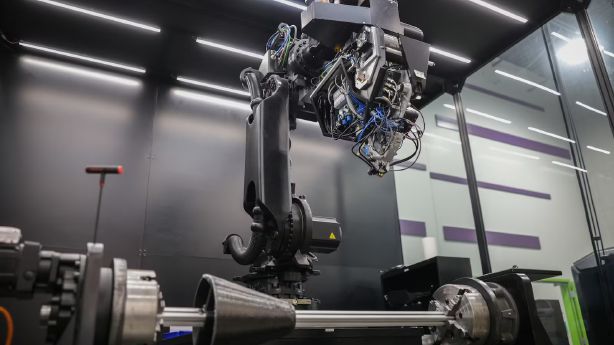
Garcia said MARS opened in 2024 with approximately $20 million in seed funding from the state. Its focus is improving the materials and manufacturing processes used in rocket motors, heat shields and vehicles that travel at high speeds through the atmosphere. The center has dual goals of helping to make the manufacturing of existing materials faster and more affordable while concurrently developing higher-performing composite materials.
Rather than operate solely as a traditional research laboratory, Garcia said, MARS is building a demonstration factory where industry partners can evaluate advanced manufacturing technologies before investing in them.
“Not everyone has the time or the money or the expertise to really vet and mature this technology,” Garcia said. “So the MARS Center is taking that on and we partner with industry to help them adopt these technologies.”

The goal, he said, is to shorten a technology’s path into a Defense Department program from the typical 10 to 15 years to potentially three to five years by addressing manufacturing challenges early.
The MARS facility brings together composite fabrication, tooling, thermal processing, machining and inspection. Garcia highlighted equipment intended to dramatically reduce production times for high-temperature carbon-carbon (carbon fibers laid up on a carbon understructure) components. A solid rocket motor throat that takes nine to 12 months to manufacture using existing processes could potentially be produced much faster.
“With this technology, we’re talking one to two days,” Garcia said.
The center’s broader purpose is to connect university expertise with industry needs and strengthen Utah’s aerospace and defense economy. Garcia said MARS has brought in more than 70 student interns since 2024, with 15 to 20 working during a typical semester. The center’s financial goal is to become self-sustaining through project work rather than rely indefinitely on state startup funding.
“The priority of the center is to get technology into the hands of our industry folks and supporting our national security needs, our aerospace defense needs,” Garcia said.
For the Spaceport Exploration Committee’s work, MARS illustrates an existing research and manufacturing capability that could support a larger space economy — and a proposed spaceport could provide additional infrastructure to help that capability grow.
Said Garcia, “We want to make Utah kind of the source of innovation in these types of things.”
Ver nota original ↗
¿Querés un resumen rápido de esta noticia, hecho por nuestra IA?