Democrat Crowley defeats Trump ally Tiffany in Wisconsin governor's race, ABC News projects
MADISON, Wis. -- ABC News projects that Democrat David Crowley will defeat a Republican with close ties to President Donald Trump on Tuesday, rising from a childhood in one of the nation's poorest neighborhoods to become the first Black person to lead the battleground state.
Crowley's win over U.S. Rep. Tom Tiffany marks the first time in Wisconsin's 178-year history that Democrats will hold the governor's office for more than eight consecutive years. He will replace Gov. Tony Evers, who decided to retire instead of seeking a third term.
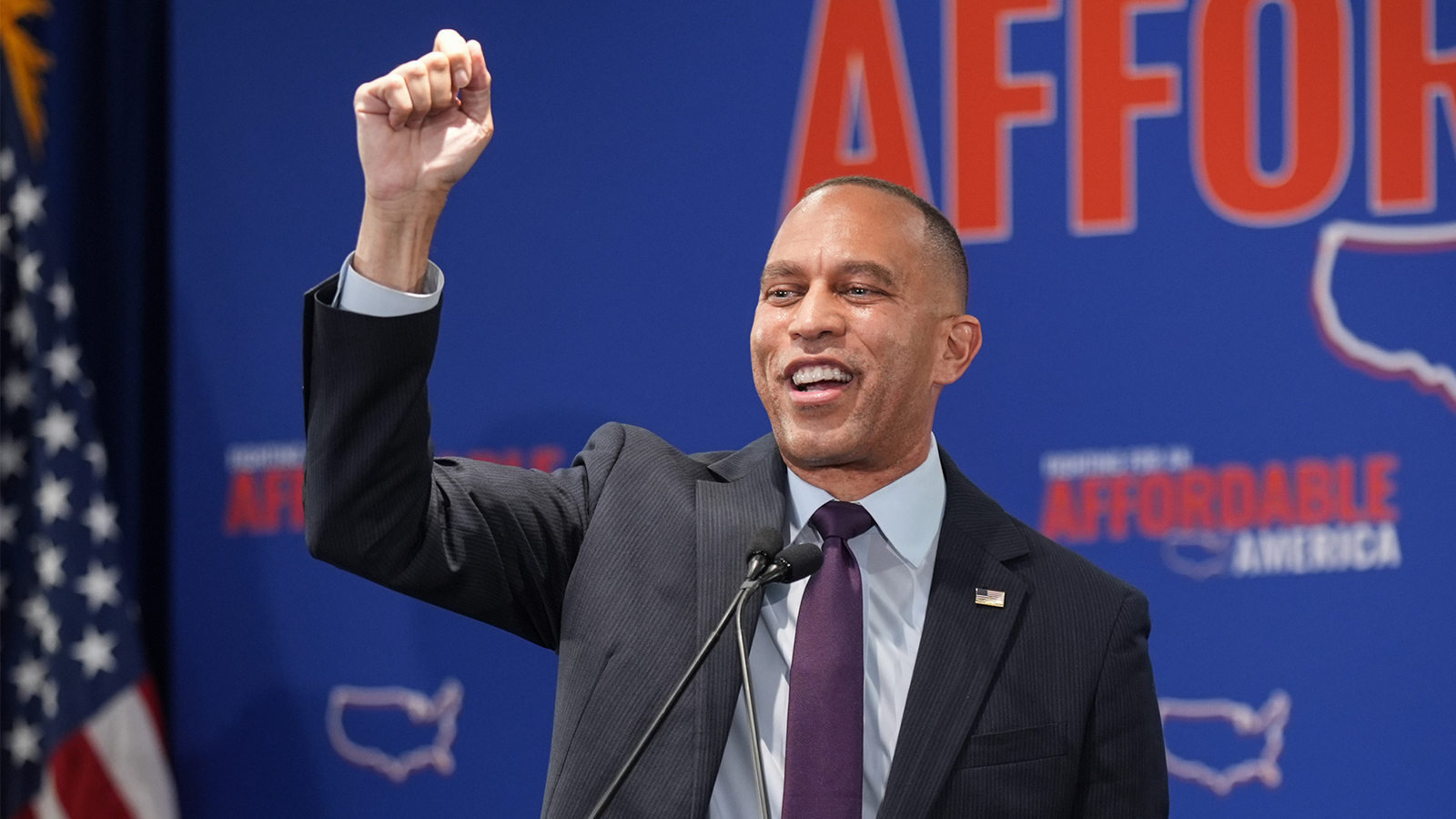
Crowley's victory came on a night of big wins for the Democrats. But he told his supporters in his victory speech that he would be a governor for everyone, including those who didn't vote for him.
"Wisconsin isn't a red state or a blue state," he said. "We never have been. In a state this close, nobody gets to govern alone."
He promised to work with Democrats and Republicans on lowering costs in Wisconsin. Democrats were hoping to flip control of the Legislature for the first time in 16 years.
A loyalist to President Donald Trump faces a Democrat seeking to become Wisconsin's first Black governor.
The victory blunts Republican efforts to claw back control of a state that Trump won in two of his three presidential campaigns. It also ensures that a Democrat will be leading Wisconsin during the next race for the White House, when the state will likely continue its role as a key battleground.
Crowley, 40, was born in the north side of Milwaukee in one of the country's poorest neighborhoods, and his parents battled substance abuse and evictions. But Crowley turned to community organizing and politics, winning election to the Legislature at age 30. He served just over three years before being elected in 2020 as Milwaukee County executive.
His path to the governor's office was tumultuous. He dropped out of the race when he appeared unlikely to win the Democratic nomination, only to rejoin at Evers' urging. He defeated a democratic socialist in the August primary, then faced off with Tiffany, who received most of his financial support from just three billionaires.
Tiffany, who survived a small plane crash while campaigning, was weighed down by the president's record-low approval numbers in Wisconsin, a state that Trump won twice.
Democrats were hoping for a trifecta — winning the governor's office and flipping both legislative chambers. They have not had full control of Wisconsin state government since 2010.
An open governor's race for the first time in 16 years
Wisconsin's governor's race was open for the first time in 16 years after Evers decided against seeking a third term.
The last open race for governor was in 2010, when Democratic incumbent Jim Doyle, similar to Evers, opted not to seek a third term. Republican Scott Walker won that year, and over the next eight years enacted a wide array of Republican priorities that dramatically scaled back union rights, slashed taxes and started requiring voters to show identification at the polls.
Evers, who normally doesn't endorse in primaries, got behind Crowley in an effort to blunt the rising campaign of democratic socialist Francesca Hong. Crowley won by less than half a percentage point.
Wisconsin is used to close races.
Trump, who endorsed Tiffany, won Wisconsin in 2016 and 2024 and lost in 2020. Those three presidential elections are among five of the past seven in Wisconsin that have been decided by less than a percentage point.
In 2018, Evers defeated then-Gov. Scott Walker by 1.1 percentage points. Evers won reelection by 3.4 points in 2022, a landslide by Wisconsin standards.
Tiffany cast Crowley as pro-data center; Crowley ran on affordability
Tiffany tried to portray Crowley as an advocate for building data centers in Wisconsin, referring to him as "Data Center David Crowley." Tiffany ran an ad that included a clip of Crowley saying Wisconsin could become the "AI and data hub not only for the entire country, but for the entire globe."
But Tiffany also said positive things about data centers in the past. Crowley changed his position on data centers late in the campaign, coming out in favor of a moratorium in October. Tiffany did not call for a moratorium on construction.
Tiffany also tried to portray Crowley as weak on crime and said Crowley would increase taxes as governor to pay for his agenda, which included expanding healthcare and fully funding public schools.
Crowley hammered Tiffany on economic issues, saying his loyalty to Trump and support of the war in Iran was to blame for the high gas prices that were hurting Wisconsin residents, particularly farmers. Crowley also ran in support of overturning the 15-year-old state law known as Act 10 that effectively ended collective bargaining rights for most public workers.
Tiffany, 68, voted for that law when he was a member of the Legislature. Tiffany was elected to Congress in 2020, representing a mostly rural district after nine years in the Legislature.
Crowley also called for expanding Medicaid coverage, increasing funding for public schools and increasing access to child care.
Competitive US House races
One of the most competitive U.S. House races, in Wisconsin's 3rd Congressional District, could show whether a close alliance with Trump helps or hurts Republicans in tight contests.
Republican Congressman Derrick Van Orden, a Trump ally and retired Navy SEAL who attended the "Stop the Steal" rally on Jan. 6, 2021, faces Rebecca Cooke, a moderate Democrat backed by prominent national figures in her party. Cooke grew up on a dairy farm and has worked as a waitress.
It is a rematch of their 2024 race, which Van Orden won by fewer than 3 percentage points.
The district, covering much of southwestern Wisconsin, only recently flipped to Republican control. Democratic Rep. Ron Kind held the seat for more than two decades until 2023, when he retired.
In 2020, Van Orden had challenged Kind for his seat, but lost the race by fewer than 3 percentage points. In 2022, after Kind had announced he would not seek reelection, Van Orden flipped the seat by beating out Democratic challenger Brad Pfaff by fewer than 4 percentage points.
While some Republicans in competitive races have distanced themselves from Trump, Van Orden has leaned into his ties to the president. He has continued to praise Trump and his administration on social media and spoke at the Republican midterm convention in September.
At an October candidates' forum, Van Orden touted his support for Trump's One Big Beautiful Bill — a sweeping tax and spending law — and defended the president's tariffs on foreign goods. Cooke, in turn, linked rising costs to Trump's war in Iran and criticized Van Orden for voting against measures to end U.S. involvement.
Through mid-October, Cooke had raised about $12.7 million for her campaign, compared with Van Orden's $9.1 million. Outside groups have poured millions more into the race.
Van Orden will need to turn out Republicans, including those whose support for Trump has cooled, to vote in a midterm election when turnout is typically lower than in presidential election years. Cooke, for her part, is seeking to improve on her 2024 showing, when she lost by just over 11,000 votes.
Another competitive race is unfolding in Wisconsin's 1st District, just south of Milwaukee, where GOP incumbent Rep. Bryan Steil, in office since 2019 and seeking a fifth term, faces Democrat Mitchell Berman, an emergency room nurse. Steil has outraised Berman as of mid-October, $6.4 million to $2 million. Trump carried the district by fewer than 5 percentage points in 2024.
ABC News contributed to this report.
The video in the player above is from a previous report.
Copyright © 2026 by The Associated Press. All Rights Reserved.
Ver nota original ↗
¿Querés un resumen rápido de esta noticia, hecho por nuestra IA?