Election results for billionaire tax, voter ID measure and other California props
From affordable housing funding to taxes on billionaires, California voters will be asked to vote on a wide range of issues on the November 2026 General Election ballot.
Scroll to see live results when the polls close at 8 p.m. in California.
Proposition 1: Affordable housing bonds
Prop 1 would allow the state to sell $11.25 billion in bonds to fund affordable housing projects. $1.25 billion would go towards veteran housing, while the rest would support rental housing, student housing, farmworker housing and homeownership programs. The California Democratic Party and Gov. Gavin Newsom support the proposition, while some GOP lawmakers oppose it and the California Republican Party is neutral.
-
Prop 1: Bonds For Affordable Housing Programs
52% expected vote in
-
Yes
59.12%
3,998,026 -
No
40.88%
2,764,627
-
Proposition 2: Rainy day fund
Prop 2 would raise the limit on the amount of general fund tax revenue the state can deposit into its rainy day fund. The limit is currently 10%, and Prop 3 would raise it to 20%. It also allows spending some tax revenue to pay off California’s federal unemployment insurance debt. The California Democratic Party and Governor Gavin Newsom support it, while the CA GOP and Reform California stand in opposition.
-
Prop 2: Increases Ca Rainy Day Fund
52% expected vote in
-
Yes
59.62%
4,029,399 -
No
40.38%
2,728,617
-
Proposition 3: Permanent high income tax
Prop 3 would make the high income tax supporting public education permanent. In 2012, voters approved an income tax on high earners: 10.3% for people making upwards of $360,000 up to 12.3% for people making more than $721,000. 89% of the dollars raised go towards public K-12 schools, while 11% goes towards community colleges. However, that tax has an expiration date of 2031. Prop 3 would do away with that sunset clause.
-
Prop 3: School Funding By Extending Tax On High Incomes
53% expected vote in
-
Yes
58.55%
3,988,246 -
No
41.45%
2,823,810
-
Proposition 4: Election campaign public funding
Prop 4 would open the door for public campaign financing across California, both at the state level and within local governments. Public financing refers to government programs that allow some spending on campaigns. The practice has been banned throughout most of California since 1988. Five municipalities, including LA and San Francisco, allow it for local elections. The CA Democrats and League of Women Voters support Prop 4, while the CA GOP and Reform California oppose it.
-
Prop 4: Repeals Ban On Public Funding Of Campaigns
52% expected vote in
-
No
52.22%
3,487,950 -
Yes
47.78%
3,191,466
-
Proposition 5: Recall election changes
Prop 5 would separate the election to recall an elected official from the election to replace them. Under the current system, voters are asked to make those decisions simultaneously. Prop 5 would make those distinct election processes. A candidate who is recalled would be eligible to run in the successor election. If the governor is recalled, the lt. governor would serve until a new governor is elected. The California Democrats and League of Women voters support Prop 5, while the CA GOP and Reform California oppose it.
-
Prop 5: Changes State Recall Election Process
51% expected vote in
-
Yes
50.21%
3,311,501 -
No
49.79%
3,284,447
-
Proposition 37: Home loan program
Prop 37 would create low-cost mortgages. It would allow– though not demand– California’s Housing Finance Agency to borrow up to $25 billion to assist people purchasing homes. They would repay the loan in monthly installments to private lenders, and it is those private lenders who are accountable if the homebuyer defaults, rather than the taxpayer. Anyone earning up to twice the area’s median income would be eligible for the loans. The California Democratic Party and Xavier Becerra are in support of this proposition, while Reform California opposes, and the CAGOP is neutral.
-
Prop 37: Loan Program For Middle-Income New Home Buyers
52% expected vote in
-
Yes
60.75%
4,104,882 -
No
39.25%
2,652,062
-
Proposition 38: Medical research bonds
Prop 38 would allow the state to borrow $8.4 billion to fund immunology research. The bond would allocate dollars to research fighting cancer, Alzheimer’s and heart disease. Half the money would go to a research institute affiliated with the University of California and the other half would be distributed to public universities and nonprofits. Drugs developed from this research would be discounted for Californians and 10% of revenue from the drugs would go back into the state’s piggybank. The CA Democrats and CA GOP support it, while the League of Women Voters opposes it.
-
Prop 38: Bonds For Immunology Research
52% expected vote in
-
Yes
56.37%
3,806,947 -
No
43.63%
2,946,967
-
Proposition 39: Voter ID
Prop 39 would require California voters to present ID at the polling place, or include the last four digits of a government-issued ID on their mail-in ballot. Currently, California requires an ID card and social security number to register to vote, but you do not have to present it at the polls. The prop would also require election officials to verify all registered voters are citizens. Noncitizens are already prohibited from voting in federal elections. The California Republican Party and Reform California support this effort, while the California Democratic Party and ACLU oppose it.
-
CA – Proposition 39: Require voter ID
53.6% expected vote in
Source: NBC News Decision Desk
-
Too Early to Call
-
No
59.1%
4,083,382 -
Yes
40.9%
2,826,807
-
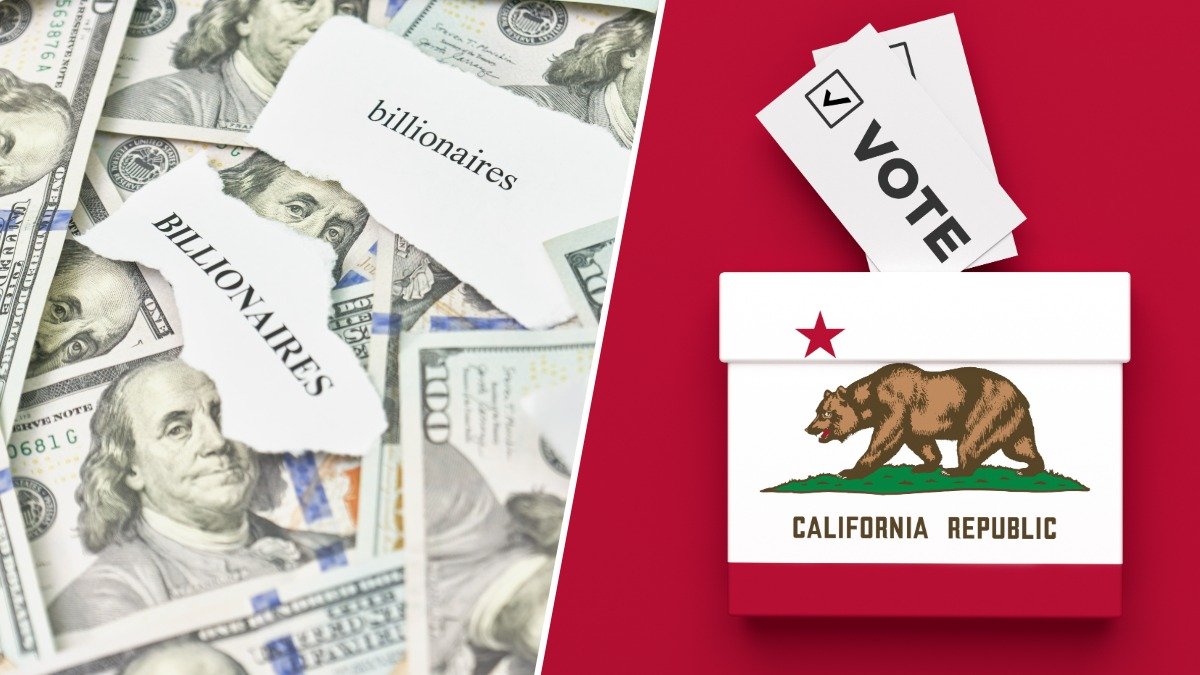
Proposition 40: Billionaire tax
Prop 40, also known as the “billionaire tax” is a one-time, 5% tax on the asset of billionaires who call California home. The funds would go towards healthcare. Proponents, including the California Democrats, say it will serve as a stopgap measure to compensate for federal funding cuts. Opponents include the CAGOP, Gov. Gavin Newsom and gubernatorial candidate Xavier Becerra.
-
CA – Proposition 40: One-time wealth tax over $1 billion
53.6% expected vote in
Source: NBC News Decision Desk
-
Too Early to Call
-
No
56.4%
3,902,784 -
Yes
43.6%
3,013,040
-
Proposition 41: Special tax audits
Prop 41 would require the state auditor to review new special tax proposals before they go to voters. A special tax is a tax with a specific purpose (e.g. housing or infrastructure), rather than dollars that would go towards general operations. This would make it harder to pass new taxes of that nature. Under this proposition, new special taxes would count towards California’s spending limit, which could induce automatic refunds, which could reduce funding for other programs or services. Notably, if Prop 41 passes with more votes than Prop 40, it would nullify the billionaire tax.
-
CA – Proposition 41: State tax audits and spending limits
52.7% expected vote in
Source: NBC News Decision Desk
-
Too Early to Call
-
No
52.3%
3,553,747 -
Yes
47.7%
3,243,597
-
Proposition 42: Property taxes
Prop 42 would prohibit taxing the simple ownership of assets, which is what Prop 40, the controversial billionaire tax, is premised upon. It would make it more difficult to institute a wealth tax. Generally, assets like personal property are only taxed when they are sold or used to make money. Notably, like Prop 41, if Prop 42 passes with more votes than Prop 40, it would nullify the billionaire tax.
-
CA – Proposition 42: Ban on new personal property taxes
53.2% expected vote in
Source: NBC News Decision Desk
-
Too Early to Call
-
Yes
54.6%
3,750,294 -
No
45.4%
3,112,639
-
Proposition 43: Special tax limitations
Prop 43 would make it more difficult to pass special taxes in cities or counties. A special tax is a tax with a specific purpose (e.g. housing or infrastructure), rather than dollars that would go towards general operations. It can end up on the ballot in two ways: elected officials can put it on, which requires 2/3 majority approval from voters, or a citizen-led initiative can gather enough signatures to wind up on the ballot, which only requires a simple majority. A “yes” on 43 would raise the threshold for the latter, so they both require 2/3 of voters to approve.
-
Prop 43: Local Government Taxes Require More Votes
52% expected vote in
-
No
54.61%
3,664,009 -
Yes
45.39%
3,045,628
-
Proposition 44: Health clinics funding
Prop 44 would require community health clinics that serve low-income people to spend more on direct patient care. They would have to spend 90% of annual revenue on that direct care, and what qualifies would be defined by the Attorney General. The state can fine clinics that fail to spend the full 90%. SEIU-United Healthcare Workers West is backing the proposition, while both the California Democrats and California Republicans oppose it.
-
Prop 44: Community Clinics Program Spending Requirements
52% expected vote in
-
No
82.35%
5,517,307 -
Yes
17.65%
1,182,269
-
Proposition 45: Environmental review
Prop 45 would speed up environmental reviews for essential infrastructure, including housing, schools and roads. It would change the state’s bedrock environmental review law, which has been in place for over half a century. Supporters include the California Chamber of Commerce, California Hospital Association and California Council for Affordable Housing. Opponents include the California Democratic Party and Sierra Club of California.
-
Prop 45: Changes Environmental Reviews For Some Projects
52% expected vote in
-
No
54.18%
3,618,199 -
Yes
45.82%
3,060,254
-
2026 California Ballot Propositions
Click on a proposition to see more information about what will happen if it does or doesn’t pass.
Source: NBC Staff Reports • Interactive: Annetta Stogniew
let lang = "english";Ver nota original ↗
¿Querés un resumen rápido de esta noticia, hecho por nuestra IA?