These are the skin cancer warning signs you may overlook as you age
(Aging Untold) — Skin cancer can appear in more ways than a changing mole.
Warning signs people may overlook
Some of the warning signs that people might overlook are having sores that don’t heal or moles that bleed easily, Dr. Rhea Rogers, a board-certified physician, said.
Moles can change and that is somethig people don’t always track, Rogers said, and shared what doctors look for.
“We look at the asymmetry, how symmetric is it? Is it the border of it? Does it change? The color, the color can change. The diameter, and then evolving. Is it changing in its appearance to you?” Rogers said.
Changes matter even for spots people have had for years, gerontologist “Sam” Cradduck added.
“A millimeter can matter a lot,” Cradduck said.
She said people should track whether a mole has grown, changed its symmetry or started to bleed.
Where skin cancer can hide
While people often are told to check sun-exposed areas, Rogers said skin cancer can show up elsewhere.
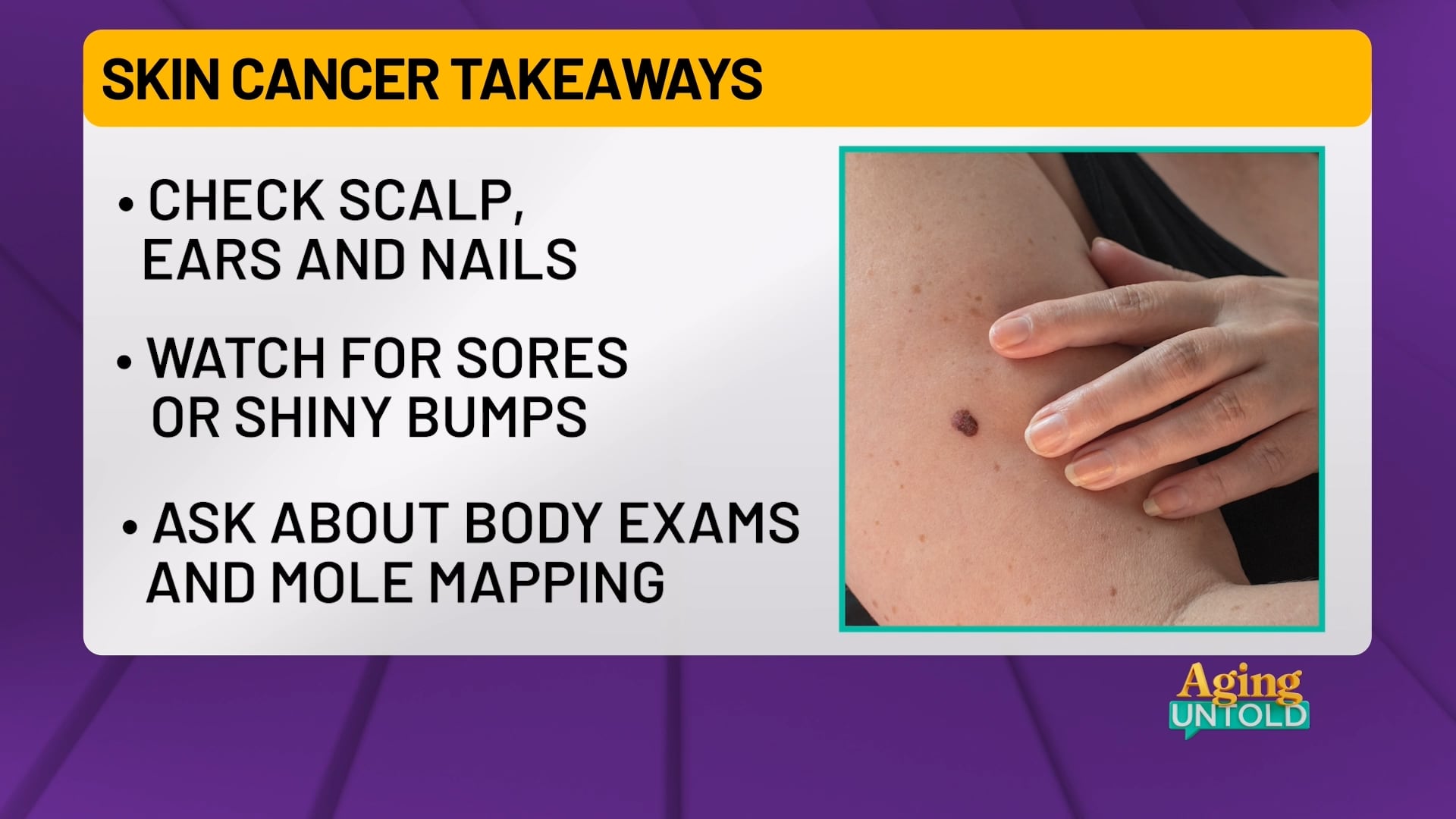
“You have to look everywhere because they can hide,” Rogers said. “They can be behind your ears, between your toes, underneath the nails.”
She said a doctor’s exam or help from another person can cover places people can’t see, such as the scalp.
“They don’t always look scary,” Rogers said. “But that’s what makes them so dangerous.”
Aging expert Amy O’Rourke described her own experience when she went to a dermatologist about a brown spot on her cheek.
A whole body scan revealed cancer on top of her head, she said. It was squamous cell, and she had surgery.
Aging well coach Katherie Ambrose said she recently found a dermatologist, had a full body scan, and her husband had one as well.
Rogers suggested that people should check with their insurance, because some plans cover an annual dermatology exam, like a well woman exam.
Risk factors and sun damage
Around three-quarters of O’Rourke’s family has had skin cancer, she said.
Asked whether the risk is genetic or environmental, Rogers said fair skin is a risk factor, along with age and family history.
“So probably both,” she said.
In addressing sun damage, Rogers warned that UVA and UVB light are invisible and can pass through glass.
Melanoma is usually linked to intense, intermittent but deep sunburn, she said.
“It spreads very quickly,” Rogers said. “So you definitely want to pay attention.”
While melanoma presents more like a mole, squamous cell and basal cell cancers are more likely to be pinkish, itchy or sores that don’t heal, she said.
Rogers also addressed a myth: that African Americans don’t need sunscreen.
“Yes, you need sunscreen,” Rogers said.
Sunscreen protects against damage to cells and DNA, she said.
Sun protection
In addition to sunscreen, sun-protective clothing is also available, the hosts said, including rash guards, sun guards, UV clothing and wide-brimmed hats.
Key takeaways
- Skin cancer can show up in unexpected places, including the scalp, ears or under the nails.
- Watch for warning signs, including sores that will not heal or shiny bumps on the skin.
- During your annual dermatology visit, request a full body exam and ask about mole mapping to track changes over time.
This program is provided for educational and informational purposes only and does not constitute providing medical advice or professional services. The information provided should not be used for diagnosing or treating a health problem or disease, and those seeking personal medical advice should consult with a licensed physician. Always seek the advice of your doctor or other qualified health provider regarding a medical condition. Never disregard professional medical advice or delay in seeking it because of something you have seen on this program. If you think you may have a medical emergency, call 911 or go to the nearest emergency room immediately. No physician-patient relationship is created by this program or its use. Aging Untold/Gray Media, nor its employees, contractors or agents, nor any contributor to this program, makes any representations, express or implied, with respect to the information provided herein or to its use.
Ver nota original ↗
¿Querés un resumen rápido de esta noticia, hecho por nuestra IA?