‘I’ll veto right here’: Gov. Ferguson promises Gee he’ll reject any move to lower WA millionaires’ tax threshold
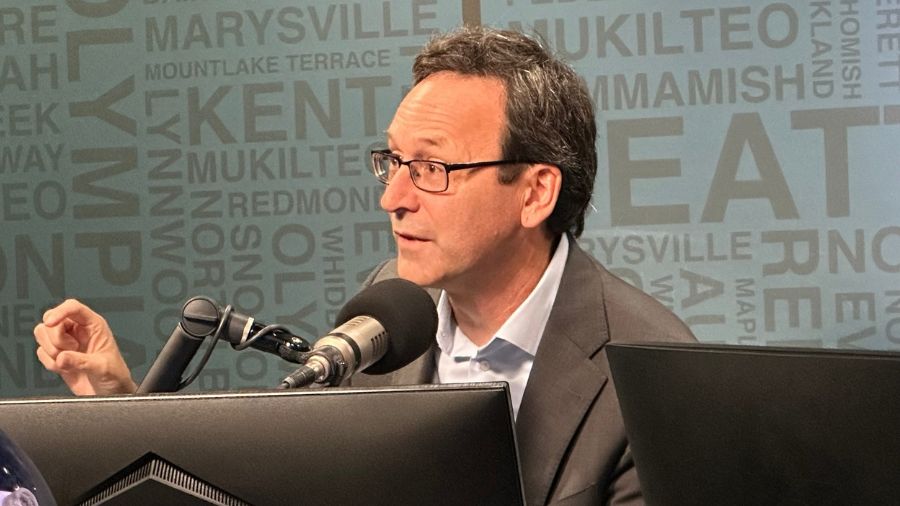
Gov. Bob Ferguson offered more than a renewed promise to block any attempt to lower Washington’s millionaires’ tax threshold: He volunteered to veto the legislation inside the KIRO Newsradio studio.
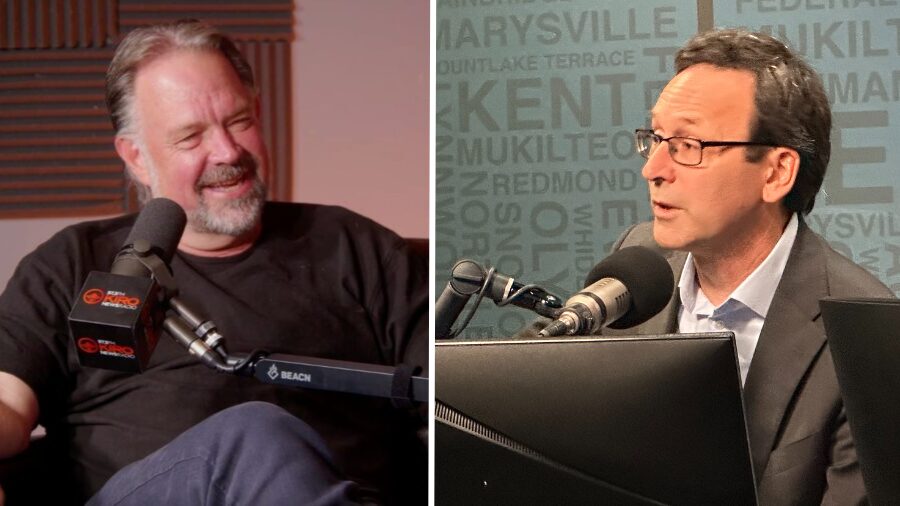
With early election returns showing the proposed repeal losing, KIRO host Gee Scott pressed Ferguson on “The Gee and Ursula Show” about whether people earning less than $1 million a year should worry about being taxed next.
Gee asked whether Ferguson would maintain his veto pledge even if legislation lowering the threshold arrived on his desk with strong Democratic support.
“I’ll come right in here with you guys and veto it right here. How’s that?” Ferguson said.
The governor doubled down on the offer.
“I’ll veto right here. We’ll get the cameras rolling. We’ll have a conversation,” Ferguson said.
Ferguson emphasized that he has communicated his position both publicly and directly to lawmakers. He also described the law’s million-dollar threshold as indexed to increase over time, rather than decrease.
Gov. Ferguson calls early returns a statewide message
Ferguson argued that opposition to repealing the tax extended well beyond King County. He pointed to early returns in counties across eastern and western Washington as evidence that voters saw benefits in keeping it.
“This is not just some King County voters thing. This is eastern Washington, western Washington, all across the state,” Ferguson said. “Voters are saying no to repealing the millionaire tax because they know it makes life more affordable for them, for their pocketbook, and for small businesses.”
Those were the governor’s conclusions about preliminary results, not a final accounting of the election.
When Gee asked what Ferguson would tell listeners who believe the threshold will eventually fall, the governor distinguished his own commitment from what a future administration might do.
“So, look, this is not a thing that’s going to happen any time as long as I’m governor. It’s not going to happen,” Ferguson said.
He also pointed to Washington’s initiative process as a way voters could challenge a future expansion. His argument was that voters could use that process to push back, not that his veto pledge permanently binds future governors or legislatures.
Could the tax change without a lower threshold
KIRO fill-in host Mike Lewis raised another possibility: Lawmakers might leave the million-dollar threshold intact but change which types of income count toward it.
He asked whether Ferguson would consider such modifications or believed the law should remain unchanged.
“Yeah, I mean that that’s not even a conversation at this point,” Ferguson said.
Instead, the governor returned to the provisions he had emphasized during the campaign, including business and occupation tax relief for small businesses and free meals for K-12 students.
“It includes free meals for every K through 12 student in Washington State. That’s literally a tax break of $1,300 a year for working families and hungry kids can’t learn,” Ferguson said.
Ferguson characterized those provisions as reasons voters were rejecting repeal.
After the interview, Lewis remained interested in amendments rather than outright repeal. He noted that opposing a lower threshold does not necessarily answer questions about changes to the tax’s definition of income.
Why should taxpayers trust Olympia with more money?
Gee also challenged Ferguson on state spending, asking why residents should trust Olympia with additional revenue when they still see homelessness, struggling schools, and affordability problems.
Ferguson acknowledged what he viewed as irresponsible budgeting before he became governor. He described a practice that let lawmakers assume revenue growth above the official forecast and argued it contributed to the budget shortfall he inherited.
“When I became governor, I made it clear I’m not signing any budget that assumes any revenue beyond what the experts tell us we’re going to have, and that’s what we’ve been doing the last two years,” Ferguson said.
He also recognized taxpayers’ right to question how their money is used.
“But I think taxpayers are more than fair to say, ‘Hey, we want to scrutinize how you’re spending our taxpayer dollars.’ Because guess what, they are their taxpayer dollars, and that’s why I’ve been very serious about getting our budget under control,” Ferguson said.
On the possibility of a Democratic supermajority, Ferguson cautioned that early returns did not indicate two-thirds Democratic control in both legislative chambers. He nevertheless acknowledged that concentrated power carries responsibilities.
“But I do think any time one party, whichever party it is, has complete control, you’ve got to be thoughtful about that,” Ferguson said.
RELATED STORIES

Gee wants another conversation about small businesses
After Ferguson departed, Gee identified a subject he had wanted more time to explore: Washington’s business climate, particularly for neighborhood businesses rather than its largest corporations.
“It is hard to run a small business here in Washington right now, and that’s the conversation that I really wanted to have with him that I couldn’t get to,” Gee said.
Lewis, a small-business owner, described a tension between high operating costs and access to customers with relatively high incomes. He also asked how the promised B&O tax relief would apply to businesses like his.
For Gee, however, the interview’s central takeaway was Ferguson’s willingness to reaffirm his threshold pledge even under pressure from his own party.
Lewis highlighted the unusually specific commitment: If lawmakers send Ferguson a bill lowering the threshold, the governor has offered to return to KIRO and veto it there.
Watch the full discussion in the video above.
Listen to Gee and Ursula on “The Gee and Ursula Show” weekday mornings from 9 a.m. to 12 p.m. on KIRO Newsradio.
Ver nota original ↗
¿Querés un resumen rápido de esta noticia, hecho por nuestra IA?