French unions unite for nationwide strikes, piling more pressure on Macron's government
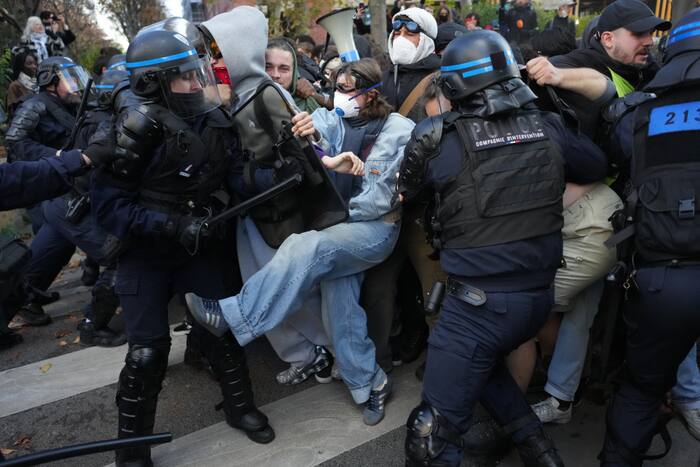
French trade unions are joining forces on Thursday for nationwide strikes and demonstrations for higher wages and in support of the high school protest movement, piling new pressure on the beleaguered government.
After more than a month of regular and large protests across France, major rallies are again planned in Paris, Lyon and Marseille, with hundreds of thousands of people likely to turn out. Unions said that around 260 rallies against rising living costs were to take place across the country.
Hundreds of high schools were closed or couldn't operate, some because of protests, others because teachers were joining the strike. Public transportation was heavily disrupted. Police in the northeast city of Strasbourg warned people to be extremely cautious around certain schools.
French Interior Minister Laurent Nuñez said that 70,000 police officers are being deployed, backed by armored vehicles, drones and helicopters. Police have been criticized for injuring protesters with heavy-handed tactics.
In a joint statement, France’s main unions warned that the country is on the brink of recession and that layoff plans are multiplying: “Fuel, food products, rent, gas, electricity … everything’s going up except wages and pensions,” they said.
France is mired in debt and is one of the worst economic performers in Europe, along with Italy and Belgium.
The unions put President Emmanuel Macron’s government and employers on notice.
“Anger is immense,” they said. “The situation in this country is fragile. The pressing social and environmental challenges must be addressed without delay.”
Before the strike action, the government had been negotiating with unions — a familiar scenario in French politics — in hopes of limiting the rioting, which has resulted in France's worst civil unrest in years.
The movement grew from a protest over staff shortages at one high school southeast of Paris in September and spread nationwide, attracting students demanding more education funding and workers seeking help with soaring fuel and other costs and demanding better pensions.
The rallies come as the election campaign to replace Macron as president next May heats up, and parties have been taking political advantage of the movement. Macron is constitutionally barred from seeking a third consecutive presidential term. Far-right candidate Marine Le Pen is the favorite to win.
Some of the candidates, including veteran far-left and anti-capitalist firebrand Jean-Luc Mélenchon, have radical solutions, but they appear difficult to put in place, according to Paul Smith, associate professor of French history and politics at the University of Nottingham in England.
“There is a sense of absolute frustration at the government’s failure to operate,” Smith told The Associated Press. “Whoever wins the presidential election is going to have a stack of problems to cope with.”
“It’s very difficult to see exactly where things go,” he said.
Ver nota original ↗
¿Querés un resumen rápido de esta noticia, hecho por nuestra IA?