Wyoming voters dodged a big-time bullet by defeating Prop 1
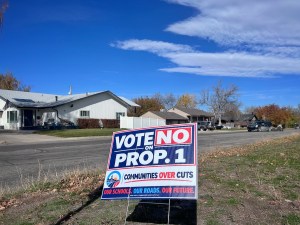
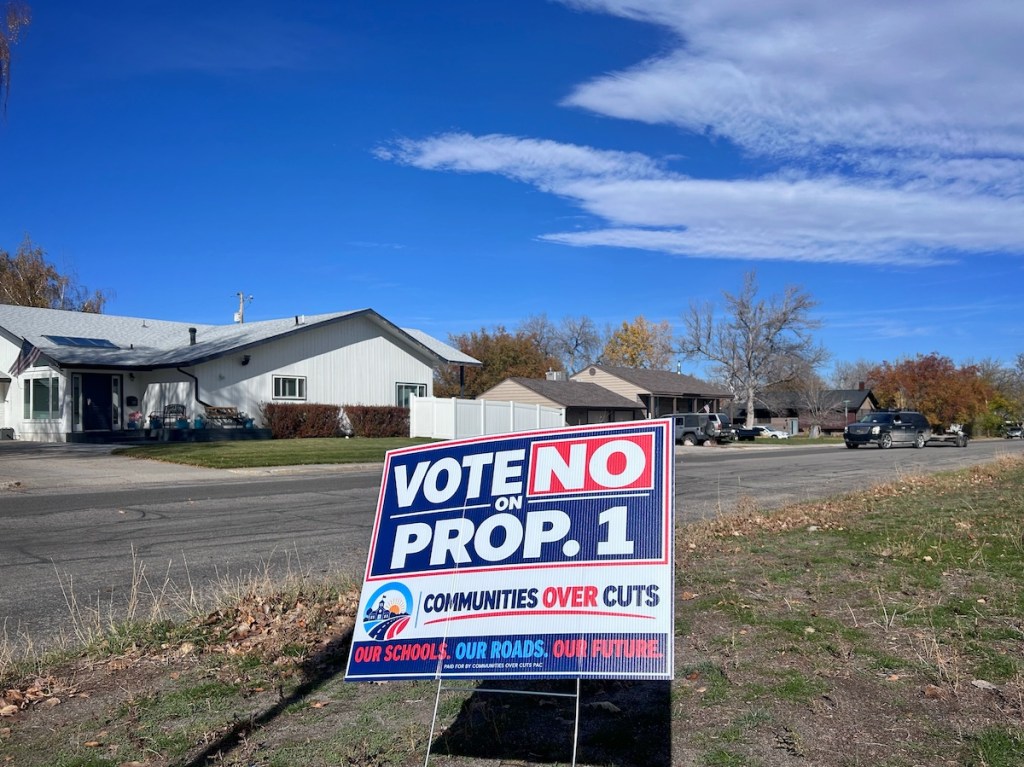
Wyoming didn’t catch any part of that mighty blue wave that washed over much of the country in Tuesday’s midterm election, but I don’t think anyone seriously thought it would.
Opinion
It did, however, dodge a major bullet by rejecting a dud of an idea that would have resulted in major cuts to essential services throughout the state. Wyoming communities could not have absorbed that much pain.
The Equality State did what it’s done in most elections for years: send an all-Republican congressional delegation back to Washington, D.C., elect a slate of GOP state officeholders and put Republican supermajorities in both houses of the Legislature.
But in one vital nonpartisan area, Wyoming voters came together and scored a smashing victory over an attempt to cut most residential property taxes by a whopping 50%.
If the Proposition 1 initiative had passed Tuesday, opponents said Wyoming could have lost $125 million a year or more in property tax revenue, resulting in major cuts to essential services, including law enforcement, fire protection, emergency medical services, hospitals, schools, roads and bridges.
And that revenue would have just disappeared; the initiative didn’t provide any means to replace it. During previous legislative discussions about either cutting property taxes by 50% or eliminating them altogether, some lawmakers had proposed increasing the state sales tax to “backfill” the lost revenue.
Fortunately, Prop 1 failed. According to unofficial final results, 58% of voters opposed or didn’t vote on Prop 1, while a total of 42% backed the measure. If a voter left the question blank, it was counted as a “no” vote.
This misguided idea was the brainchild of three people: Brent Bien, who was endorsed by the Wyoming Republican Party but finished third in this year’s GOP gubernatorial primary; his former campaign manager, Rich Weber, and ex-Wyoming Republican Party state committeewoman Cheryl Aguiar.

Two years ago this trio began a movement to get the massive tax exemption on the ballot for the 2024 election. While they failed to collect enough signatures to make the deadline, Secretary of State Chuck Gray certified the initiative for 2026 after his office verified more than 30,000 signatures of registered voters in January 2025.
It was a stunning accomplishment, the first citizen’s initiative to be placed on a Wyoming ballot in 30 years. One of the reasons for the extreme dry spell is because the state has such a high bar for ballot initiatives, which must obtain signatures equal to 15% of the votes cast in the previous general election’s U.S. House race.
Moreover, the signatures must come from registered voters in at least two-thirds of the state’s 23 counties, which is 16 counties.
The Legislature has rejected attempts to lower the bar, obviously because lawmakers want to make the laws, and not turn that power directly over to voters.
In the case of the long-winded “People’s Initiative to Limit Property Tax in Wyoming Through a Homeowner’s Property Exemption,” it initially appeared to many political observers as one issue that had a great chance of passing.
Within a few months after its ballot certification, I heard of — but did not specifically see — polling data that found more than 80% of the state’s likely voters viewed the initiative favorably. I didn’t doubt it.
For people who understood what a dangerous impact such action could have on property tax revenue that goes directly to local governments, special districts and public schools, it appeared potentially devastating.
One of the reasons is because lawmakers in the far-right Freedom Caucus had seemingly convinced the public that passing tax cuts was imperative due to major tax increases that had swept through much of the state.
As home values rose, residential property taxes during the COVID-19 pandemic in 2022 increased by an average of 16%, compared to prior years when annual hikes were 3% to 4%. During the same time of double-digit property tax increases throughout the state, Teton County — the wealthiest county in the nation — saw a 36% increase due to skyrocketing house values.
Some Freedom Caucus members in the House and their Senate allies claimed some homeowners would lose their property unless the Legislature provided some so-called “tax relief.” They made this claim without producing any real-life examples of anyone that would happen to, but the narrative was quickly ingrained by politicians and their constituents as gospel.
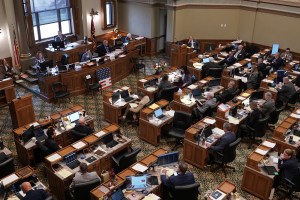
In the 2024 election, the Freedom Caucus saw enough members elected to take control of the House. The leadership immediately went to work on bills to cut residential property taxes.
One new law capped the annual increase at 4%. A tax rebate program was expanded. For homeowners of more than 25 years, a temporary 25% tax cut was passed, then made permanent.
These measures had started to work. At the same time, the rapid increases in home values began to subside. Meanwhile, the Freedom Caucus had clearly lost the support of voters in the Aug. 18 Republican primary, as it was booted out of House control and its much-ballyhooed attempt to take over the Senate fizzled.
The cries for property tax cuts died too. Two months before Tuesday’s general election, the Joint Revenue Committee said no to a proposed bill to eliminate residential property taxes that it had approved the previous year. In 2025, the bill died when the House ran out of time to consider it.
The panel’s decision came amid the release of new data showing that the majority of Wyoming homeowners did not take advantage of the 25% property tax cut that the Legislature had approved without any income restrictions.
Clearly, the ballot initiative would have only paved the way for the rich to get richer, while people who owned modest homes would receive a small tax cut.
People had stopped coming to legislative committee meetings demanding that property taxes be cut. During the Joint Revenue Committee’s meeting on sponsoring a bill to let voters amend the Wyoming Constitution by eliminating residential property taxes and a companion measure to backfill it with higher sales taxes, no one spoke for or against the measure.
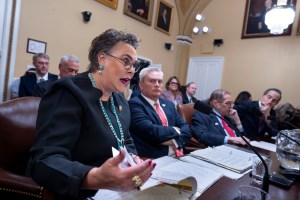
That particularly pleased Rep. Liz Storer, D-Jackson, who asked the panel, “What is the purpose of these bills, and why would we take the time to continue to move them forward, also given that I do not think they will be met with success in the next Legislature? So help me understand your reasoning.”
No one could.
The post Wyoming voters dodged a big-time bullet by defeating Prop 1 appeared first on WyoFile .
Ver nota original ↗
¿Querés un resumen rápido de esta noticia, hecho por nuestra IA?