Retiring fire commissioner on the hot seat about 'downgrades' in emergency medical response
Hours after a townhouse fire killed a family of four in Rogers Park, questions about Chicago Fire Department equipment, training and paramedic shortages that "downgrade" the city's emergency response capability took center stage at City Hall.
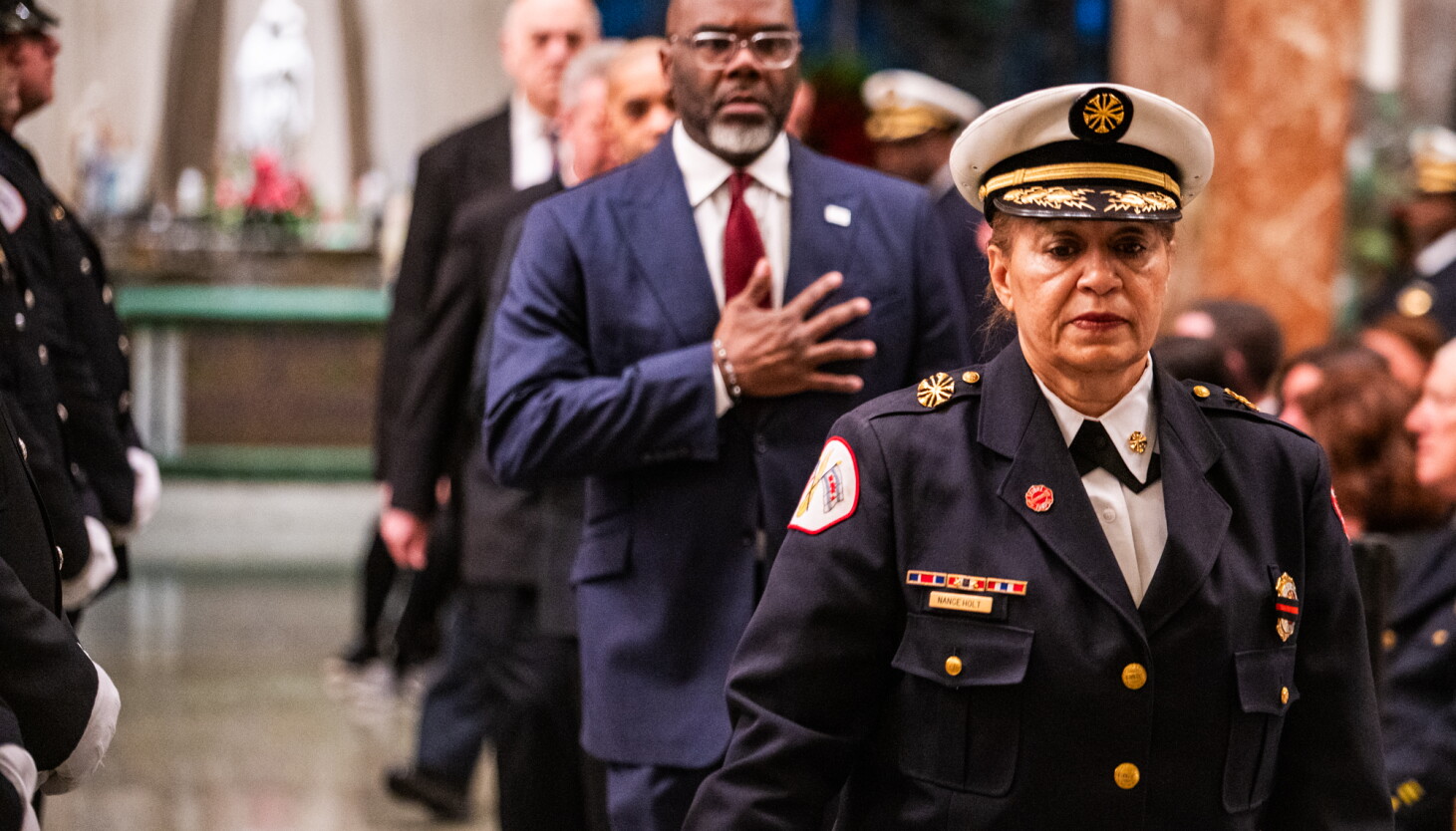
Chicago Fire Commissioner Annette Nance-Holt wraps up a 37-year career on May 26, when she hits the mandatory retirement age of 63. She was on the hot seat Thursday at what will be her final round of City Council budget hearings.
It started when Erik Steinmetz, president of the Chicago Firefighters Union Local 2, complained about a shortage of ambulances, aging equipment and inadequate training that has led to Chicago having more line-of-duty deaths “than any other city in the country by far.”
“We don’t provide our firefighters with the continuing training they deserve, yet we expect them to confront some of the most dangerous environments imaginable. Too often, we have buried those very people we’ve asked to take those risks,” Steinmetz said.
The problems extend to emergency medical services, Steinmetz said, adding that Chicago “continues to downgrade advanced life support fire companies, taking paramedic level care out of our neighborhoods that depend on it."
Retiring Ald. Matt O’Shea (19th), whose Far South Side ward is home to scores of firefighters and paramedics, then turned it up a notch.
He complained that the number of “advanced life support units downgraded” to basic-life support has “just exploded” in the past two weeks, slowing response times.
“I’m talking about people suffering cardiac arrest, an overdose, a stroke, a situation where minutes matter. We’re putting neighborhoods at risk,” O’Shea said. “We’re short paramedics. There’s an issue with paramedic pay. Nobody wants to be a medic. What are we doing to resolve this?”
Nance-Holt blamed a 2016 arbitration award that allowed firefighters to drop their paramedic license and downgrade to emergency medical technician.
“As a result, we’re experiencing shortages as far as firefighter/paramedics on [Advanced Life Support] engines and trucks,” she said.
“The answer is probably to sit down and talk about it again because my hands are tied with this… It’s not by our design to see this happen. .. There was a 10% increase for paramedics, crossovers in the budget. That still is not making people want to take those jobs. There is a shortage of paramedics in the whole country.”
When Ald. Gilbert Villegas (36th) probed more deeply into the shortage of paramedics, Nance-Holt talked about those who “choose to go elsewhere or work in suburban departments” where they can “make the same money or more” and not work nearly as hard racing from call to call.
Nance-Holt described the shortage of paramedics as “a national crisis,” adding, “Something happened after COVID where a lot of people just don’t consider that anymore.”
The shortage of paramedics reached a recent peak on Halloween night, when 17 of 90 fire trucks were “downgraded.”
“Sometimes, people choose not to work on those days. We can’t control that on ALS engines and trucks,” Nance-Holt said.
District Chief Mike Divita said it’s “hard to staff engines and trucks” on weekends and, since Halloween fell on a Saturday this year, the number of downgrades skyrocketed.
Overtime was offered “forwards and backwards” to the paramedics available “and we just didn’t have any takers. So we have come up with a list that we can strategically downgrade fire companies.”
Nance-Holt said “nobody wants to downgrade. That just sounds really bad.” But she is “faced with a lot of different obstacles” that require it, including more firefighters seeking “work/life balance” and taking advantage of family and parental leave.
“They have to… figure out how to work through this. It needs to be dealt with,” Nance-Holt said.
Steinmetz said the 3.5% pay differential between EMTs and paramedics — $30 a paycheck — is nowhere near enough to justify the heavy workload and massive liability.
In Seattle, paramedics make 17% more than EMTs. In Los Angeles, it’s 10%.
“Ten percent [differential] would bring some of the people back. Fifteen percent would probably get just about everybody back," he said.
The perennial problem of aging fire rigs — with 48% of fire engines and 38% of fire trucks over 15 years old — is expected to be remedied by a multi-year purchase, though it will take time to deliver new vehicles.
Still reeling from the "tragic loss of life" in her Rogers Park ward, Ald. Maria Hadden (49th) had only praise for the firefighters who tried to save her four constituents.
"I know that these are the types of tragedies that you all deal with on a daily basis multiple times a day," Hadden said.
Ver nota original ↗
¿Querés un resumen rápido de esta noticia, hecho por nuestra IA?