Doggonit! City dog licensing hits an all-time low
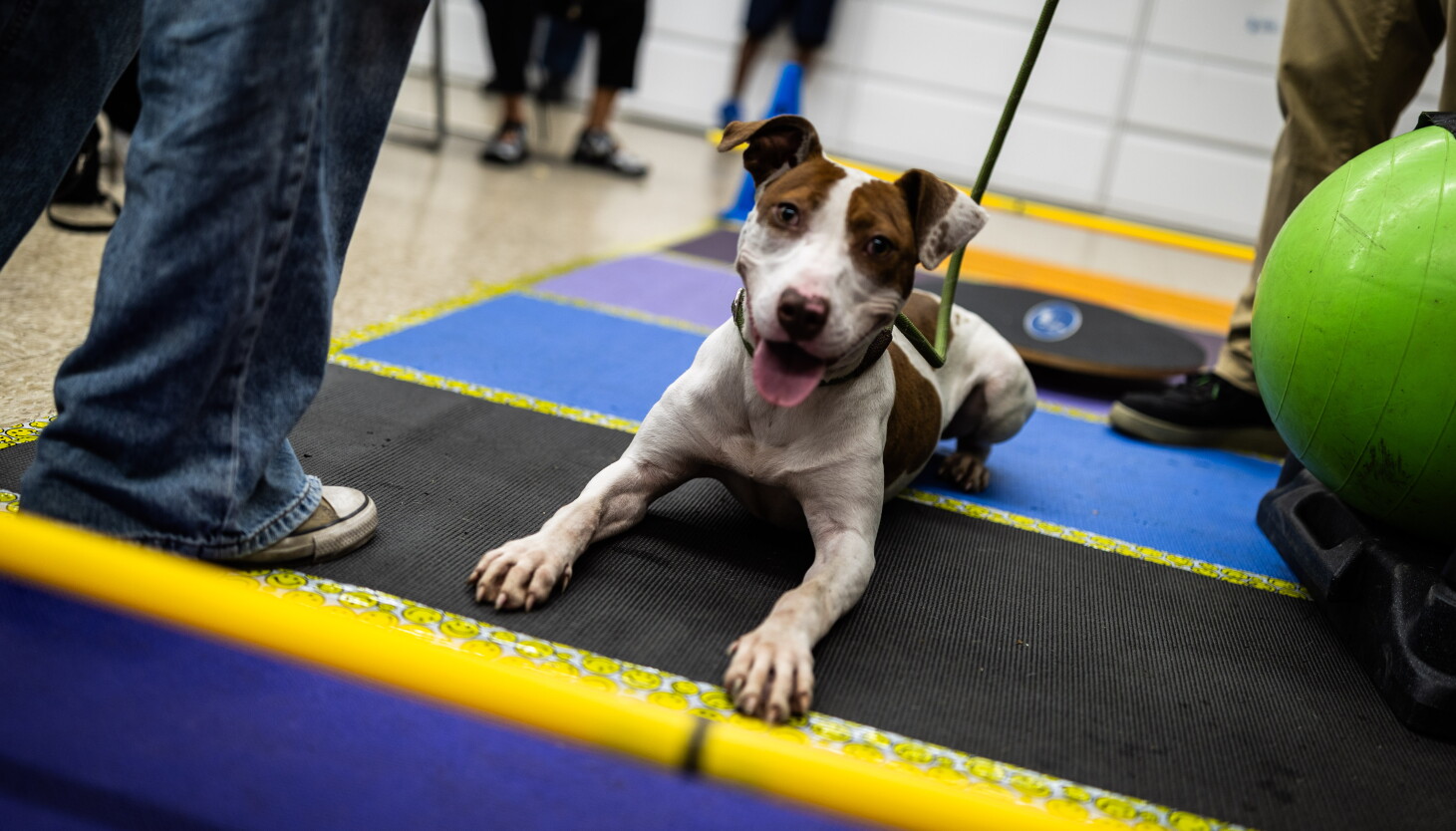
Chicago’s bark has long been worse than its bite when it comes to cracking down on owners of unlicensed dogs, but there now appears to be no bite at all.
That much was obvious Friday when City Clerk Anna Valencia revealed during City Council budget hearings that her office has issued only 4,100 dog licenses this year in a city with an estimated dog population of more than 650,000.
That’s down from the already paltry 8,000 dog licenses last year, 18,000 in 2017 and 40,896 in 2013.
The cost of a city dog license is clearly not the impediment.
The license fee has been frozen for decades at $5 a year for spayed and neutered dogs, $50 for those that are not and $2.50 for dog owners who are senior citizens.
Valencia said the problem is ignorance. The city’s regulatory leash has been so loose for so long, most Chicago dog owners don’t even know that they’re required to buy city licenses for their dogs.
“People don’t know. And if you don’t have a marketing budget to tell people, they just don’t understand,” Valencia told the Sun-Times.
“There’s no marketing dollars. You can do as much free marketing as possible, which we have, but there’s 2.7 million people in this city. We’ve done some free PSA [public service announcement] stuff. That’s important, but it’s not gonna be enough to move the needle.”
Downtown Ald. Brendan Reilly (42nd) said the number of dog licenses issued by the city is “ridiculously low” because it has “never been a priority” for the city to enforce the legal requirement — even on the city’s own agencies.
Reilly said the city’s Commission on Animal Care and Control transfers roughly 10,000 dogs to adoption partners like PAWS and the Anti-Cruelty Society without issuing dog licenses before transferring the animals.
“The vast majority of dog owners want to comply with city laws, but many are unaware that the city even requires a license. The city should not be imposing licensing requirements without properly educating the public regarding their obligations,” Reilly told the Sun-Times.
“This has been an issue for decades and it appears compliance has dropped off even further. I asked the city clerk to make this a priority through a public education campaign that leverages free public service announcement air time on local TV and radio, as well as the city’s massive network of JCDecaux billboards, bus shelter ads and video kiosks.”
Ald. Ray Lopez (15th), the City Council’s resident dog lover, said the 4,100 dog licenses sold by the city — at a time when Cook County issues 500,000 annual rabies tags — shows that there is a “breakdown in communication that’s hurting the city’s ability to fully track” stray dogs.
“It’s not just about the revenue. It helps with identification and the return-to-owner law. If your pet escapes and has a valid city license tag on it, we’ll bring that pup home for free. It won’t go to Animal Care and Control because we’ll know where that dog belongs,” Lopez said.
“That’s the greatest value of the dog license. If one of my dogs were to escape, anyone could scan and see where that dog lives, bring him home and I don’t have to worry about him going to the pound."
Currently, dog owners can obtain a dog license at the city clerk's office or through the city's clerk web site. But for years, dog owners who failed to purchase dog licenses have gotten a pass.
That changed in 2005, when the clerk's office put computer software in place to match its short list of licensed dogs with Cook County's larger list of Chicago dogs with rabies shots.
Warning letters were then mailed to those whose names appeared on the county's list, but not the city's, prompting a small boost in registration.
That's the way it stayed until October 2011, when then-City Clerk Susana Mendoza's outreach campaign and the threat of tickets prompted a larger surge in dog registrations.
On Friday, Lopez proposed requiring animal hospitals and veterinarians to purchase city dog licenses in advance like they do rabies tags, and issue them "at the point of vaccination."
"Administer this tax as they would a sales tax in a retail environment,” Lopez said.
Valencia proposed a "universal dog license" that would be issued jointly by the city and the Chicago Park District.
“The Park District offers a dog license and we do. Instead of overlapping, we should do one together and split the cost. But we can’t do that until we get our new technology system," she said.
Valencia made no apologies for letting dog licensing slide in favor of higher priorities: amnesty programs that give people debt relief; City Key IDs that help them get housing and enroll kids in school, and City Council modernization.
"We only have so many people and so many resources," she said.
Ver nota original ↗
¿Querés un resumen rápido de esta noticia, hecho por nuestra IA?