Shane James trial: What jurors have seen and heard during first 6 days of testimony
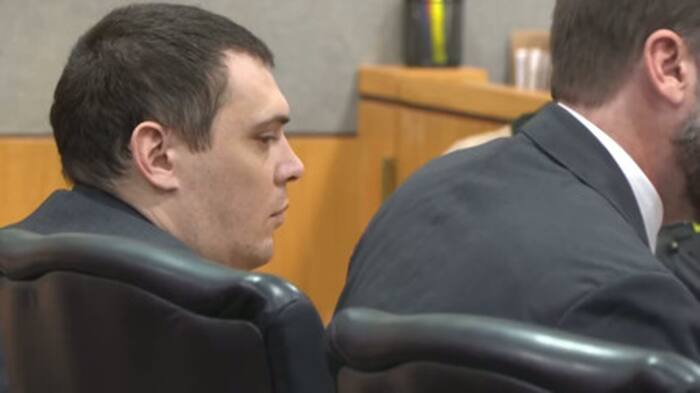
Six days into the capital murder trial of Shane James, jurors have heard testimony from first responders, investigators and forensic specialists, watched video from multiple crime scenes and seen evidence prosecutors say connects James to a series of deadly shootings in December 2023.
The trial is also beginning to reveal more about James’ mental state before the violence, including writings found inside his Bexar County home and statements he made to investigators.
James, 37, is accused of killing six people, including his parents in Bexar County, and injuring three others during a series of shootings in Austin. His defense attorneys are arguing he was legally insane at the time of the killings.
Here are some of the key takeaways from the first six days of testimony.
Prosecutors are building a timeline of the shootings
The state has presented evidence in chronological order, beginning with the shooting of Austin ISD police officer Val Barnes near Northeast Early College High School.
Jurors have heard from witnesses who were nearby, watched surveillance footage and seen evidence collected from multiple shooting scenes.
Testimony has also focused on the killings of Sabrina Rahman, 24, and Emmanuel Pop Ba, 32, on Shadywood Drive, as well as Katherine Short, 56, and her daughter, Lauren Short, 30, inside their southwest Austin home.
The evidence has included surveillance footage, crime scene photographs, body camera video and testimony from first responders who attempted to help the victims.
Forensic evidence is connecting the crime scenes
Investigators and forensic specialists have described evidence collected from several locations, including shell casings, vehicles and ammunition.
Jurors have seen evidence from the Nissan Versa that James allegedly drove from Bexar County to Austin, including a camouflage backpack, a loaded magazine and ammunition.
Forensic testimony has also focused on shell casings found at different locations — evidence prosecutors are using to connect the shootings.
Videos are giving jurors a closer look at James’ behavior
Jurors have watched footage from the investigation, including video of James’ arrest after a police pursuit ended in a crash in southwest Austin.
The jury also watched an interrogation with Austin police in which James appeared hesitant when questioned about his parents.
In a separate interview with Bexar County investigators, James described his belief that his parents were not who he thought they were and discussed shooting them.
Writings inside James’ bedroom are becoming a significant part of the defense’s argument
On Day 5, a Bexar County Sheriff’s Office homicide detective testified about what investigators found inside the home where James’ parents were killed.
Deputies responding to a welfare check found Shane James Sr. and Phyllis James dead inside the home.
Jurors saw photographs of James’ bedroom, including writings covering the walls and pages from more than a dozen notebooks.
Some of the writings referenced lasers, secret societies and other beliefs investigators described as incoherent.
The defense has pointed to those writings as evidence of James’ delusions, including his belief that what he called “laser masters” were controlling him.
The insanity defense is emerging as the central question
James’ attorneys have said he was experiencing severe delusions and did not understand his actions because of his mental illness.
The defense is expected to rely on evidence of James’ history of schizophrenia, mental health crises and writings to support its argument.
Prosecutors, meanwhile, have presented evidence of James’ actions before, during and after the shootings that they say shows he understood what he was doing.
Under Texas law, a diagnosis of mental illness alone does not establish legal insanity. Jurors must determine whether James knew his conduct was wrong at the time of the alleged offenses.
Jurors are also hearing about the victims and the violence they experienced
The testimony has included accounts from people who witnessed shootings, tried to help victims or responded to the scenes.
A witness described seeing Emmanuel Pop Ba shot. Another woman attempted CPR on Sabrina Rahman after finding her wounded.
Paramedics described the injuries they encountered, while an Austin police officer testified about being shot multiple times during a confrontation at the Short family’s home.
The testimony has offered jurors a detailed account of the violence and its impact on the people who were killed and injured.
What comes next
As testimony continues, jurors are expected to hear more evidence about James’ mental state and the defense’s insanity argument.
The central question will not simply be whether prosecutors can prove James committed the shootings, but whether the jury believes he was legally responsible for his actions under Texas law.
The trial continues in Austin into next week.
More coverage of this trial on KSAT:
Ver nota original ↗
¿Querés un resumen rápido de esta noticia, hecho por nuestra IA?