
Trump administration holds up Utah as national example on this issue

SALT LAKE CITY — Housing and Urban Development Secretary Scott Turner held up Utah this week as the national standard for implementing President Donald Trump's overhaul of homeless services.
In a video message to Gov. Spencer Cox, Turner praised the state for pioneering a rejection of a longtime status quo that prioritized permanent shelter space.
The Trump administration has followed Utah's lead by opening up more than $4 billion in funding to elevate treatment options and pathways to self-sufficiency.
Attempts to limit grants for long-term, low-barrier housing have been stymied by the courts. But HUD has redirected money to support the recovery-centric attitude of Utah.
State policymakers have accompanied new transitional units with more coordination between treatment providers and less tolerance for public nuisance in the past few years.
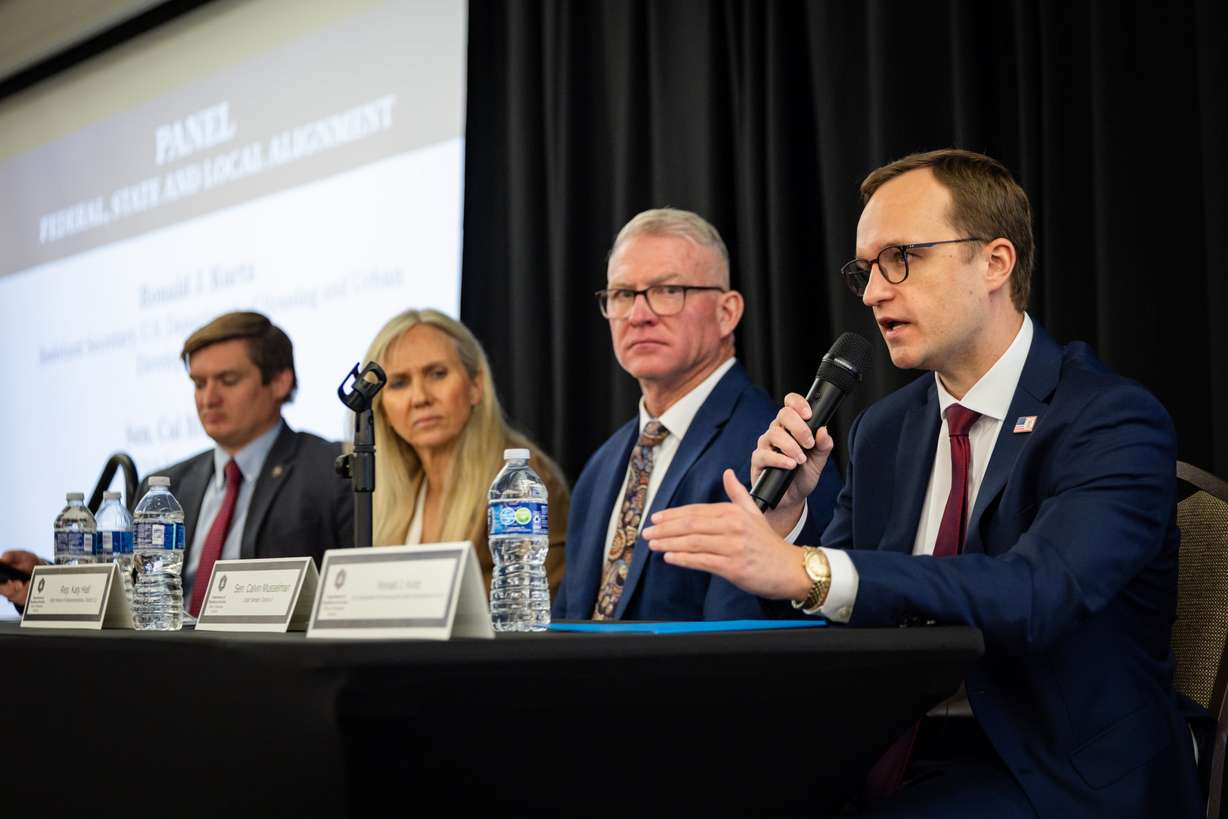
"We're proud at the federal government to lift you up as that example nationwide," HUD Assistant Secretary Ronald Kurtz said at an event on Thursday after remarks from Cox.
How has federal homelessness funding changed?
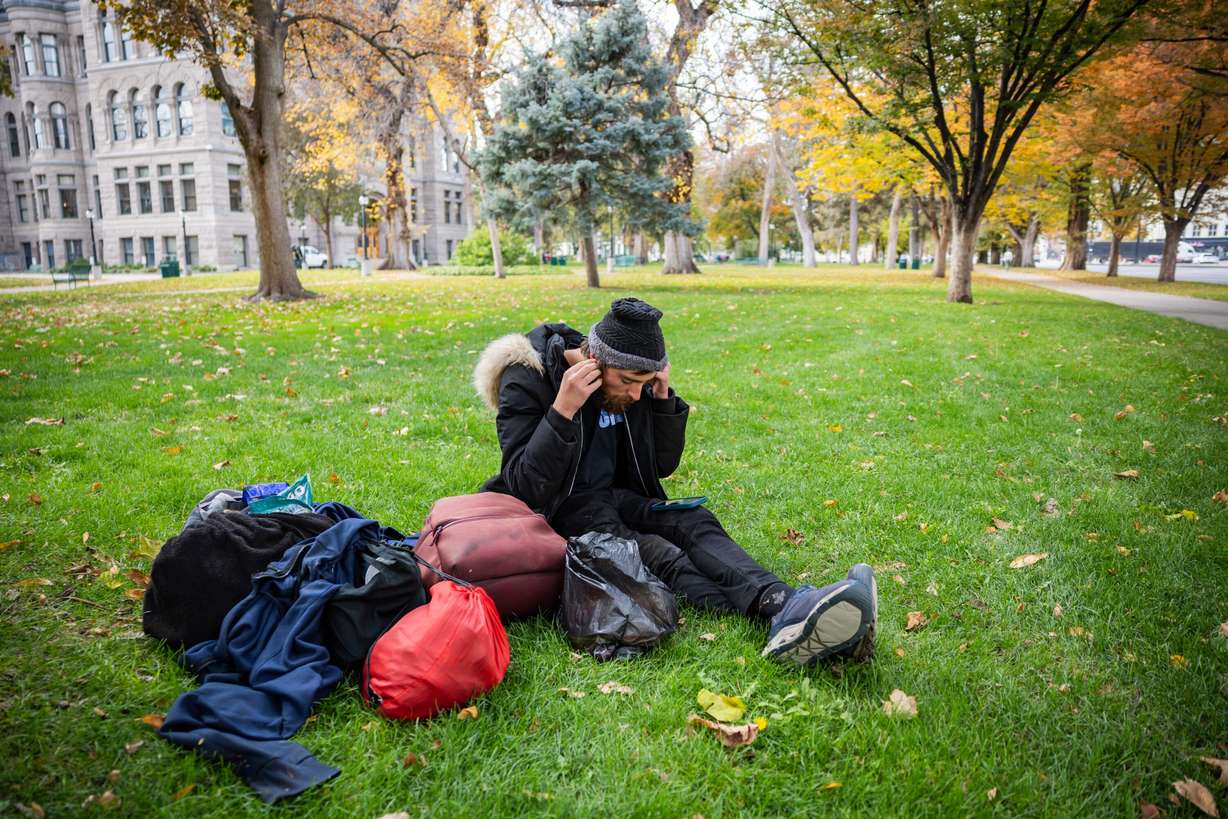
Utah is the recipient of roughly $2.9 million in Continuum of Care funding, according to Kurtz. Another $16 million goes to homeless services organizations in the state annually.
Under Trump, HUD has decreased the number of Continuum of Care recipients who are automatically reapproved. Instead, grants have become more competitive, Kurtz said.
Applicants can now request support for outpatient medical care, employment assistance, childcare, street outreach — not just for increasing the number of available beds.
This aligns with reforms made under Utah homelessness coordinator, Tyler Clancy, who has pushed for partnerships connecting police departments directly with social workers.
The goal of Utah's "human first" approach is to focus state offices, nonprofit groups and law enforcement on the underlying issues of substance abuse and mental illness.
Turner pointed to the state's reduction in homelessness last year as evidence this works better than a "housing first" model that measures beds instead of individual progress.
"HUD adopted Housing First as its North Star, but it proved to be a false star that only led us into shipwreck," he said. "Housing First failed, Treatment First will succeed."
How has homelessness in the US increased?
Since "housing first" became the guiding criterion for Continuum of Care in 2013, spending has increased by 111%, while overall homelessness has gone up 27%.
During the presidency of Joe Biden, homelessness spiked 33% to 771,500 on a single night in 2024, marking the greatest number of homeless individuals in the U.S. ever.
From 2013 to 2025 — even as taxpayer funded beds jumped by 151% — unsheltered homelessness still grew nationwide by 36% and chronic homelessness by 81%.
Seeing similar trends in Utah, the Legislature embraced Cox's three-pronged vision of shelter space, behavioral health and "high utilizers" who suck up police resources.
Last year, legislative leadership approved more than $40 million to support Cox's efforts to coordinate outreach across the courts, charities and reintegration initiatives.
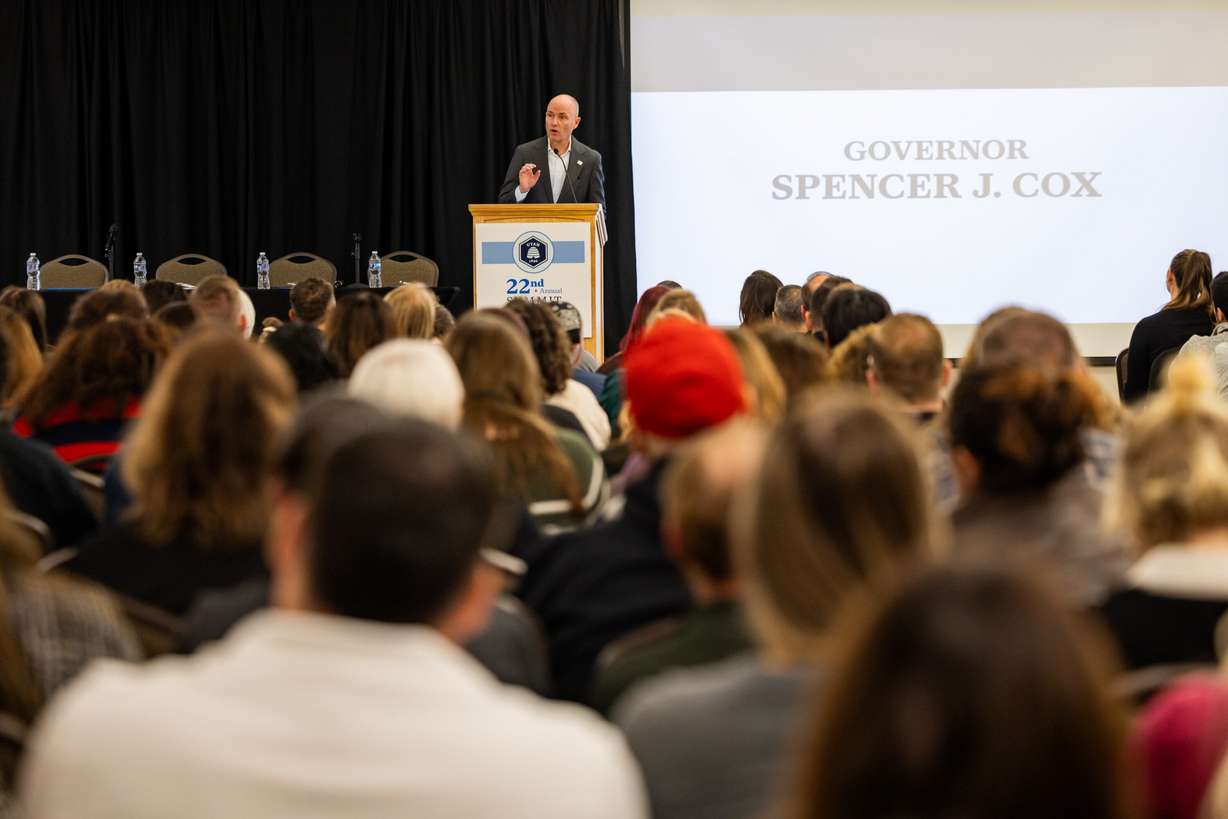
This is already having an impact, Cox said at the state's Homeless Summit held at the University of Utah, like 40% fewer arrests, leading to plans to double the operation.
Will federal changes harm disabled Americans?
These changes have made Utah a top contender for the revamped grant process, Kurtz said. But the changes at the federal level have had uncertain consequences systemwide.
New interpretations of Supreme Court rulings have allowed the administration to facilitate the institutionalization of homeless individuals — an objective Cox has cheered on.
This has also threatened a long-standing government obligation to help seriously disabled individuals in their own communities, instead of relocating them to facilities.
Lawsuits continue to constrain the agency's ability to cancel existing grants or transform the Continuum of Care process. Recent announcements reveal how HUD will proceed.
In August, HUD paired housing opportunities with a Department of Health and Human Services investment of $96 million into "care systems" for co-occurring disorders.
The proposal stems from Trump's Great American Recovery Initiative. Cox made Utah the first state to take executive action in favor of the faith-centered strategy in September.
The Key Takeaways for this article were generated with the assistance of large language models and reviewed by our editorial team. The article, itself, is solely human-written.
Ver nota original ↗
¿Querés un resumen rápido de esta noticia, hecho por nuestra IA?


