Chicagoans voted for permanent festival grounds. What's next?

Chicagoans want the city to develop a permanent space for large-scale music festivals and outdoor events.
That was the message sent during last week’s election, when 68% of voters supported the non-binding ballot measure introduced by 11th Ward Ald. Nicole Lee.
“I really wasn't sure how that was going to come out, to be honest,” Lee said the day after results came in. “While I was watching the returns, I was like, ‘Oh, this is doing pretty well.’”
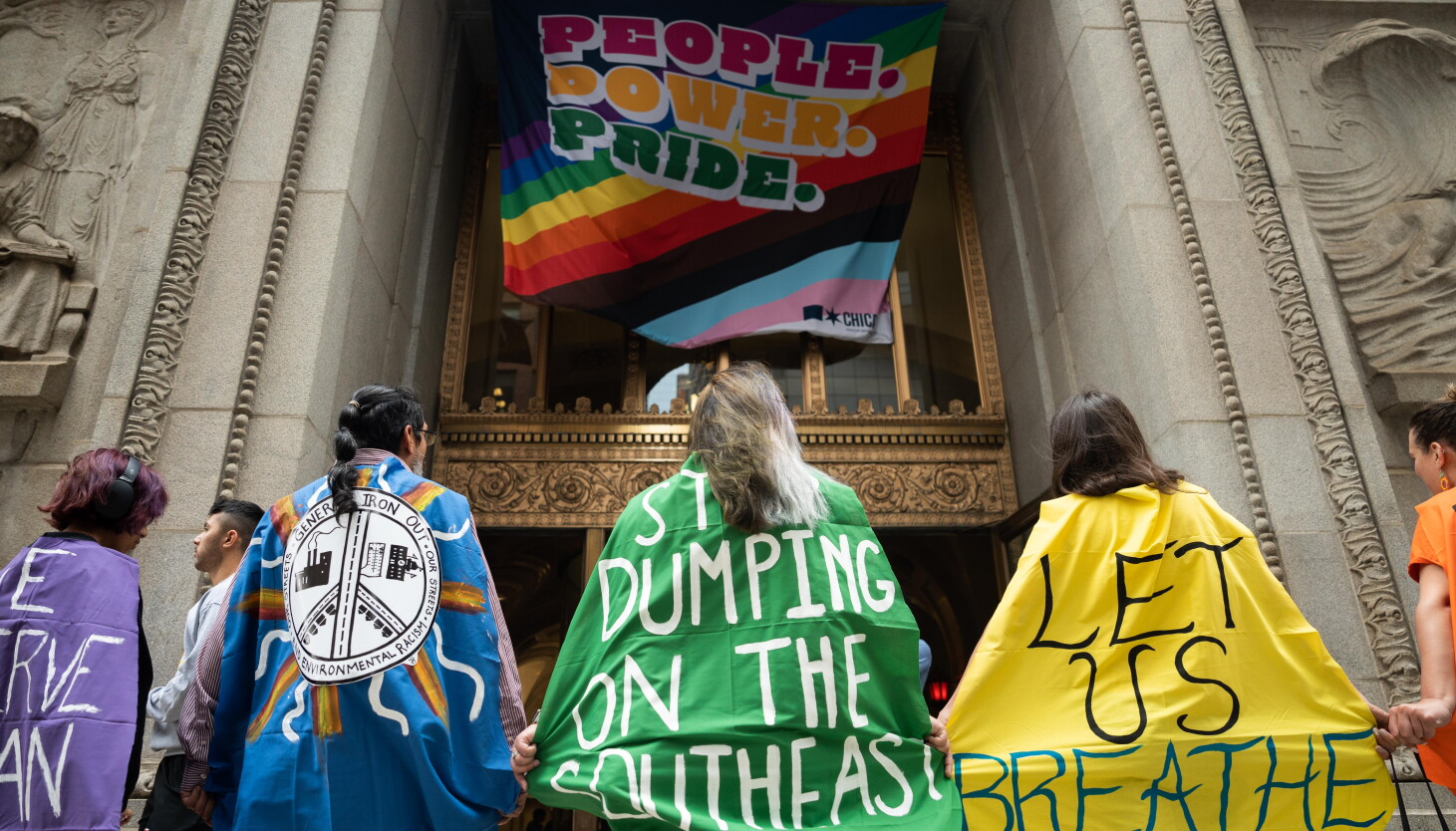
The measure, meant to gauge public interest, arrived after pushback in recent years from some Chicagoans who oppose privately run festivals taking place in the city’s public spaces, from Lollapalooza in Grant Park to Riot Fest in Douglass Park.
But despite electoral support, there are no clear next steps. For her part, Lee — whose ward includes parts of Bridgeport and Chinatown, where there is at least one proposal for an alternative location for a Bears stadium — said she’d like to keep the conversation going.
“I didn't have any huge expectations about what immediately comes next,” Lee said. “I think post-COVID, and how Downtown has continued to struggle to recover, we need to think about creating and spreading the wealth a little bit more, creating economic centers.”
Compared to public green spaces like Grant Park or Douglass Park that currently house big festivals, Lee said she thinks a destination with better infrastructure, including permanent bathrooms, could better serve attendees and prevent damage to city parks.
Both Lollapalooza and Riot Fest fell on rain-soaked weekends this year, which left the host parks torn up and muddy. Festival organizers are contractually required to pay to repair the fields, but neighbors around Douglass Park, for example, have complained the repairs move on a slow schedule and leave sections of the grounds unusable for the public for swaths of time. The muddy conditions and lack of accessibility infrastructure also raise concerns among attendees with disabilities.
Some supporters have compared the proposed festival grounds idea to Milwaukee’s Summerfest site, which that city owns. The grounds are operated year-round through a nonprofit. But in proposing the measure, Lee said she also had the North Shore nonprofit Ravinia in mind.
“The question for me was, what would the experience be like?” Lee said. “I just love going to Ravinia and having a permanent structure and that predictability. We keep talking about predictability and stability, and that to me feels like something that can be done in that way.”
Even if the idea does maintain momentum, there’s also the question of where possible festival grounds could go.
“We have a lot of different neighborhoods that have available land,” Lee said.
Could Soldier Field be an option , if the Chicago Bears decamp from the lakefront stadium?
“I think Soldier Field is an opportunity to do that,” Lee told the Sun-Times prior to Election Day. “If the Bears are moving out, we have to find another purpose for it. We know that the venue itself being used for concerts and other type events is lucrative to the city and the park district at the end of the day, so I think it behooves us to really look for those opportunities.”
Community organizer Sara Heymann with the group Únete La Villita in Little Village, which has spent years pushing for Riot Fest to leave Douglass Park, pointed to the new South Loop development known as The 78 or the site of the former Damen Silos as possible spots where an outdoor event space could go. No matter where it is, Heymann wants it to be near public transportation and fully accessible.
Chicago already owns multiple outdoor venues, such as the city-operated pavilion in Millennium Park. However, that Frank Gehry-designed venue typically is used for free-to-attend festivals, like Blues Fest and Jazz Fest.
Elsewhere, the city also owns Northerly Island, but it contracts the operation of Huntington Bank Pavilion on that site to Live Nation. That arrangement is scrutinized in a new Vanderbilt University report, which found such deals are disproportionately favorable to Live Nation by forgoing competitive bidding, offering below-market rent, and giving the corporation the chance to sell naming rights for publicly owned venues.
After the ballot measure began circulating, some expressed concern about what such a site could mean for the city’s smaller, independently owned venues, many of which have struggled financially in recent years. In a social media video, the team behind Bookclub Chicago pointed to the Live Nation-run venue on Northerly Island as a cautionary tale.
Lee is open to the idea of a city-run and operated venue.
“I think that can be revenue generating,” she said Wednesday, but she added: "I think if we can get creative with a partner, I think that there's possibilities that are worth exploring.”
Courtney Kueppers is an arts and culture reporter at WBEZ.
Ver nota original ↗
¿Querés un resumen rápido de esta noticia, hecho por nuestra IA?