BJC HealthCare, Aetna agree to extend access for southern Illinois retirees

Article Summary
- A one-year deal announced Nov. 6 allows thousands of Illinois retirees to maintain in-network access to BJC HealthCare hospitals and providers.
- In October, BJC announced it would drop its participation at the end of 2026 in the Medicare Advantage plans offered by Aetna, affecting about 5,000 Illinois retirees.
- Aetna and WashU Medicine have yet to reach an agreement; discussions are ongoing.
This summary was written by the reporters and editors who worked on this story.
Thousands of Illinois retirees will maintain in-network access to BJC HealthCare hospitals and providers through the end of next year after BJC and insurer Aetna reached a one-year agreement.
The deal, announced Friday, Nov. 6, applies specifically to members enrolled in the TRAIL program through the end of 2027. Discussions remain ongoing between Aetna and WashU Medicine.
TRAIL, which stands for Total Retiree Advantage Illinois, is the state of Illinois’ Aetna-administered Medicare Advantage health insurance program for eligible state, teacher and community college retirees.
In October, BJC announced it would drop its participation at the end of 2026 in the Medicare Advantage plans offered by Aetna, including those covered by the TRAIL program, citing “administrative burden and payment issues.” The new agreement effectively pushes that deadline another year for TRAIL members, but it doesn’t extend to members of other Aetna Medicare Advantage individual or group plans.
“This one-year transition plan will provide time for the State of Illinois to consider additional plan options for retirees for 2028 and beyond that include in-network services from BJC providers and hospitals,” Laura High, media relations director for BJC HealthCare, said in a statement to Southern Illinois Source.
Phil Blando, spokesperson for Aetna, said Illinois retirees can continue accessing BJC HealthCare/St. Luke’s for services. Blando did not respond to a separate question regarding negotiations with WashU.
“We are available to help members understand continuity of care, answer their questions, and provide information about our robust provider network in the St. Louis, Kansas City and Southern Illinois areas,” Blando wrote in an emailed statement.
The Illinois Department of Central Management Services, which oversees the TRAIL program, said the recent contract dispute affected about 5,000 Illinois retirees who receive healthcare at Barnes-Jewish Hospital and WashU Medicine in St. Louis.
While the recent agreement provides temporary relief for TRAIL participants, the agreement does not resolve the disruption facing other Aetna Medicare Advantage members. Overall, more than 72,000 people across the 15-county St. Louis metropolitan area are enrolled in Aetna Medicare Advantage plans, according to an analysis of federal Medicare data.
In late October, a group of 14 Illinois state lawmakers sent a letter to leaders at BJC, Aetna and CMS urging an agreement before the anticipated end of in-network access on Dec. 31.
On Nov. 6, the same day BJC and Aetna announced the new agreement, BJC responded in writing to the lawmakers, detailing an Oct. 28 meeting between leaders from BJC and CMS. Christian Morgan, BJC vice president for government relations, said BJC agreed to the new deal after ensuring it “would not continue to be subject to the same significantly adverse policies tied to inappropriate denials and reduced reimbursement for service.”
Morgan said BJC will consider similar arrangements with other Aetna Medicare Advantage group plans and has shared that willingness with Aetna.
“To help State of Illinois retirees have a choice and voice in their health care, we urge you to consider legislation to require the Illinois Department of Central Management Services to award contracts to a minimum of two supplemental Medicare plan options if two or more responsive bidders submit bids during the procurement process,” Morgan told the lawmakers.
Cynthia Johnson, a spokesperson for CMS, did not respond to a request for a comment on that proposal.
Lawmakers react to the agreement
Lawmakers across southern Illinois, where many constituents rely on healthcare specialists in the St. Louis market, hailed the agreement but acknowledged the need for a permanent solution.
State Rep. Katie Stuart, D-Edwardsville, said in a statement she is working on legislation to create a long-term fix to ensure “health insurance will not hang in the balance for our community members.” State Rep. Dave Severin, R-Benton, said local retirees need choices, including a Medicare supplement plan.
“An extension is a positive step, but it is not a permanent solution,” Severin said in a written statement. “There are statutory changes and procurement processes that must be addressed to provide retirees with more choices.”
After BJC announced its planned withdrawal, retirees across southern Illinois mobilized to contact elected officials and other policymakers. In a letter to retirees, Maria Britton-Sipe, retiree coordinator for the American Federation of State, County and Municipal Employees Council 31, congratulated members for responding “swiftly and forcefully.”
“You called legislators, civic leaders and other concerned parties,” Britton-Sipe wrote. “You told your stories and kept the calls and emails coming. You made it so that you couldn’t be ignored.”
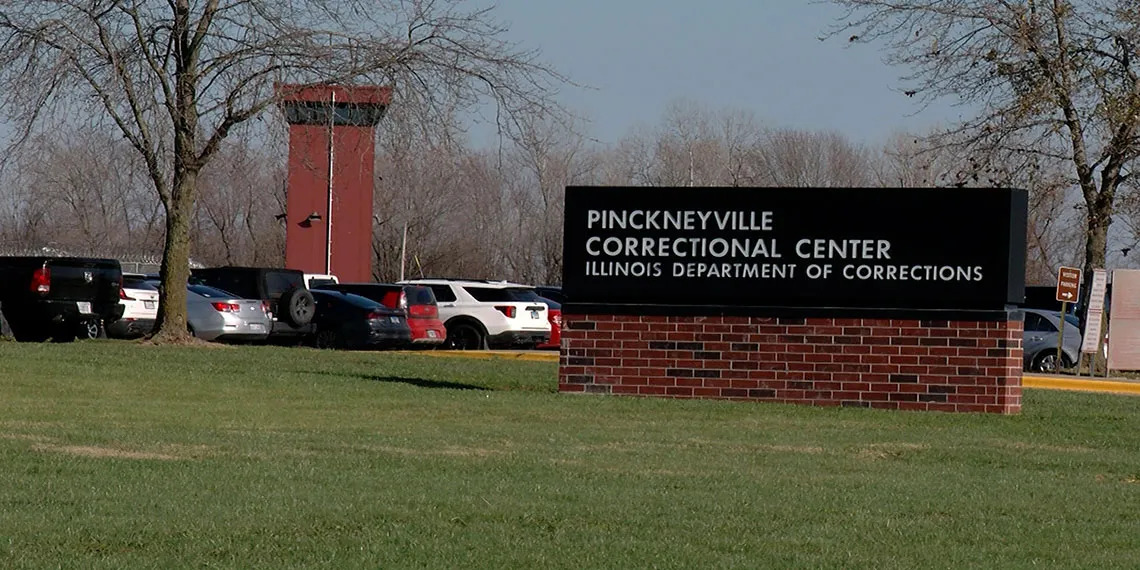
Rosemary Rouse of Tunnel Hill, Illinois, is retired from the Illinois Department of Corrections and sees a specialist at Washington University for a compression fracture in her spine. She said the contract agreement is a positive development but some issues “remain in limbo,” including what will happen after one year. She is also concerned that the current agreement does not resolve access to her WashU specialist.
“While this is a major advancement, it doesn’t rectify the whole problem,” Rouse said. “What has happened thus far is tremendous, but it has to be completed.”
This story was produced by Southern Illinois Source, the Illinois Press Foundation’s nonprofit news collaborative serving the bottom third of the state in partnership with the Southern Illinois University Charlotte Thompson Suhler School of Journalism and Advertising.
Capitol News Illinois is a nonprofit, nonpartisan news service that distributes state government coverage to hundreds of news outlets statewide. It is funded primarily by the Illinois Press Foundation and the Robert R. McCormick Foundation.
Ver nota original ↗
¿Querés un resumen rápido de esta noticia, hecho por nuestra IA?