‘They aren’t accepting failure as an option’: Seattle chamber CEO contrasts San Francisco’s approach to public disorder
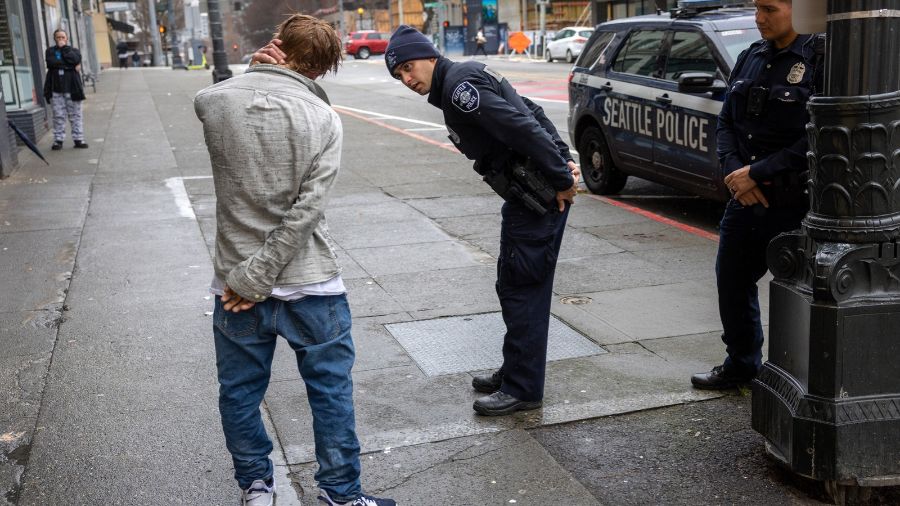
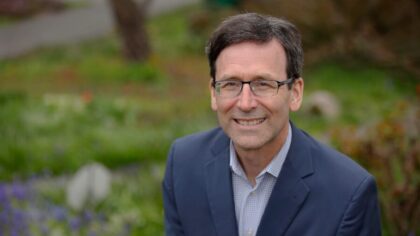
Seattle Metropolitan Chamber of Commerce President and CEO Joe Nguyen is urging Seattle leaders to adopt lessons from San Francisco’s response to public disorder and downtown recovery.
In a Nov. 3 GeekWire opinion column, Nguyen argued that Seattle has comparable resources but needs stronger leadership and follow-through.
Speaking with KIRO fill-in hosts Tim Gaydos and Greg Tomlin on “The John Curley Show” on KIRO Newsradio, Nguyen emphasized measurable outcomes over additional studies and political arguments.
“We actually have a lot of the same programs. We have a lot of the resources,” Nguyen said. “The biggest difference that I saw in San Francisco versus how we operate here is that they are not accepting failure as an option, and they are going to move past task forces, work groups and reports, and they’re actually going to get stuff done.”
Public safety comes first for investment
Nguyen’s column pointed to San Francisco Mayor Daniel Lurie’s approach to open-air drug markets and the city’s RESET sobering center. It also called for Seattle’s business community to become more involved in politics.
When asked what he would recommend as Seattle’s top priority, Nguyen answered public safety.
“You cannot have economic development without public safety. You cannot have businesses coming downtown unless they feel safe. You will not have workers come down unless they feel safe,” Nguyen said. “Public safety means a lot of different things to different people. And I’m sure that the stats for crime in general are down, but the fact of the matter is that people don’t feel safe.”
Nguyen reflects on changing his drug-policy position
Before leading the chamber, Nguyen represented the 34th Legislative District in the Washington Senate and served as director of the state Department of Commerce.
He described changing his position on drug penalties after observing the consequences of decriminalization.
“Multiple times I actually voted to decriminalize drugs,” Nguyen said. “In a very short period of time, we saw the implications of not having something on the books and functionally having decriminalized drugs on our streets.”
“On the fourth time we had to vote on this bill, and ended up voting to criminalize drugs and not go back to war on drugs, but to have a better system in place because you have to make sure that the things that you are doing actually impact people in a positive way,” he continued.
The distinction between campaigning and governing was central to his explanation.
“When you’re governing, you have to care about the whole city, the whole state, the impacts, even if you agree with that person or not,” Nguyen said.
Business growth and social services are connected
Nguyen has also argued that economic growth supports the tax base needed for public services, a position he outlined in a September address to regional leaders.
“You cannot fund compassion from an empty treasury,” Nguyen said. “When you look at things like social services, when you look at things like affordable housing, when you look at things like even health care, oftentimes the tax base required to make those happen is from the business community. So they cannot be separate; they have to go hand in hand.”
His concerns about taxes extended beyond any single measure.
“It’s not even just one tax; it’s the stacking factor that has happened over the last five years, and the instability, and also the rhetoric that is happening,” Nguyen said. “Because people who run businesses are also people.”
RELATED STORIES


Nguyen calls for action on street conditions
The discussion returned to the treatment of people using drugs and the safety of surrounding neighborhoods.
“Kids should be able to walk to school safely, and then how do we, in the most humane, values-driven way, serve these folks?” Nguyen said. “To me, it’s not leaving them to die on the streets. It is not leaving them to rot on the streets. It is for us to help bring them in to get services.”
“I think outcomes are more important than rhetoric, and I think part of being progressive means you have to make progress,” he added.
Watch the full discussion in the video above.
Listen to The John Curley Show weekday afternoons from 3 – 7 p.m. on KIRO Newsradio, 97.3 FM. Subscribe to the podcast here.
Ver nota original ↗
¿Querés un resumen rápido de esta noticia, hecho por nuestra IA?