There's 'pent-up demand' for skiing in Utah this winter. Will El Niño deliver?

SALT LAKE CITY — Last winter was a real eye-opener for Utah's ski and snowboard industry, but Nathan Rafferty believes it wasn't necessarily as bad as the data suggests.
Utah's record-low snowpack translated into a 26% year-over-year decline in skier visits. However, last year's numbers would have shattered pre-pandemic records, said Rafferty, president and CEO of Ski Utah.
It just wasn't the type of winter Utahns were used to. The industry has tried to shake the year off as an anomaly, while history is helping provide optimism that this winter will be at least better than last year.
And, if anything, skiers and snowboarders are always optimistic, Rafferty jokes.
"We just need a strong start. That would really help boost the confidence of skiers," he told KSL. "I know it would for me."
All eyes have been on the Pacific Ocean heading into this winter. Ski Utah handed out approximately 1,300 "Vote Super El Niño 2026-2027" lawn signs after announcing the campaign in September.
It launched the campaign as it hopes this winter's "super El Niño" will deliver, as it has in previous years.
Repeating history?
Some of the growing optimism comes from the stretch of storms that have impacted Utah since mid-July, even if it hasn't produced a ton of snow yet.
The state has, on average, collected 7.91 inches of precipitation between July and October — the most between those months since at least 1895, per federal climate data updated this week.
It dethroned 1982, which collected 7.79 inches during a similar four-month stretch. The summer and fall of 1982 carried over into a strong snowpack during the ensuing winter and spring, which remained the state's highest total for 40 years.
Of the other three highest four-month stretches on record (1941, 1997 and 1916):
- Utah's 1998 snowpack peak was 135% of its 30-year normal. Both it and the 1982-1983 season were during strong El Niño winters, as this winter is projected to be.
- Modern snowpack data only dates back to the 1980s, but 1942 data suggests Utah had a good runoff from snowpack. It was toward the end of a lengthy El Niño track.
- Snowpack wasn't tracked until 1930, but Salt Lake City collected 105.6 inches of snow during the 1916-1917 season, which was during a La Niña event. It's the city's third-highest total since 1874.
That said, the sixth-highest July through October total came just five years ago, and that carried over into a snowpack total that was 76% of normal, the second of two back-to-back years of that.
These are a small sample size from the wide range of possible outcomes any given winter.
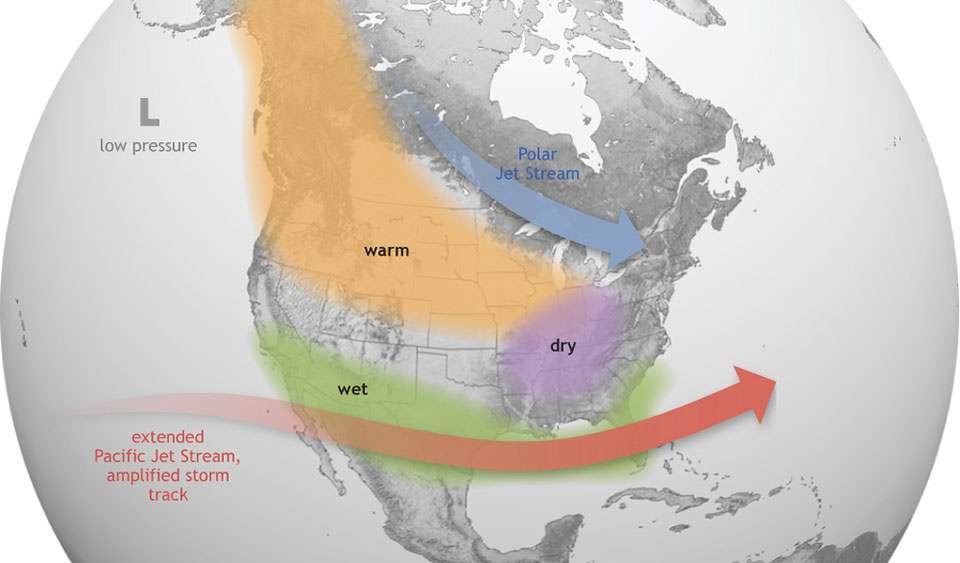
Utah's winters are typically caught between El Niño and La Niña, and many robust years are driven by active West Coast storm tracks that regularly push storms into the state, KSL meteorologist Matt Johnson explains. Sometimes that begins during the late summer or fall.
What Utah has experienced since mid-July could suggest the forthcoming pattern.
Long-range forecasts suggest active moisture will push through Utah and most of the West, especially toward the end of meteorological winter and early spring. Those are expected to slam California first, which Johnson said almost always sends Utah "spillover storms."
A series of two or three storms forecast to arrive in Utah beginning this weekend could be the starting point for this. It's currently projected to bring at least 1-3 feet of snow in the mountains over the next week.
"I think we will see this pattern continue," he said, noting that outlooks suggest all regions could benefit from future storms, with southern Utah having stronger odds. "It will be interesting to see how it plays out."
Long-range forecasts still don't offer enough clues about temperature, which could be equally important. Last year's record-warm winter played a large factor in the record-low snowpack.
'Ready to rip'
There's more than a 98% probability that this winter will be better than last year, OpenSnow forecaster Evan Thayer reported to Ski Utah.
Rafferty will take that. He acknowledges that what type of winter Utah receives is out of anyone's control, but perhaps the optimism is helping manifest a good one.
That would be great for the resorts and Utah's water supply, and also the general economy.
Utah wins when "ski wins," said Natalie Randall, managing director of the Utah Office of Tourism and Film, pointing to the $350 million that the ski resorts pump into the state's tourism industry.
Resorts have spent the past offseason planning for better resort experiences to meet the growing demand.
"We're ready to rip," said Jared Winkler, director of marketing for Brighton Resort.
If El Niño delivers, there could be longer lines, which is why Rafferty recommends that skiers consider smaller resorts like Nordic Valley, Cherry Peak, Beaver Mountain or Snowland Ski Area to spread out visitation.
Some offer lift tickets as low as $9, which he said helps handle cost hurdles. He knows people are thrilled to return to the slopes, regardless of where they ski or snowboard, though.
"I don't know if I've felt this much pent-up demand for skiing as we have this season," he said.
The Key Takeaways for this article were generated with the assistance of large language models and reviewed by our editorial team. The article, itself, is solely human-written.
Ver nota original ↗
¿Querés un resumen rápido de esta noticia, hecho por nuestra IA?