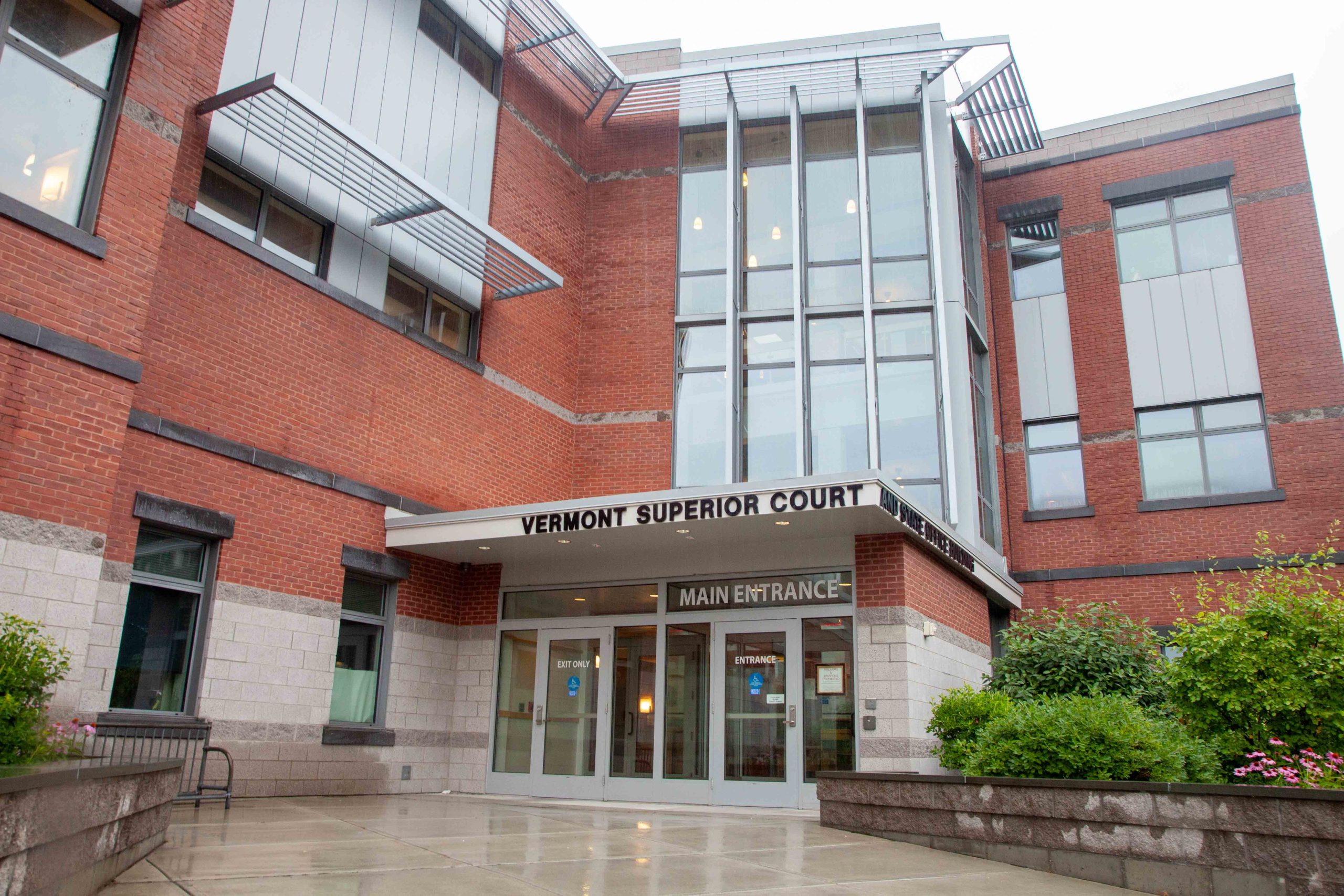
Elliot Russell sentenced to life in Ulysses Ivey murder

This story by Jeff McRae was first published in the Bennington Banner on Nov. 10, 2026.
BENNINGTON — Elliot Russell, 50, will be spending the rest of his life behind bars for the pre-meditated shooting death of Ulysses Ivey, 39, of Bennington following a sentencing hearing on Monday afternoon.
At the hearing, Russell maintained his innocence and members of his family were allowed to play an extended version of the 911 phone call they say included at least one additional voice that they claim was omitted from the call tape submitted as evidence in the trial.
At sentencing, Russell’s defense attorney acknowledged that he had had a difference of opinion with Russell and Russell’s family as to the value of the extended call tape. Ultimately, Russell’s sister was allowed to play the tape following a brief discussion with the defense attorney and the attorney’s explanation to the court for the family’s agitation.
Following a second playing of the extended 911 call, the court acknowledged “I heard something at the end,” but did not characterize the sound.
The court emphasized that nothing presented at the sentencing would alter the outcome of the trial in which Russell was found guilty of murder by a jury of his peers.
Following a 35-minute recess, the court offered an explanation of the criteria they considered when coming to their conclusion, including: the nature and circumstances of the 2022 events; that the crime was committed when Russell was an adult; the luring of Ivey to a remote location, and Russell’s criminal history of increasing violence.
Given those factors, the court handed down the maximum sentence of life in prison without the possibility of parole.
Russell, also known as “Face,” was charged in the Oct. 26, 2022 with first degree murder. Authorities say Ivey was lured to the area outside the Green Mountain power sub-station just before the exit ramp, west of Route 279 in Bennington, where he was killed.
A 911 call came from Ivey moments after he was shot. Prosecutors said during that call, Ivey identified the then-46-year-old Russell as the shooter. Rescue workers unsuccessfully attempted to save Ivey’s life.
Russell is no stranger to the Vermont and New York legal systems, with Vermont aggravated assault convictions in 2007 and 2009, and convictions in New York state in 1993 for robbery and for criminal possession of a loaded firearm in 1998.
Most recently, he was convicted in 2007 of attempted murder after stabbing a man in front of a bar on Main Street in Bennington. Russell was sentenced to 13 to 15 years behind bars. He had been released from prison only three months prior to Ivey’s murder.
During the recess, the prosecutor, Deputy State’s Attorney Jared Bianchi, declined to comment on the specifics of the Russell murder case. He said that generally when there’s been a conviction, there could be an appeal based on legal issues that arose during the trial or the sentencing, and that once a sentence is imposed, a person can file a petition for post-conviction relief (PCR). He said if, for instance, DNA is discovered that exculpates – or clears someone from guilt or blame – an individual would file a writ of habeas corpus, that, according to the Brennan Center for Justice, is “a civil lawsuit filed in court by or on behalf of a detained person to challenge the legality of their imprisonment or custody.”
In Vermont, “According to Rule 3(b) of the Vermont Rules of Appellate Procedure, any criminal case resulting in a sentence of life imprisonment triggers an automatic appeal to the Vermont Supreme Court,” as described by Justia Law.
Read the story on VTDigger here: Elliot Russell sentenced to life in Ulysses Ivey murder.
Ver nota original ↗
¿Querés un resumen rápido de esta noticia, hecho por nuestra IA?