‘We’re getting worse results than ever’: McKenna backs Ferguson’s criticism of Reykdal as WA school districts prepare to sue
Three major Washington school districts are preparing to sue the state over education funding, prompting former Attorney General Rob McKenna to ask why increased spending hasn’t resolved either district budget problems or concerns about student performance.
Speaking with host Charlie Harger on “Seattle’s Morning News” on KIRO Newsradio, McKenna argued that another funding lawsuit could lead to higher taxes, but lawmakers also have the option to redirect existing spending.
“Usually, when you double your investment in something, you expect to get a better result,” McKenna said. “We’re getting worse results, and I think that’s the point that Governor Ferguson is making.”
Lake Washington, Tacoma, and Yakima school districts contend that local levies are paying for basic education expenses the state should cover. Lake Washington and Tacoma authorized lawsuit preparations Oct. 22, and Yakima followed Nov. 2. The districts have not announced a filing date.
Charlie opened the interview with a question many taxpayers may share: Wasn’t this problem addressed by the McCleary decision and the billions of dollars subsequently directed toward schools?
McKenna explained that the districts’ argument centers on Washington’s constitutional “paramount duty” to provide education for children within its borders.
He described the McCleary case as a response to the state shifting responsibility for basic education funding onto local districts.
“So that decision in 2012 forced the state to shift money in the state budget to amply fund public education,” McKenna said.
The state Supreme Court found Washington in compliance with McCleary in 2018. The districts now argue that funding is again falling short.
McKenna noted that many people assumed the earlier changes had addressed the constitutional problem. The planned litigation would put that assumption back before a court.
Higher taxes or different spending priorities?
Charlie asked whether another successful lawsuit could mean billions more in education spending and another round of tax increases.
“Oh yeah, absolutely,” McKenna said.
McKenna outlined possible responses, including new taxes or changes to existing income and capital gains taxes. Those were his predictions about what lawmakers might consider, not announced proposals.
He also emphasized that raising revenue is not the only option.
“So the other choice they have is to reallocate money within the state budget,” McKenna said.
He worried that another spending adjustment might offer only a temporary fix unless lawmakers and districts examine the costs driving recurring deficits.
McKenna pointed to district-by-district teacher contract negotiations, arguing that competition for qualified educators pressures salaries. He also described how declining enrollment can squeeze districts because fewer students mean less state funding, while expenses such as facilities remain.
Ferguson’s criticism puts school leadership in focus
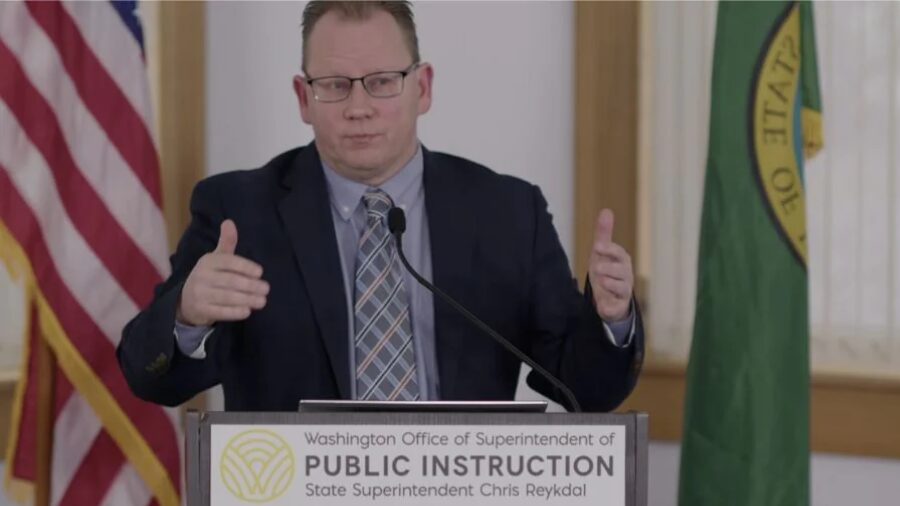
Charlie also played Gov. Bob Ferguson’s reaction to Superintendent of Public Instruction Chris Reykdal’s announcement that he would not seek reelection.
“Candidly, that’s good news. Appreciated service, public service, but that’s time for a change,” Ferguson said in the recording.
The governor criticized student outcomes while acknowledging educators’ efforts.
“It’s just not been good enough, despite the best efforts of our educators all across the state. So, looking forward to a change,” Ferguson said.
Charlie questioned what the unusually pointed criticism revealed about the relationship between the two Democrats.
“I don’t think there’s much love lost between those two. What’s your analysis of what’s going on here?” Charlie said.
McKenna agreed with Ferguson’s broader critique, arguing that higher spending should come with stronger results. He placed particular importance on leadership in the superintendent’s office.
“And to turn that around, I agree with him. We need to start with strong, effective leadership at the top of the public education pyramid, and that’s the superintendent of public instruction,” McKenna said.
RELATED STORIES
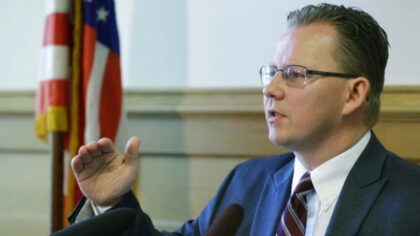
McKenna gives Ferguson more time
Charlie pressed McKenna on whether Ferguson’s criticism had another political dimension.
McKenna acknowledged that critics might view it as an attempt to shift blame. But he contrasted Reykdal’s longer tenure with Ferguson taking office in January 2025, arguing that the governor deserves more time to influence education policy.
“He could really benefit from a strong, effective ally in the superintendent’s office,” McKenna said.
The discussion left two distinct questions facing the state: Whether Washington is meeting its legal obligation to fund basic education and whether the money already being spent is producing the results students need.
Watch the full discussion in the video above.
Listen to “Seattle’s Morning News” weekdays from 5 a.m. to 9 a.m. on KIRO Newsradio 97.3
Ver nota original ↗
¿Querés un resumen rápido de esta noticia, hecho por nuestra IA?