‘You do it casually, and you’re going to get savaged’: KIRO hosts weigh Ballard’s new local challenger to DoorDash
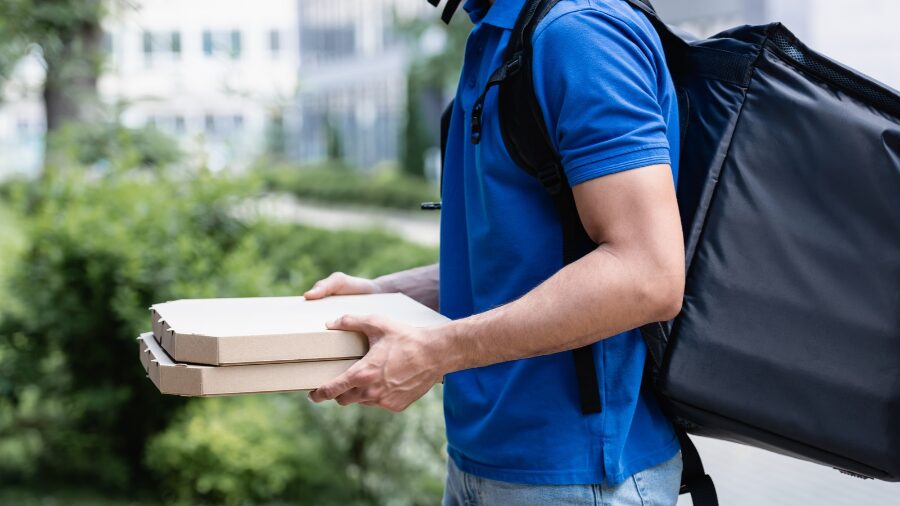
A new food delivery service started by Ballard restaurant owners aims to cut out the big apps. KIRO fill-in host Mike Lewis, who owns a Seattle restaurant, warned that delivery only works for restaurants that plan for it carefully.
“You do it casually, and you’re going to get savaged,” Mike said on “The Jake and Spike Show” on KIRO Newsradio.
Spice Waala, a small Seattle chain serving Indian street food, launched the service, called Yaku, on Oct. 29, according to My Ballard. Co-owner Uttam Mukherjee started it as a cheaper delivery option for the neighborhood. Five Ballard restaurants have signed on so far: Spice Waala, Rachel’s Bagels and Burritos, Pie Bird Bakeshop, Lil Woody’s and Ballard Pizza Company.
Customers pay one $9.99 delivery fee per order with no added service charges, according to My Ballard. Yaku’s drivers are hourly employees who get paid for their full shifts and reimbursed for mileage. Restaurants can join for free, and national chains aren’t allowed. Mukherjee told My Ballard that rising app fees cut Spice Waala’s delivery business in half over the past few years.
KIRO host Spike O’Neill described the cost burden that delivery apps put on both customers and restaurants.
“Sometimes you can pay more for the service of bringing food to you than you’re paying for the food itself,” Spike said.
Why Mike’s restaurant stays out of delivery
Mike explained that his restaurant, which serves pub food, doesn’t use any delivery service.
“If you want food, you come in, you buy food, you can take it with you,” Mike said.
He made clear that he doesn’t oppose the apps.
“I’m not against it,” Mike said.
Delivery requires a separate operation, Mike explained, including how food is prepared, how it’s packaged, and where drivers pick it up. Done well, it can pay off. He pointed to a Los Angeles restaurant he visited where to-go orders make up half of the nightly sales, and a required gratuity on those orders helps boost tips for kitchen staff.
His biggest concern is losing control over the meal once it leaves the kitchen. As Mike sees it, customers blame the restaurant, not the driver, when food shows up cold or crushed.
“If someone gets your sandwich and that sandwich is cold, or the fries are cold, or the stuff got mixed together, or it’s looking like somebody maybe sat on it, like that is not a bad review for the delivery. That is a bad review for your restaurant,” Mike said.
Some dishes travel better than others. Thai food reheats easily, Mike noted, but his menu doesn’t.
“But a burger doesn’t reheat quite so well,” Mike said.
Restaurants that adapted
Spike shared his experience with a Thai restaurant he loves in Shoreline. After the pandemic, delivery drivers kept disrupting both dine-in service and his own takeout pickups. That changed once the restaurant assigned an employee to delivery orders and set up a separate pickup station.
Mike credited restaurants that made that shift. He argued that dedicating one person to delivery can pay for itself if the kitchen can handle the volume.
RELATED STORIES


E-bikes and staying local
Mike suspects a local service like Yaku could lean on electric bikes, which he believes are the fastest way to cover short distances in Seattle.
“I’d love to see a local company grab hold of that. I think that would be great,” Mike said.
Spike rooted for the service but had one worry.
“I just hope it doesn’t become so successful that they become too big and lose the benefit of being locals,” Spike said.
Watch the full discussion in the video above.
Listen to “The Jake and Spike Show” weekdays from noon to 3 p.m. on KIRO Newsradio 97.3
Ver nota original ↗
¿Querés un resumen rápido de esta noticia, hecho por nuestra IA?