
After surviving war, Utah veteran's new mission is helping others find a way forward
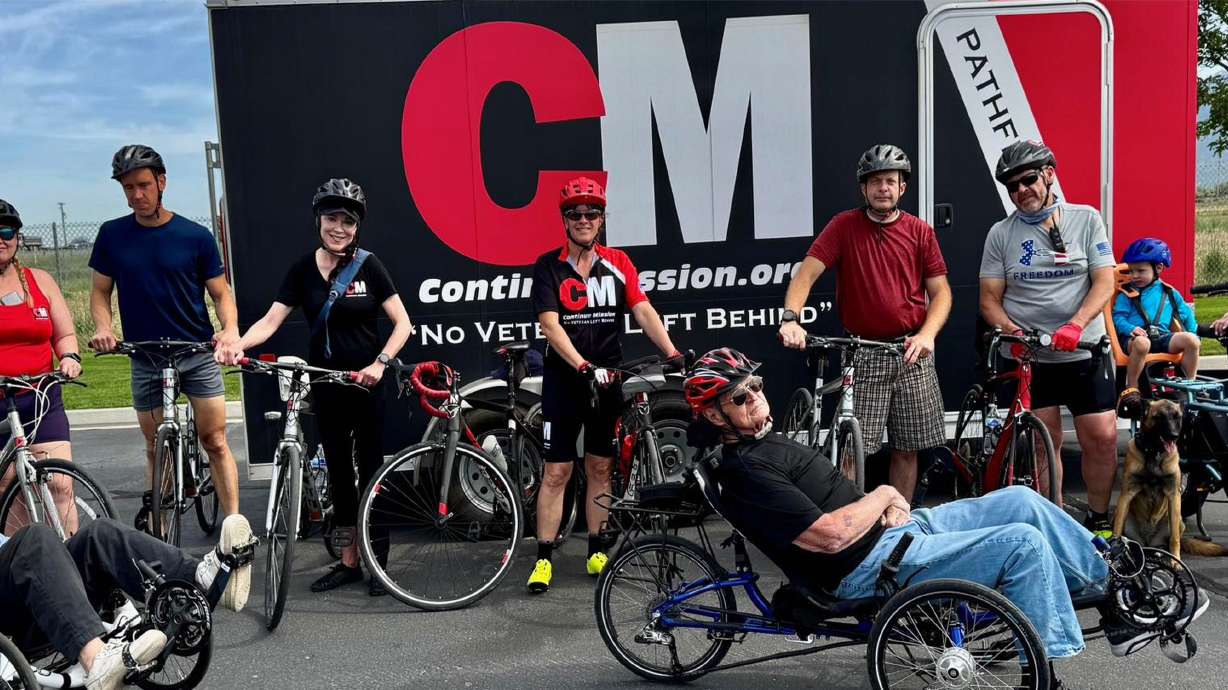
WOODS CROSS — Josh Hansen survived eight roadside bomb blasts while serving in Iraq. But when the retired Army sergeant finally returned home, he faced a different kind of battle, one that would ultimately change the direction of his life.
Hansen suffered a traumatic brain injury along with neck and back injuries during his deployment. He spent months recovering in a military hospital before receiving additional care in Utah.
The physical wounds were only part of his struggle.
Hansen said he withdrew from others, struggled with his mental health and felt like a burden on his family. His wife, Melissa, left her job to help care for him.
At his lowest point, Hansen said he experienced thoughts of suicide.
Then, he lost a fellow soldier and close friend to suicide.
"We both came home injured and went down our own dark road," Hansen told KSL.
The loss became a turning point. Hansen had spent years training soldiers to survive the dangers of combat. Now he was confronting the reality that some of those same soldiers were struggling to survive life after military service.
Related:
"Here I trained my men great for the war to survive things and be trained the best they could," Hansen said. "But then to come home and having them die by suicide, I thought we need to change this and do something here at home."
That realization eventually led Hansen and his wife to establish Continue Mission, a Utah nonprofit helping veterans rebuild connections, find purpose and improve their mental health through recreation and peer support.
And on Veterans Day, Hansen hopes people remember that the challenges facing veterans don't necessarily end when their military service does.
Utah's veteran suicide rate remains a concern
The need for support is reflected in the latest figures from the U.S. Department of Veterans Affairs.
According to the VA's 2024 state-level suicide data, released in September, 65 Utah veterans died by suicide in 2024, the most recent year for which data is available.
Utah recorded an unadjusted veteran suicide rate of 51.2 deaths per 100,000 veterans, compared with the national veteran rate of 36.4.
Although Utah's reported rate was higher, the VA found that the difference was not statistically significant after accounting for age.
Nationwide, 6,488 veterans died by suicide in 2024, averaging nearly 18 deaths each day.
Another finding in the VA's annual report highlights the challenge of reaching veterans who may need support: 62% of veterans who died by suicide in 2024 had not received VA health care during that year or the year before.
That does not necessarily mean they received no medical care, but it underscores the importance of reaching veterans outside the VA health care system.
Hansen said he regularly encounters veterans who have not sought assistance. And while some may be reluctant to discuss mental health, he believes another factor is often overlooked.
"Because a lot of veterans will tell me that (they) aren't receiving help. They're like, 'Oh, well, there's more people injured more than me. So I don't need to go in,'" Hansen said.
He believes the selflessness emphasized during military service can sometimes carry over in ways that prevent veterans from prioritizing their own needs.
"'I don't want to take away from someone else,'" Hansen said, describing what he hears from veterans who are hesitant to seek care.
Hansen said his own experience with the Salt Lake City VA was positive, and he regularly encourages veterans to register for benefits and pursue professional treatment.
But he also believes mental health care is only one part of the equation.
Veterans need opportunities to connect with others, stay physically active and rediscover a sense of purpose, he said.
Continuing the mission at home
Hansen and his wife founded Continue Mission in 2014, building its programming around the same elements that helped him during his recovery.
The organization brings veterans together for activities ranging from hiking, cycling and skiing to bowling, pickleball and other recreational events.
The activities are offered at no cost to registered veterans, and family members or friends can participate in many of them.
For Hansen, that family involvement is especially important.
He remembers how difficult military service and his subsequent recovery were for his wife, who faced the uncertainty of deployments and the challenges of caring for him after he was injured.
Having someone familiar alongside a veteran can make the first step toward joining an event a little easier.
But getting out of the house can still be a significant challenge.
"Being physical was so incredible for my mental health," Hansen said.
He described becoming comfortable with isolation, even while recognizing that it was making his life more difficult.
"Because it's very difficult to just get up and leave the door when you have post-traumatic stress and a lot of mental health issues from the war," he said.
Hansen eventually pushed himself to get outside and reconnect with others. Now, through Continue Mission, he hopes to help other veterans take that same step.
The activities themselves are only the beginning.
"The reason our organization works is the networking," Hansen said. "Veterans meet in our program."
He said those introductions often grow into friendships outside the organization, with veterans attending concerts, going to movies, hiking and participating in sports together.
Some have even taken up competitive pickleball after discovering the sport through Continue Mission.
Hansen believes those relationships can be particularly meaningful for veterans who leave military service at a young age because of injuries or disabilities and struggle to find a new daily routine.
"You need to have a purpose and something to live for and drive for," he said.
Continue Mission reports that its annual participant surveys have shown improvements in self-reported mental health and reductions in suicidal thoughts among participants. Those findings reflect participant experiences rather than independently establishing that the program prevents suicide.
Hansen also emphasized that peer support and recreation are not replacements for professional mental health care.
He said VA social workers sometimes attend Continue Mission events, providing opportunities for veterans to connect with professionals and learn about services available to them.
A different kind of mission
For Hansen, the organization's name carries special meaning.
While serving in Iraq, his job involved clearing roads of improvised explosive devices so other service members could travel safely. Once a road was cleared, he would radio a familiar military message.
"We can Charlie Mike continue mission. The path was clear," Hansen recalled.
Today, those words represent something different.
Rather than clearing dangerous roads in a war zone, Hansen hopes to help other veterans navigate the challenges of life after service.
"Now we're going to continue mission in life and healing and take care of one another here at home," he said.
And while the organization has become an important part of his life, Hansen said he doesn't believe Continue Mission is the only answer.
He encourages veterans to find whatever group, activity or community works for them.
"As long as you're doing something, please get out and do something," Hansen said.
It's a message he hopes reaches veterans who may be struggling in silence, particularly on a day when the country pauses to recognize their service.
For Hansen, honoring veterans means more than recognizing what they did in uniform. It also means helping them find their place, their people and a reason to keep moving forward.
Resources for veterans and families
Veterans interested in participating in recreational activities and connecting with other veterans can click here to learn more about Continue Mission.
Veterans experiencing a mental health crisis, or anyone concerned about a veteran, can contact the Veterans Crisis Line by dialing 988 and pressing 1, texting 838255, or visiting VeteransCrisisLine.net. The service is free, confidential and available 24 hours a day, seven days a week. VA enrollment is not required.
If you or someone you know is struggling with thoughts of suicide, call 988 to connect with the 988 Suicide and Crisis Lifeline. Crisis hotlines Online resources The more of these signs a person shows, the greater the risk. Warning signs are associated with suicide but may not be what causes a suicide. Information from the American Foundation for Suicide Prevention. Information from the American Foundation for Suicide Prevention.Suicide prevention resources
Warning signs of suicide
What to do if you see warning signs of suicide
The Key Takeaways for this article were generated with the assistance of large language models and reviewed by our editorial team. The article, itself, is solely human-written.
Ver nota original ↗
¿Querés un resumen rápido de esta noticia, hecho por nuestra IA?


