Lawmakers propose banning Flock camera grants by Texas agency
Democrats in the Texas Senate have proposed legislation to ban state agency grants that enabled law enforcement to erect thousands of Flock surveillance cameras along state roadways.
The bill — among four filed this week that seek to ban or limit use of the cameras — would block the Motor Vehicle Crime Prevention Authority from offering financial assistance for roadside automated license plate readers.
In 2023, a bill by Sen. Carol Alvarado, D-Houston, added a $1 annual fee to Texans’ auto insurance policies to fund programs combating catalytic converter theft, a growing problem at the time. An August investigation by The Texas Tribune found the authority had devoted more than $30 million of that money to help install at least 3,200 Flock cameras — part of a concerted effort to “cover the entire state” with the devices.
The Flock spending spree surprised Alvarado, who said roadside cameras were never discussed as her bill made it through the Legislature with unanimous support from the House and Senate.
On Monday, Alvarado responded with legislation that aims to “put an end” to vehicle authority grants for automated license plate readers, according to a statement from her office. Democratic Sens. Roland Gutierrez, José Menéndez and Taylor Rehmet joined as co-authors of the bill.
In addition to grants for cities and police departments, the authority tapped the insurance fund for a $15.9 million contract intended to help the Texas Department of Public Safety install more than 1,200 cameras. Ultimately, 940 Flock cameras were erected using the funds, establishing a network that in June was accessed an average of once every four seconds by thousands of law enforcement agencies across the country.
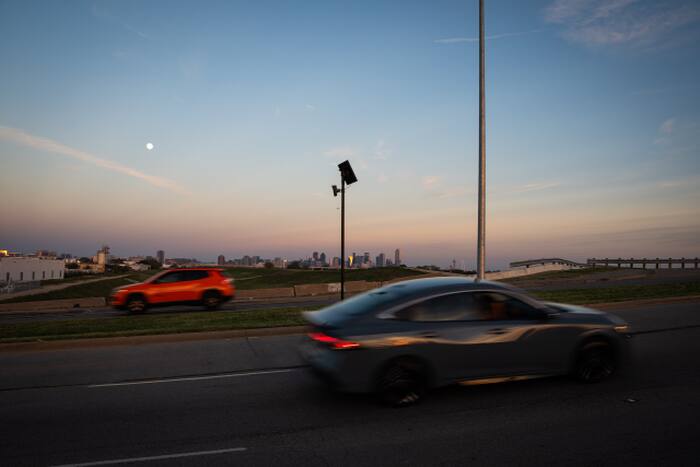
Flock cameras create “vehicle fingerprints” that can track the make, model and color of automobiles as well as details like bumper stickers and dents. Flock’s software allows departments to access databases compiled by other camera networks, creating a web of surveillance across Texas roadways.
In late August, there were an estimated 13,000 Flock cameras in Texas, although that number has dwindled as public sentiment for the cameras has soured, leading cities and counties to end their Flock contracts for hundreds of cameras.
Adding to Flock’s dwindling presence was a freeze on state funding for the cameras, including vehicle authority grants, that prompted several municipalities to end their contracts. Gov. Greg Abbott, who appoints six of the vehicle authority’s seven board members, ordered the freeze after the Tribune sent him questions about the agency’s grants.
Flock Safety offered a few cities a 90-day reprieve from payments with the hope that funding would be restored post-election. But with the imminent arrival of Gov.-elect Gina Hinojosa — who made opposition to Flock cameras a part of her campaign against Abbott — return of the grants appears unlikely.
In a September interview, Hinojosa said the vehicle authority’s actions to spread the cameras without legislative approval were particularly egregious.
“What should really happen is they should be taken down and taxpayers should get their money back for this fiasco,” Hinojosa said. “They were never authorized. They shouldn’t be standing.”
In related legislation since bill filing for the 2027 legislative session began Monday, Rep. John Bucy, D-Austin, filed a bill to ban public agencies from using automated license plate readers. Beyond Flock cameras, law enforcement frequently use Axon, Vigilant and other brands of license plate readers, although they are not interconnected in the same way as Flock’s network.
Two other bills would allow the use of Flock cameras under tighter regulations.
A bill by Rep. Mary González, D-Clint, would require law enforcement to get a warrant before a search using a license plate reader. The bill would also clarify what data from the devices are public records. As scrutiny of Flock has mounted, departments have shifted what information is available to the public, including audit logs of when officers are querying the vast state network.
Another bill from Rep. Brian Harrison, R-Midlothian, would also require a warrant and would restrict law enforcement’s use of the cameras to investigations of violent crimes. Harrison filed similar legislation the last two legislative sessions.
Ver nota original ↗
¿Querés un resumen rápido de esta noticia, hecho por nuestra IA?