The rules of texting and social media keep changing — what older adults should know
(Aging Untold) — If you are more used to phone calls and handwritten notes than texts and group chats, you might feel a bit like you are out of the loop.
There are unwritten rules about what to share, when to reply and who to trust, and the Aging Untold experts are walking you through them.
The rules are hard to find, and they keep changing
Amy O’Rourke, an aging expert, said she recently ran into the new rules herself.
“I got a text from my godson and he shamed me for the length of the text that I sent him,” O’Rourke said. “OK, so there’s rules out there, and I don’t know what they are.”
She pointed to Emily Post and Miss Manners as places to find up-to-date information on the rules.
The rules have never stood still, gerontologist “Sam” Cradduck said.
“The reality is the rules have always been changing. They’re fluid,” Cradduck said. “They’re different from the 20s to the 30s to the 40s to the 50s.”
Handshakes meant something. Scammers are counting on that.
Dr. Rhea Rogers, a board-certified physician, said older adults need to know what has changed.
“They’re used to that handshake really meaning something,” Rogers said. “And now you have the scams or the fast relationships that are growing because of the new technology.”
Rogers said older adults are looking for connection, which is why they need to be careful.
“They’re looking for that interaction and the trust,” Rogers said.
Some things don’t change, Rogers said, including “consistency, transparency.”
Relationships that once took years to build now often start on social media, Cradduck said.
“The walls are gone,” she said. “So now you’re telling intimate details about your life to a virtual stranger. And that’s not just our kids doing it or our older people. Everyone has fallen into that.”
Check with a buddy before you reply
To guard against fraud, O’Rourke suggested having a person to check in with.
“I want to have people to have a buddy, have somebody that you check in with to say, ‘I’m about to respond to this text, I’m about to jump on this Facebook,’ and check it out with somebody before you jump in,” O’Rourke said.
“We’re all learning together, so just have a comfort level with that,” aging well coach Katherine Ambrose said.
Don’t let caution keep you offline
Ambrose said scams should not push older adults away from technology.
“You should, because it’s going to keep you sharper, and it’s going to keep you in relationship with the younger people in your life and with your friends,” Ambrose said. “This is how we communicate today.”
Learning to text well helps people stay in touch with children who are busy working and raising kids, Cradduck said.
“I understand that that may not be the most comfortable way to communicate, and it might not have fit your norm,” she said. “But it is the norm of society.”
Key takeaways
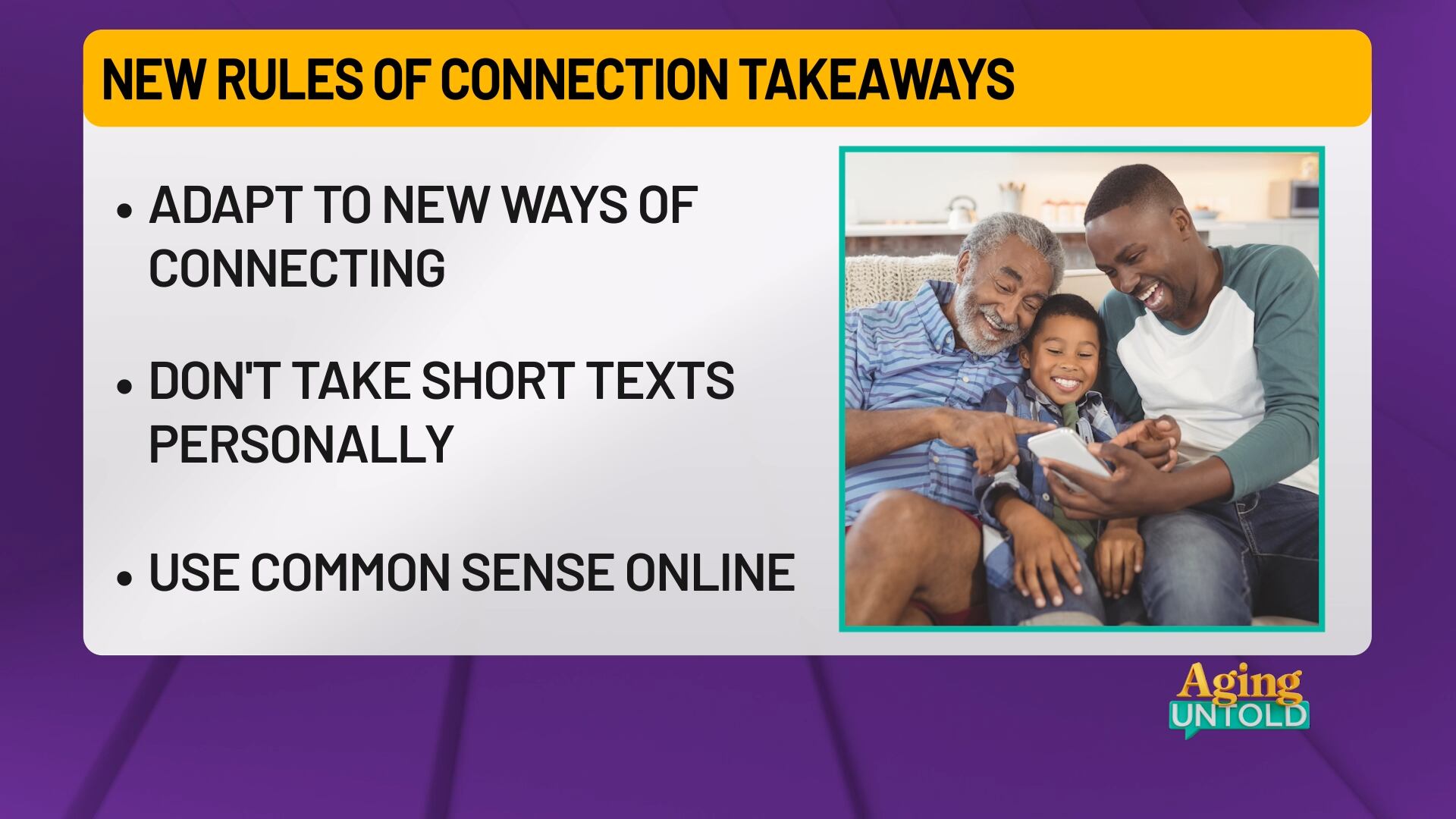
- Meet your family where they are. Adapting to new technology keeps you connected.
- Don’t take changing norms personally. A text may feel short, but the rules are different now.
- Stay cautious online. Don’t let digital speed replace common sense boundaries.
This program is provided for educational and informational purposes only and does not constitute providing medical advice or professional services. The information provided should not be used for diagnosing or treating a health problem or disease, and those seeking personal medical advice should consult with a licensed physician. Always seek the advice of your doctor or other qualified health provider regarding a medical condition. Never disregard professional medical advice or delay in seeking it because of something you have seen on this program. If you think you may have a medical emergency, call 911 or go to the nearest emergency room immediately. No physician-patient relationship is created by this program or its use. Aging Untold/Gray Media, nor its employees, contractors or agents, nor any contributor to this program, makes any representations, express or implied, with respect to the information provided herein or to its use.
Ver nota original ↗
¿Querés un resumen rápido de esta noticia, hecho por nuestra IA?