‘She went against everybody that had gotten her in there’: Curley questions Katie Wilson’s Seattle CCTV expansion
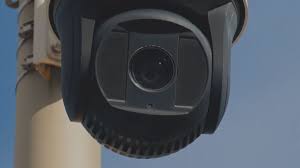
KIRO Newsradio host John Curley characterized Seattle Mayor Katie Wilson’s decision to expand police surveillance cameras as a break with the supporters who helped elect her, while arguing that Seattle should look to San Francisco’s approach to public safety.
“She went against everybody that had gotten her in there,” Curley said on “The John Curley Show.”
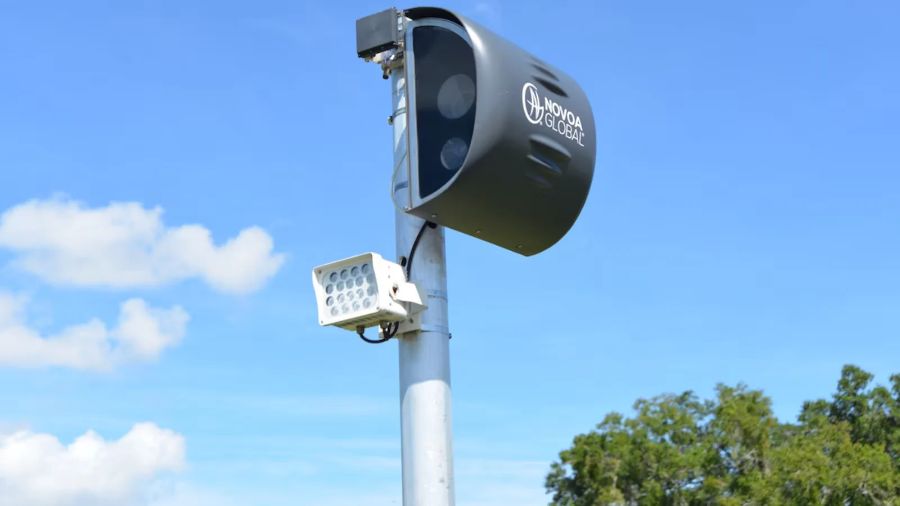
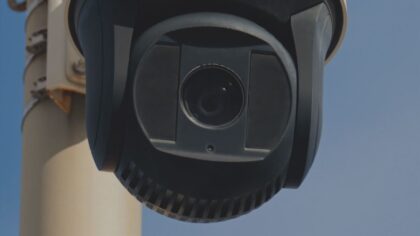
Curley played Wilson’s announcement authorizing the Seattle Police Department to expand CCTV cameras in SoDo, Capitol Hill, and the Central District and immediately activate cameras installed in the Stadium District before the World Cup.
He contrasted that announcement with an earlier recording in which Wilson opposed expanding surveillance, citing concerns about federal access to sensitive information and risks to immigrant and refugee communities.
Campaign opposition meets governing decisions
In the earlier recording, Wilson criticized surveillance legislation approved by her predecessor and raised the possibility that the Trump administration could access camera systems.
“So that is a kind of risk that I would not take,” Wilson stated in the recording.
Curley argued that the shift reflected the compromises that come with governing. In his view, Wilson had recognized demand for cameras and was deciding which supporters she could afford to disappoint.
“Well, listen, you learn, live and learn on this stuff,” Curley said.
He did not dismiss the underlying data-security concerns. Curley argued that restricting access requires more than simply switching off a direct connection to federal agencies.
“You can throw the switch in order to stop the federal government from getting in there and getting it, but there’s a whole bunch of backdoor moves,” he said.
Still, Curley supported cameras as investigative tools, distinguishing between recording a crime and preventing it.
“But the cameras help catch the people,” Curley said.
San Francisco becomes Curley’s comparison
The discussion turned to reports by Chris Daniels about San Francisco’s use of surveillance technology and its response to homelessness and public drug use.
Curley described San Francisco as a city trying to recover from years of property crime and disorder. He argued that its direction could offer Seattle a model.
“I would say San Francisco at this point is where Seattle wants to be in two years,” Curley said.
In the report played during the segment, San Francisco District Attorney Brooke Jenkins defended pursuing public safety while acknowledging the need to protect privacy.
“There’s nothing wrong with wanting public safety that doesn’t make you a racist or a Republican,” Jenkins stated in the recording.
Curley welcomed the sentiment and sarcastically framed his own support for public safety as a bold declaration.
“I’m gonna I’m gonna go out on a limb here and say that I’m in favor of public safety,” Curley said.
Jenkins also described supporting penalties for law enforcement personnel who misuse access to surveillance data.
“We have to prove that we can be trusted with it, and that starts with being transparent about what those guardrails are and being smart about it,” she stated in the report.
RELATED STORIES

What happens when someone refuses treatment?
Curley’s comparison extended beyond cameras to San Francisco’s approach to people experiencing homelessness and substance use problems.
The report described a facility called the Reset Center, where law enforcement could bring people arrested on the street to sober up. Curley focused on what he considers an unresolved question in Seattle: What happens when someone declines help?
“People refuse treatment,” Curley said.
He argued that offering services does not settle what the city should do when someone chooses to remain on the sidewalk rather than accept shelter or treatment.
“Seattle is still up in the air on that,” Curley said. “Do you force them in there?”
Curley recalled Marysville adopting an approach that presented people with shelter or jail as alternatives. He acknowledged he didn’t have updated results and wanted to examine how that policy had worked.
“I think we have to check and see how their numbers are working out,” he said.
His broader conclusion was that Seattle needs to move beyond debating whether to act and determine how its public-safety and treatment policies will work.
“But Seattle definitely needs to do something,” Curley said.
Watch the full discussion in the video above.
Listen to The John Curley Show weekday afternoons from 3 – 7 p.m. on KIRO Newsradio, 97.3 FM. Subscribe to the podcast here.
Ver nota original ↗
¿Querés un resumen rápido de esta noticia, hecho por nuestra IA?