‘Three days of medication and not much else’: King County prosecutor calls for fixes to WA’s involuntary treatment system
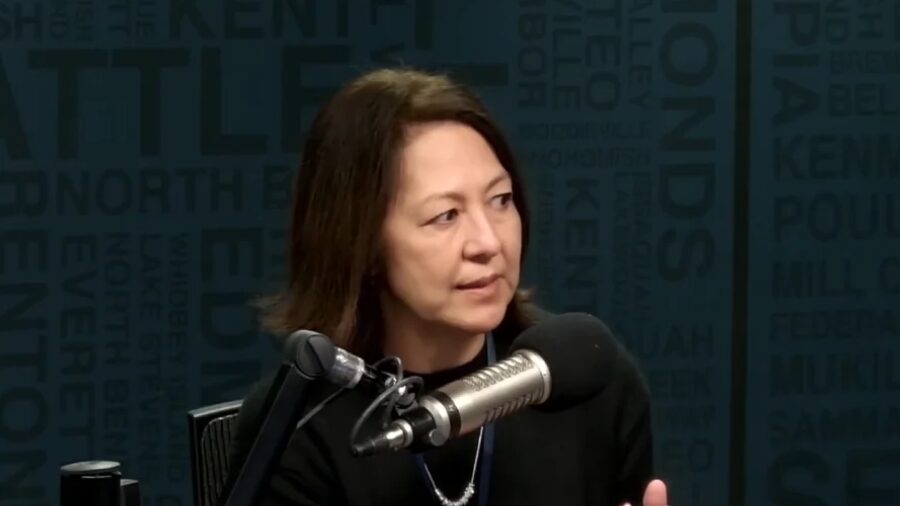
People released after being involuntarily committed for mental health or substance use treatment in Washington often leave with little support, King County Prosecutor Leesa Manion said. That’s why she’s asking lawmakers to fund better care once those patients are back in the community.
“Typically, when someone’s in the system, they’ve been stabilized, and they’re released,” Manion said on “The Gee and Ursula Show” on KIRO Newsradio. “They are released with a phone number to call and maybe three days of medication and not much else.”
She compared it to how hospitals handle other medical conditions.
“We would never release someone who, say, was suffering from some kind of acute diabetic condition into the community from the hospital with a number to call and only three days of medication,” Manion said.
A two-year look at the system
Under state law, people with a mental health or substance use condition can be detained and treated against their will if they pose an imminent risk of harm to themselves or others, or are considered gravely disabled.
After taking office in January 2023, Manion formed a task force to study the system. It brought together law enforcement, public defenders, disability rights advocates, the Whatcom County prosecutor and a person with lived experience. The group held listening sessions in Spokane, Whatcom County, King County and the Greater Columbia region.
Manion said the group found the system needs improvement across the board. King County alone sees more than 200 new involuntary treatment petitions each week.
KIRO host Gee Scott asked whether patients are being released because they’ve gotten better or because there aren’t enough beds. Manion said judges make those decisions, and patients are typically released because they’ve been stabilized. The problem is what happens next.
What the task force wants
The task force’s final report makes three main recommendations. The first is to fund care both before and after commitment, so people get support early enough to stay out of the system and keep getting help after they leave so they don’t cycle back in. The second is to match treatment to each patient’s needs, which Manion said is often blocked by geography and limited resources.
The third is to make it easier to share information, including through a statewide database that would show how many times someone has been committed and what happened after release. No such database exists now, she said.
“It’s 2026. It seems like we could do better,” Manion said.
The task force is also asking lawmakers to fund a pilot site that pays for post-release care, tracks results and then replicates what works.
Gee asked what pushback she expects beyond money. Manion said funding will be the biggest challenge, but the state is already paying when people fall through the cracks and end up in hospitals or the criminal justice system.
“So we’re spending money, but we may not be getting the results or the return on investment that we would like,” she said.
A retired law enforcement officer texted the show asking why people brought to the hospital for an evaluation are often released right away. Manion said a crisis responder may decide someone doesn’t meet the legal criteria, but that doesn’t mean the person doesn’t need help.
“We shouldn’t wait for them to decompensate so that then they meet criteria and then they enter the system,” she said.
Manion warns against bail changes
KIRO host Ursula Reutin also asked Manion about a proposal before the Washington State Supreme Court that would make it harder for judges to hold people on cash bail. Public defenders argue the current system treats poor defendants differently from people who can afford to pay.
Manion said King County doesn’t hold many people accused of misdemeanors in jail before trial. She noted that judges already must presume release unless a defendant is likely to commit a violent crime, violate a no-contact order, tamper with evidence or witnesses, or miss court.
She said the proposal would limit judges’ discretion, and pointed out that the Superior Court Judges Association opposes it. One change would cap bail for most misdemeanors at $200, meaning someone could get out by paying $20 to a bondsman.
“I think that there are certain individuals who probably should be held that will be released under this system with very little to guarantee their return to court,” Manion said.
She said she supports bail reform, but any changes need to come with strong alternatives that keep the public safe and get defendants back to court. She suggested one simple fix: text reminders.
“I get a text message from my dentist reminding me that I have an appointment,” Manion said. “But folks who are in the criminal legal system, they don’t necessarily get that same courtesy or response.”
Gee called that his biggest takeaway from the interview.
RELATED STORIES



Diversion and intervention
Gee asked how the county’s diversion programs are working. Manion said she fully supports diversion, but results need to be tracked to make sure programs change behavior without putting the public at risk.
She also pointed to an intervention effort in Kent. Her office and the Kent Police Department identify young people who keep showing up around shootings but haven’t been charged or hurt. They’re referred to two nonprofits, Project Be Free and the Latino Civic Alliance, which offer services to them and their families.
Manion said gun violence in South King County has dropped by about 67%, compared with about 47% across most of the county, and she credits the work of those groups.
Manion also said her office will go back to lawmakers this session with its bill on juvenile gun possession.
Watch the full discussion in the video above.
Listen to Gee and Ursula on “The Gee and Ursula Show” weekday mornings from 9 a.m. to 12 p.m. on KIRO Newsradio.
Ver nota original ↗
¿Querés un resumen rápido de esta noticia, hecho por nuestra IA?