El-Sayed breaks barrier for Muslims who've been in U.S. for half a millennium
Muslims have never been strangers to this country, contrary to the skewed perception of many Americans.
In 1528 — nearly a century before English colonists arrived in Jamestown and the Mayflower dropped anchor in Cape Cod — Mustafa Zemmouri, a Muslim Moroccan, also known as Estebanico or Estevanico, set foot on what is now the United States.
The enslaved, Arabic-speaking explorer, whose last name is also written Azemmouri, walked across the American South, Southwest and into Mexico, serving as a translator and cultural mediator between the Indigenous communities and the Spaniards he traveled with.
Zemmouri, who may have been killed by the Zuni tribe or faked his death to escape bondage, wasn't an anomaly.
Scholars estimate that as many as 30% of the thousands of other Africans brought to our shores against their will shared Zemmouri’s Islamic faith, which they were forced to practice in secret or abandon.
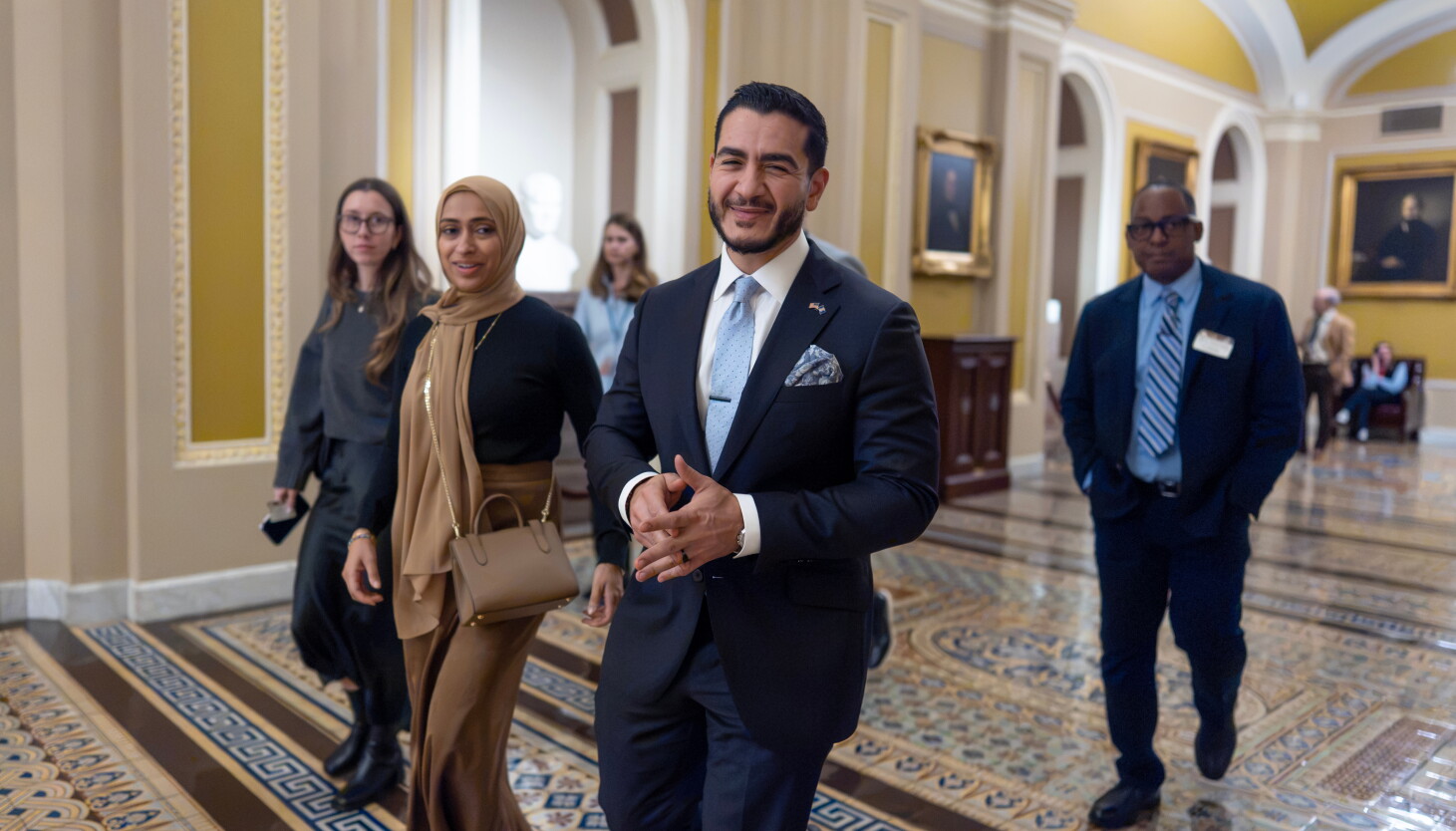
I feel compelled to give this history lesson as I watch many fellow Americans freak out over the political rise of Muslims, including Abdul El-Sayed's milestone Senate win in Michigan less than two weeks ago.
The centuries-old context is particularly significant to El-Sayed's victory, which would have been impossible without the votes of Black Michiganders, many of whom are also Muslim.
There was skepticism before the midterm elections about whether the former public health official of Egyptian descent could garner enough support in Detroit, where the tension between Black and Middle Eastern populations is well-documented.
The progressive El-Sayed didn't shy away from broaching the subject. He called out anti-Black racism in many Arab and Muslim spaces and credited the Civil Rights Movement for helping bring his family to the U.S. from North Africa — a region where Zemmouri was born 500 years ago.
"In the Arab and Muslim community, too often people don't really quite appreciate the history on which they walk," El-Sayed told Chicago-born rapper Vic Mensa in a video podcast interview in late October.
"It was organizing in pews in Black churches that addressed the bounds of immigration that allowed my dad to come here. I owe that debt of gratitude (to the Black community)."
Days later, Haley Stevens, who lost to El-Sayed in the Democratic Senate primary, walked into the type of house of worship El-Sayed referenced and sidled up next to Senate Republican nominee Mike Rogers.
Exploiting a Black sanctum to set the stage for a betrayal is pretty offensive. But for a white woman to use such a site to debut her newfound enthusiasm for a candidate whose party peddles white supremacy is next-level wack.
I know many Americans were traumatized by the congresswoman's endorsement of the MAGA-aligned Rogers, who used racialized and anti-Muslim rhetoric against El-Sayed.
For most Muslims, the stunt was an extra punch in the gut and additional proof that some Americans, including those who claim to have our best interests at heart, don't want us in key positions of power.
After all, it was only a year ago that the Democratic establishment played a starring role in trying to derail Zohran Mamdani's mayoral campaign in New York City.
Hope coupled with despair
That Mamdani and El-Sayed prevailed in spite of the vitriol and desperate efforts to block their ascent made their victories even sweeter. Their triumphs symbolize the beauty of a diverse America and its potential to fulfill the promise of equality. But the men's visibility also lays bare the ugliness of bigotry and double standards brandished to render Muslims a threat.
I'm sure someone started a drinking game somewhere tied to the number of times Mamdani and El-Sayed are pressed about their commitment to Jewish safety due to their Palestinian rights advocacy.
Maybe they're the wrong people to ask.
Two days after the midterms, a national poll commissioned by J Street, a pro-Israel nonprofit, revealed that the majority of Jewish voters said Israel's actions in Gaza and the West Bank, along with the American Israel Public Affairs Committee’s campaign spending against Israel's critics, increase antisemitism.
No one should feel unwelcome or at risk.
I just don't hear journalists repeatedly asking politicians what plans they put in place to make Muslims feel safer when they green light bombing Muslim countries and implement policies like the USA Patriot Act that harm our communities at home.
The first Muslims, who helped build the nation with their non-Muslim brothers and sisters, used their voice and written word to resist oppression and document their own and their shackled peers' humanity and intellect.
Many of us have adopted such traditions to keep persevering. We refuse to be silenced and take solace in knowing that many of our fellow Americans are finally willing to listen and trust us enough to govern in a land where we've existed all along.
Rummana Hussain is a columnist and leads the opinion coverage at the Sun-Times.
Ver nota original ↗
¿Querés un resumen rápido de esta noticia, hecho por nuestra IA?