
Salt Lake Masonic Temple still open after nearly a century in Utah
SALT LAKE CITY — The Salt Lake Masonic Temple, the fifth-largest Masonic temple in the United States, has been operating for nearly 100 years. Despite its age, the building is still in use and open to tours.
The temple, located at 650 E. South Temple in Salt Lake City, was constructed over several years in the 1920s, costing $750,000 to build and another $250,000 to furnish. Because of inflation, the $1 million price tag would equal an estimated total cost of $19.4 million if built in 2026.
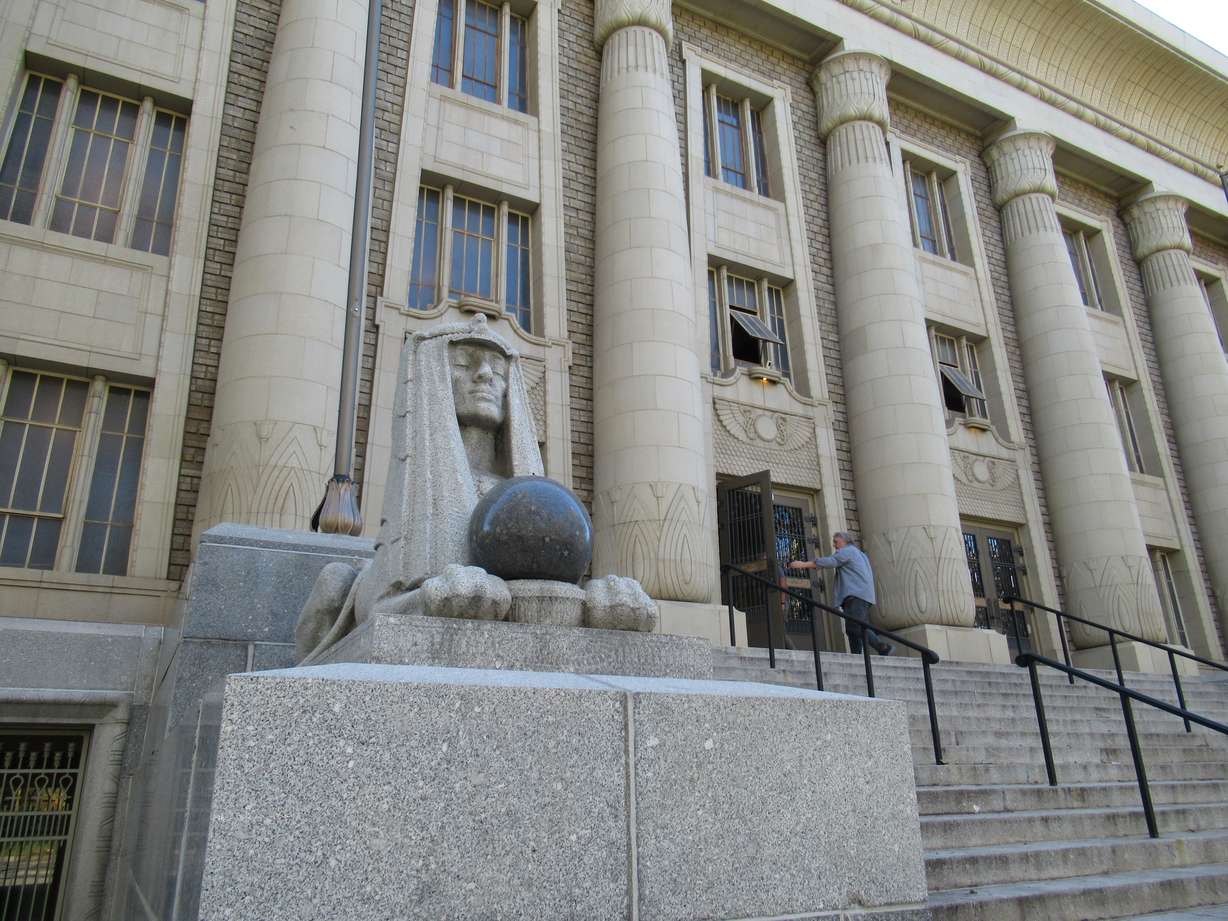
The cornerstone was laid on Nov. 5, 1926, but the building did not open for occupancy until Nov. 20, 1927, according to Ashlee Child, a temple worker. A public ceremony honoring the 100th anniversary of the cornerstone's installation will take place in front of the temple on Saturday, Nov. 21, at 1:45 p.m.
The white stone building rises five stories along South Temple, but the tall, offset front windows give the illusion that it rises only four. The roof was originally a functional sixth floor, but it has since been closed to the public.
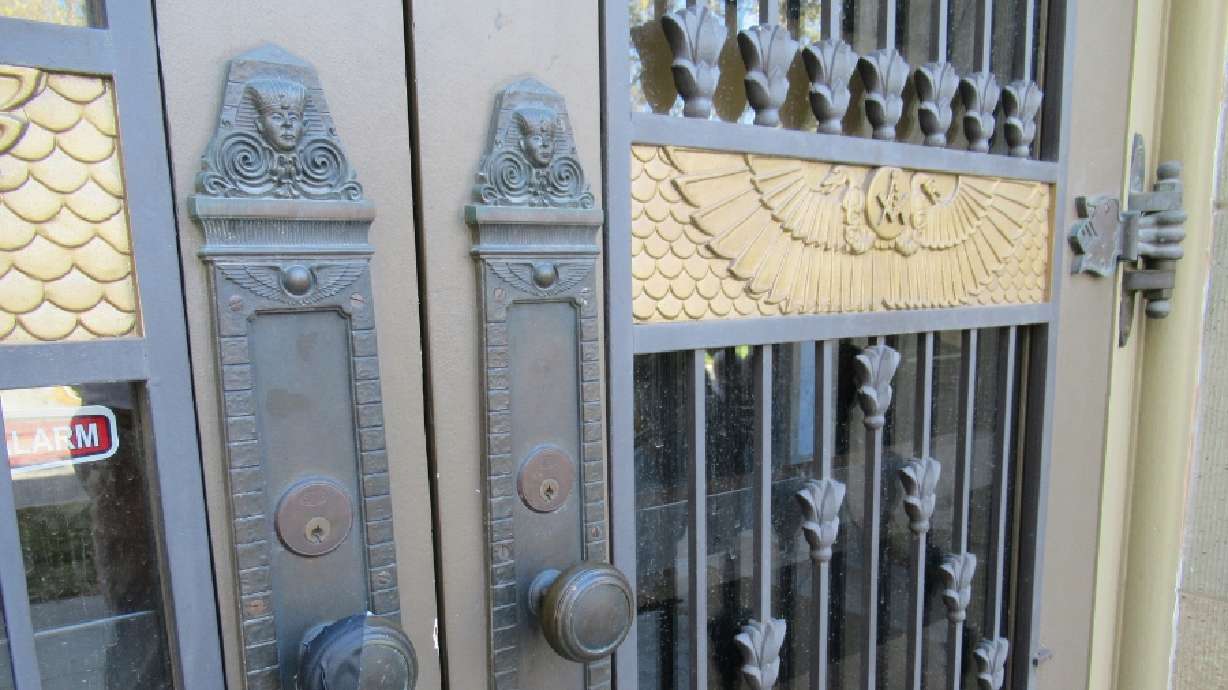
Members of the Masonic Temple could enter through the main entrance at the top of the stairs off South Temple, but visitors were required to enter through a side entrance. The metal gates inside kept non-inducted members out while still allowing them to talk to Masonic officials.
The first floor is now open to visitors as a more functional space, with offices for businesses that provide free dental, speech, vision, orthopedic and specialized surgical care for children regardless of the family's ability to pay.
Another section of the main floor is the banquet hall, a large room with a recessed floor supported by columns on all sides. The large room is available for rent to large outside groups, helping provide additional funding for the temple's upkeep.
Access to the upper floors is available via staircases or the second-oldest operating elevator in Utah. Originally limited to masons, the upper floors can now be viewed on temple tours.
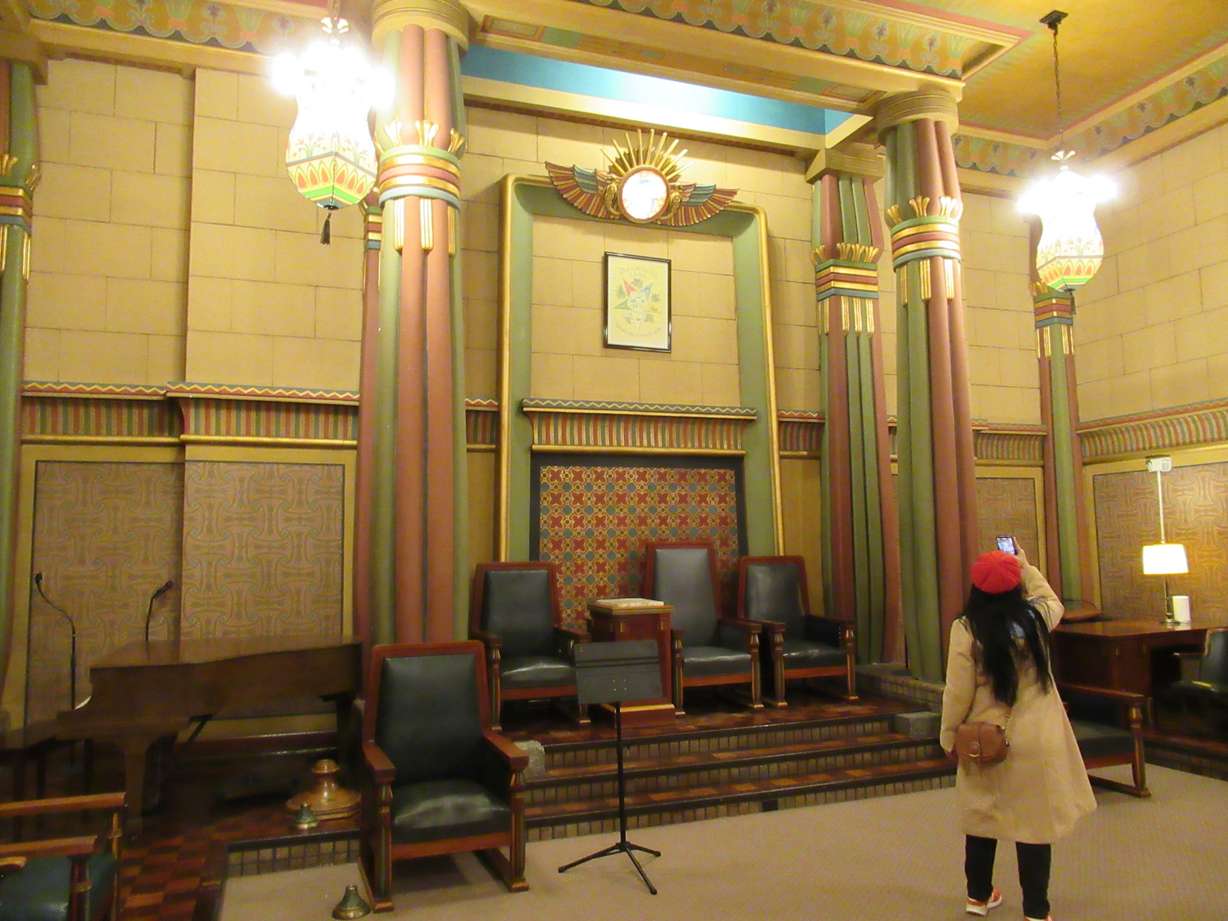
Several large rooms within the building are each designed around a different theme. One room is themed around American colonial architecture, another around Egyptian architecture and a third around North African architecture.
Each room is laid out according to the cardinal directions. In the east sits the worshipful master, the chief officer of the Masonic lodge. To the west sits the senior warden, the lodge's second officer.
To either side of the worshipful master sit two stones, one roughly cut from a quarry and the other finely polished and square. These two stones, known as ashlar stones, symbolize the journey from an uneducated, rough individual to a refined, finished one.
Another notable aspect of the rooms is the winding staircase, laid out with two landings between three, five and seven stairs. The lower three stairs are inscribed with Masonic symbols, while the middle five refer to the traditional five senses and the upper seven refer to the liberal arts and sciences.
Two columns stand at the base of the staircase, representing the columns of the Temple of Solomon, according to tour guide Jon Clark.
Several of the pieces of furniture are original to the temple, including the chairs in the American colonial room and wicker furniture in the ladies' lounge. While some of the carpet remains original in the temple, other portions have been replaced with newer carpeting.
One of the largest rooms within the temple is the theater room, where hundreds of seats rise up three of the four walls facing a large theater. The theater room's ceiling is dotted with stars, showing stars from the night sky in the 1920s.
Originally, the theater room had an organ, but Clark said most of it was donated to the Cathedral of the Madeleine. Some of the original pipes remain within the walls.
Tours within the temple
Over time, the temple has attracted fewer and fewer attendees. As fewer attendees came, less and less funding was available for the building's upkeep.
It was Child's idea to reach out to Preservation Utah to partner with the Salt Lake Masonic Temple to help preserve the century-old building and potentially raise additional funds.
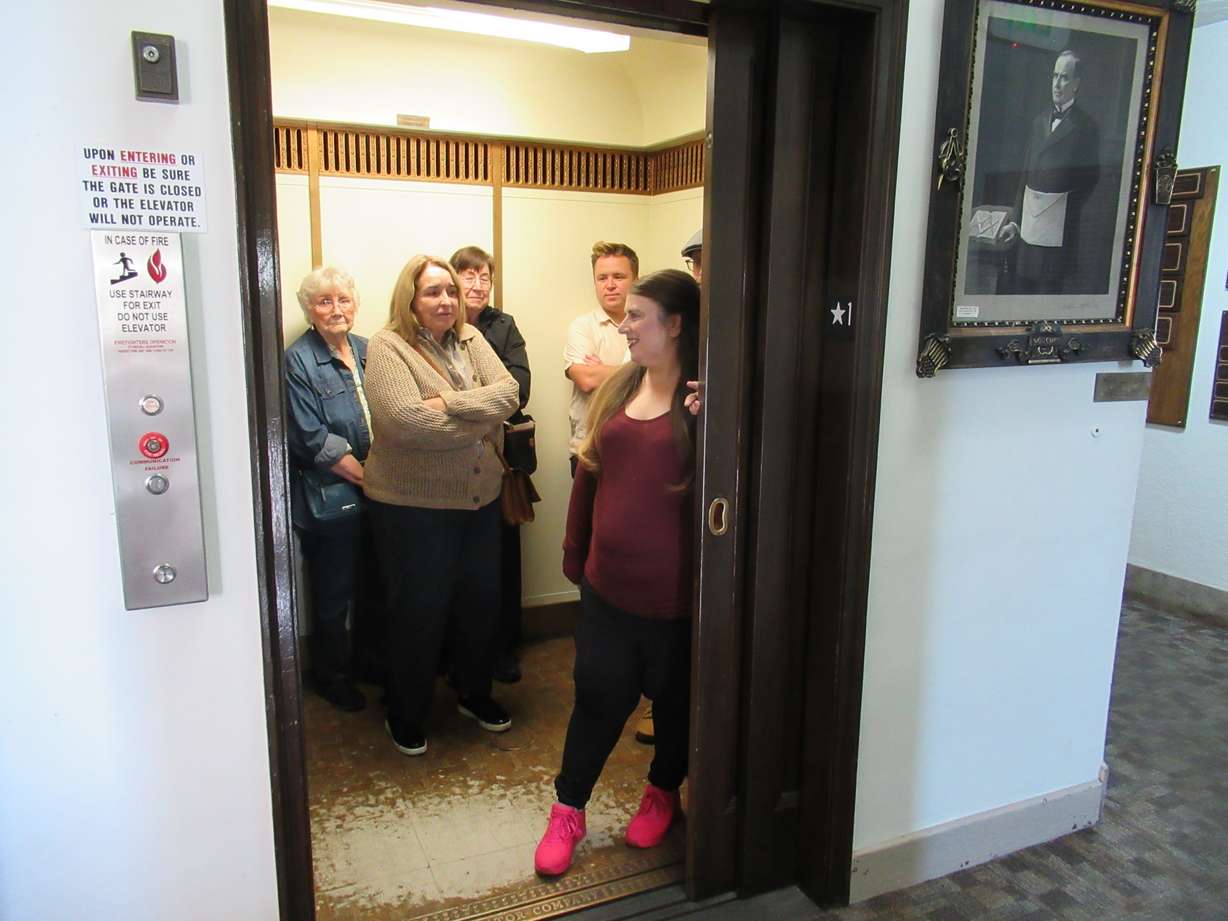
While tours of the building had taken place in the past, the tours were typically free. Child said she began going to the city markets and advertising $10 tours to see the inside of the temple.
"My first time I did that, I almost did $1,000 in one day," she said. "So like, 'OK, maybe there's something here after all.'"
Preservation Utah now runs tours, guiding visitors through the temple year-round. The temple is on track to host dozens of tours this year, often more than once a week. Ticket sales help fund the temple's operation.
"I'm just always trying to think of creative ways to bring money in the building, to keep this building here," she said.
The Key Takeaways for this article were generated with the assistance of large language models and reviewed by our editorial team. The article, itself, is solely human-written.
Ver nota original ↗
¿Querés un resumen rápido de esta noticia, hecho por nuestra IA?


