CPS overtime pay costs skyrocketed despite a 2022 warning to rein in spending
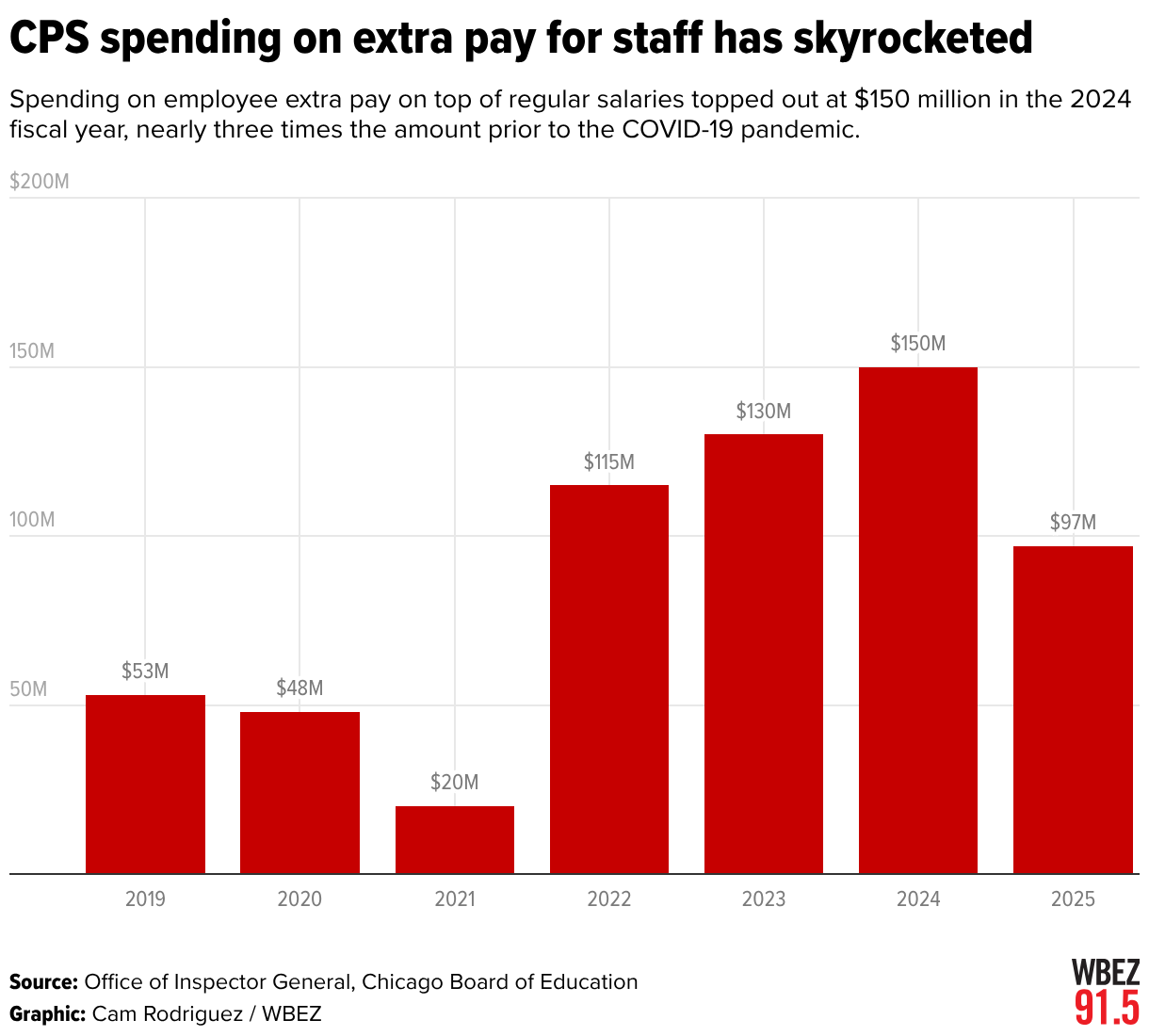
Extra pay earned by Chicago Public Schools staff exploded in recent years after the district failed to heed some recommendations issued in 2022 that might have brought the spending under control.
That’s according to a new report from the CPS inspector general’s office, released Monday. The inspector general found the school district’s overtime costs tripled from 2019 to a peak of $150 million in 2024. In 2025, the most recent year examined by the OIG, the amount dropped to $97 million.
“When it goes unmonitored and untracked, it can absolutely lead to fraud and waste, we've seen it in our investigations over the years,” Inspector General Philip Wagenknecht said. “We’ve had cases where clerks are involved in paying themselves over time. Several years ago, we had a principal who was indicted and convicted for a phony extra pay scheme where she was distributing the pay to her staff and requiring them to kick it back to her.”
Wagenknecht’s office found issues with extra pay to employees among a range of positions and parts of CPS but found particularly high levels among custodians. One custodian, for example, punched in and out of work for 77 days in a row, including weekends.
CPS officials say they take the Inspector General’s findings “seriously and are continuing to strengthen controls over extra pay, including overtime, extended day and stipends. The District will continue to review and update guidance and monitor payroll procedures.”
The report comes as the school district has had to cut to close budget deficits for the past three years and is expected to face one again this coming year.
The inspector general’s report is a follow-up to one in 2022 that pointed out the district lacked controls on extra pay and expressed concern that “spending might continue to rise unchecked, especially with federal COVID relief funding available.” CPS received $2.8 billion in COVID-19 relief funds, which it had to spend by the end of 2025.
“Unfortunately, the OIG’s prediction came true,” the inspector general wrote in the report, referring to the Office of the Inspector General.
In response to the report, CPS officials say they have or are working on implementing some of the recommendations. These include capping what employees can earn in a given period through what’s known as “extended day pay” and creating a system to monitor whether protocols are being followed.
The OIG examined different types of extra pay: traditional overtime for hourly workers, typically 1.5 times their rate; and extended day pay, which is paid by the hour; and lump-sum stipends, which are two categories of pay teachers and other staff can earn for work done outside their standard schedule, like running a club or a sport.
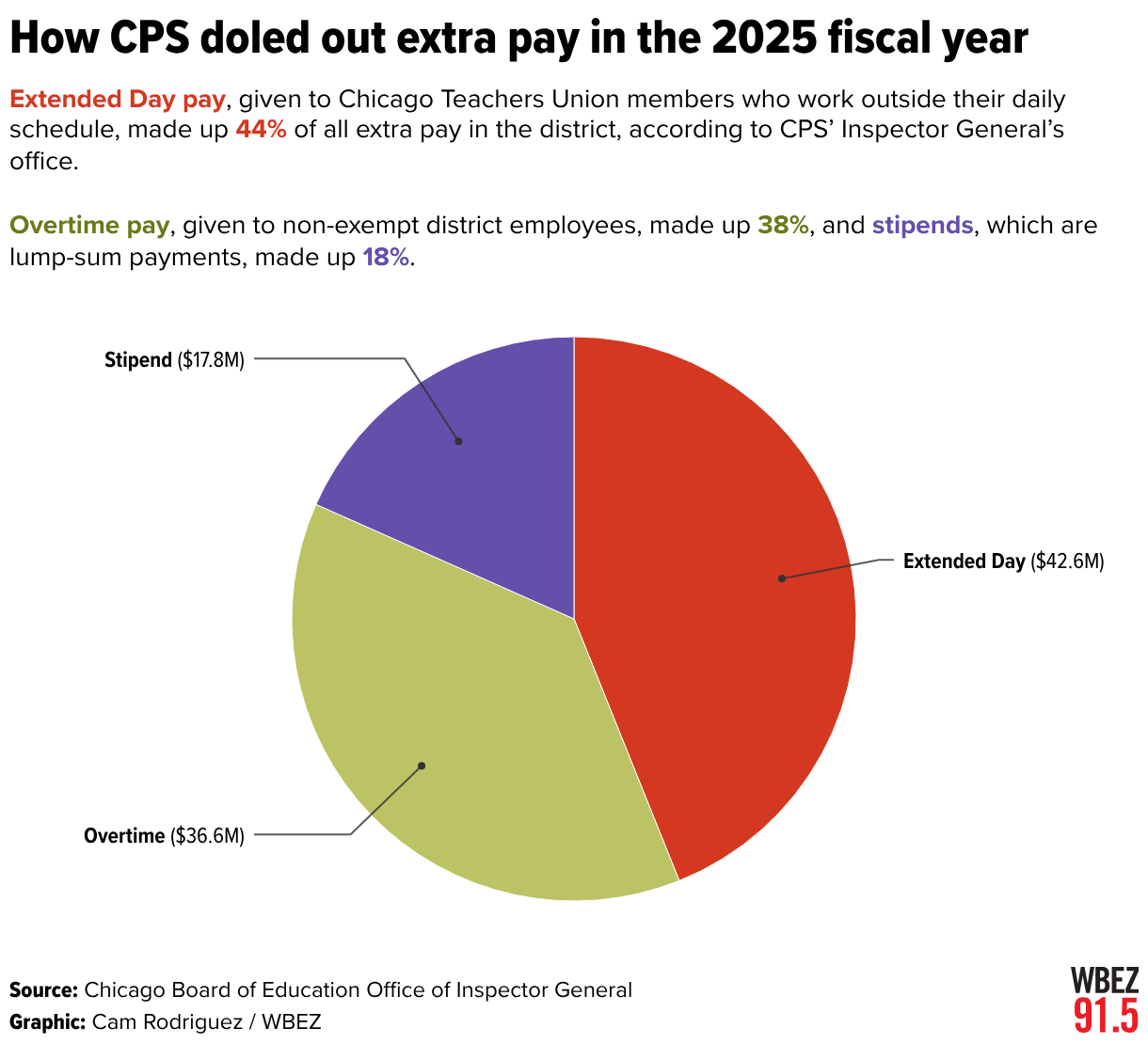
CPS put aside more than $100 million in COVID-relief money for extended day payments as the district sought to recoup learning loss and increase attendance through after-school programs.
Yet the inspector general noted, back in 2022, the deployment of those extra pay dollars was ripe for fraud and CPS did not have limits, accepted paperwork without proper approvals and did not monitor it to catch excessive payments.
And the inspector general’s new report details a number of situations where employees appeared to collect a lot of extra pay without questions. For example, over four years, six employees made $200,000 in extra pay and 147 made $100,000 in extra pay.
The facilities department and its custodians received the most overtime pay in each of the years the inspector general reviewed. His office noted the costs in 2025 might be a result of the district laying off 160 custodians who clean schools. CPS kept all the 1,225 custodians employed by the district. This resulted in a 6% drop in custodian positions.
Even if there was more work to do, some of the extra pay for custodians was exorbitant, the report said. One custodian took home $275,000 in extra pay over four years. Another earned $81,000, in addition to a regular salary of $61,000, in 2025.
CPS noted in 2025 the management of custodians was in transition as the district took it over after it had been privatized for more than a decade.
Ver nota original ↗
¿Querés un resumen rápido de esta noticia, hecho por nuestra IA?