You can cut sodium without giving up flavor
(Aging Untold) — For many older adults, watching sodium is part of managing blood pressure, heart health and other medical conditions.
If you think that means giving up favorite foods and flavors, Dr. Rhea Rogers, a board-certified physician, said it does not.
‘Smarter ways to make things healthier’
Rogers said people do not have to give up the foods and flavors they enjoy.
“Absolutely not,” Rogers said. “We just find smarter ways to make things healthier.”
Other spices can bring out the natural flavor of food.
“Other spices will bring out the natural flavor, because many times we’re hiding it,” Rogers said. “Many times we’re hiding it. We don’t even taste what that real food tastes like.”
She said people with high blood pressure or kidney issues may not want a lot of sodium.
“The sodium is going to make you absorb water and hold on to it,” Rogers said.
High insulin can also make the body hold on to sodium and water, she added.
“You just have to learn how to blend the spices and things like that to make your food taste actually just as well, or better,” Rogers said.
Cooking and seasoning at home
Aging expert Amy O’Rourke said her husband follows a low-sodium diet. She cooks vegetables, such as carrots, for a long time to bring out their flavor, though not until they are mushy.
“I also toast and warm spices like cumin and paprika, and that brings out the flavor also,” O’Rourke said. “The less we season the food, the more you can taste the actual food.”
She said she reads labels because bread, pastries, processed foods and canned foods can contain a lot of sodium. When her husband started the diet, she looked up how much he should have.
“It’s 2,300 mg, which is a teaspoon,” O’Rourke said. “So it’s very, very little.”
Reading labels and finding hidden sodium
Rogers said some people make their own seasonings, such as garlic powder instead of salt. She also brought up the recommended daily allowance on food labels.
“If you see 5% or less, that’s a really low sodium,” Rogers said. “You start seeing 20% or higher, that’s pretty high in content.”
Gerontologist “Sam” Cradduck said the biggest source of sodium is not the salt shaker.
“The most dangerous salt shaker there is isn’t even the one that’s on the table or the one that you use,” she said. “It’s what’s already in the food that you’re eating.”
The body still needs sodium
Cradduck said the body needs sodium.
“That’s what makes our nerves work. It’s what makes our muscles contract. It maintains blood pressure, normal fluid balances,” Cradduck said.
She said low sodium can be an issue in older adults, especially for people who take a diuretic or have heart failure or kidney disease.
“One is nutritional, one is metabolic, and you need to find the balance,” Cradduck said.
Sea salt, sports drinks and potassium substitutes
Aging well coach Katherine Ambrose said people hear that sea salt, Himalayan salt and pink salt are good for them. She said some fitness trainers recommend a certain amount of salt each day, while a low-sodium diet calls for less. She named lunch meat, fast food, canned goods and energy drinks as sources of sodium.
“I think it’s going to be individualized,” Rogers said. “You have to look at who’s getting what and who needs what.”
She said replacing sodium with potassium may not be a good idea, depending on a person’s medical conditions.
Butter and nutritional yeast
When using butter as a seasoning, check whether it is salted or unsalted, Cradduck said.
“Don’t think, ‘Oh, I’m going to get rid of the salt and I’m just going to season with butter,’ and then you use butter that’s full of salt,” Cradduck said.
Rogers also mentioned nutritional yeast, which can give a cheesy flavor.
“There’s a lot of different things that you can use that really enhance the flavors and actually taste better,” she said.
Key takeaways
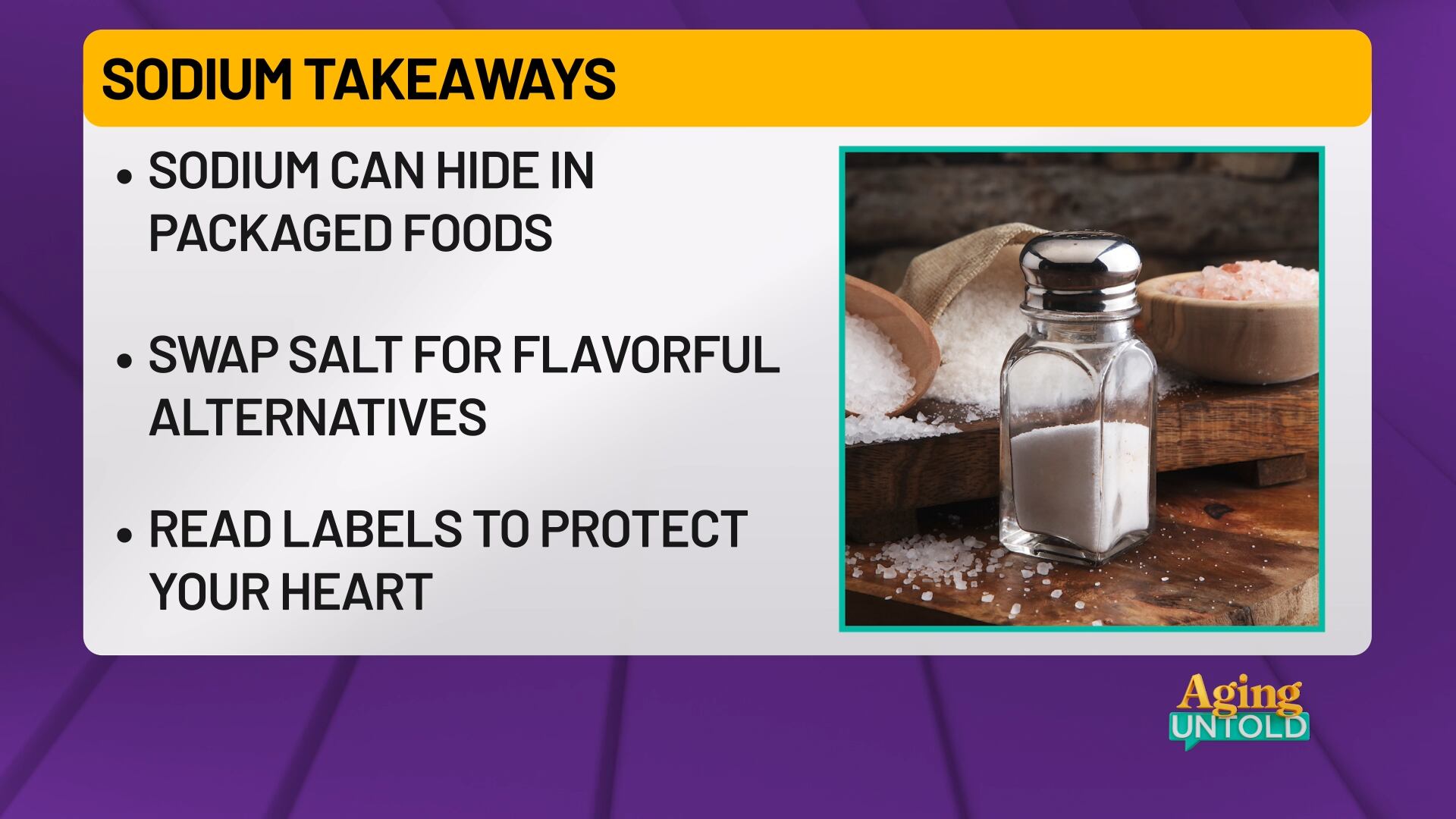
- Sodium can hide in packaged foods and raise blood pressure
- Swap salt for flavor. Zest, herb blends and nutritional yeast can bring out the natural flavor of food
- Check labels to protect your heart without losing flavor
This program is provided for educational and informational purposes only and does not constitute providing medical advice or professional services. The information provided should not be used for diagnosing or treating a health problem or disease, and those seeking personal medical advice should consult with a licensed physician. Always seek the advice of your doctor or other qualified health provider regarding a medical condition. Never disregard professional medical advice or delay in seeking it because of something you have seen on this program. If you think you may have a medical emergency, call 911 or go to the nearest emergency room immediately. No physician-patient relationship is created by this program or its use. Aging Untold/Gray Media, nor its employees, contractors or agents, nor any contributor to this program, makes any representations, express or implied, with respect to the information provided herein or to its use.
Ver nota original ↗
¿Querés un resumen rápido de esta noticia, hecho por nuestra IA?