Texas' data center policy could have impact on interest rates
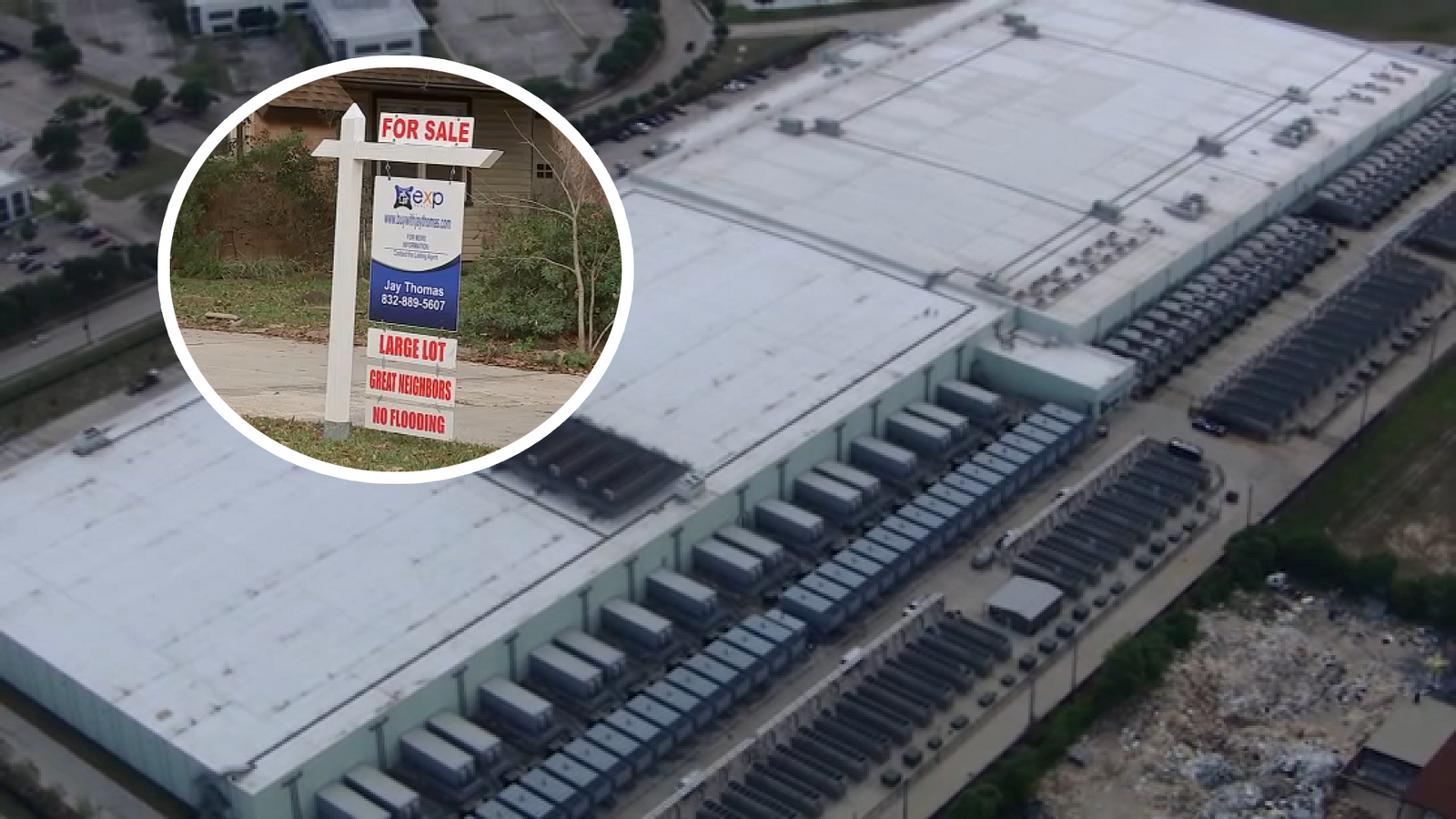
HOUSTON, Texas (KTRK) -- Texas lawmakers are already looking at new rules for the state's growing data center industry. More than 20 bills have been filed ahead of the next legislative session. And decisions in Austin could have implications that go beyond your water and electric bills.
The proliferation of data centers does more than just impact water and electricity concerns; it also impacts Texans' ability to borrow money and buy homes.
Kala Simpson is looking to buy a home for her and her two dogs. It's been a process.
"It started a couple of years ago," she said, "wanting to buy a home, tired of renting, living in an apartment. "
Today's interest rates are part of the equation.
"Interest rates are definitely a lot higher than when I started looking," she said.
And while it might not seem like it on the surface, data centers have indirectly impacted Kala's home search. Here's how: data centers are expensive. The Federal Reserve in Minneapolis estimated one trillion dollars in spending in 2027. Companies borrow a lot of money to build them. That borrowing puts pressure on government-backed securities like T-bills, which are tied to longer-term debt like mortgage rates.
Even a half-point shift in interest rates can have a significant impact on the price of a mortgage. Consider how it would alter the price of a $300,000, 30-year fixed-rate loan. That half point changes the monthly loan by roughly $100.
What Governor-elect Gina Hinojosa and the new legislature decide to do about regulations and how far they choose to go could eventually impact those rates.
Joyce Beebe is the public finance fellow at the Baker Institute at Rice University.
"There are several things at play," Beebe said. "That might slow down the construction, and that may make some operators decide whether we to stay in Texas or whether we want to look somewhere else."
But it's not only about interest rates for homebuyers like Kala. Her broker is her mom, Trecia Cooke.
"The interest rate is not the only thing," Cooke said, "or it's not the most important thing. The most important thing is what you're comfortable in paying and the overall expense of what it is to live in a property. "
Another factor is the cost of electricity. And while there is mixed evidence as to whether Data Centers directly increase the cost of electricity for homeowners, they objectively impact the grid and its ability to handle the additional demand those data centers require. Adding to that capacity is a cost the state may shift to the companies or pass on to residential customers.
"It's the cost of upgrading the grid," Cooke said. "Where are we going to get electricity from? Who is going to pay for that? "
Data centers are not going anywhere. The question remains how much tighter restrictions could become under a new political environment and what that does long term for consumers who borrow money.
Whatever happens won't be overnight, so for home shoppers like Kala, on the verge of buying, any drop in rates won't help. But it could down the road, when she's ready to sell and buy home number two.
"Just something that I can call my home," she said. "I'd rather pay $1,700 for a mortgage than $1,700 for rent. "
Copyright © 2026 KTRK-TV. All Rights Reserved.
Ver nota original ↗
¿Querés un resumen rápido de esta noticia, hecho por nuestra IA?