Tech company says it can mine lithium from Great Salt Lake without consuming any water

FERNLEY, Nev. — From its facility about 30 miles east of Reno, Mark Mulligan gave KSL a tour of one of Lilac Solutions' pilot lithium plants.
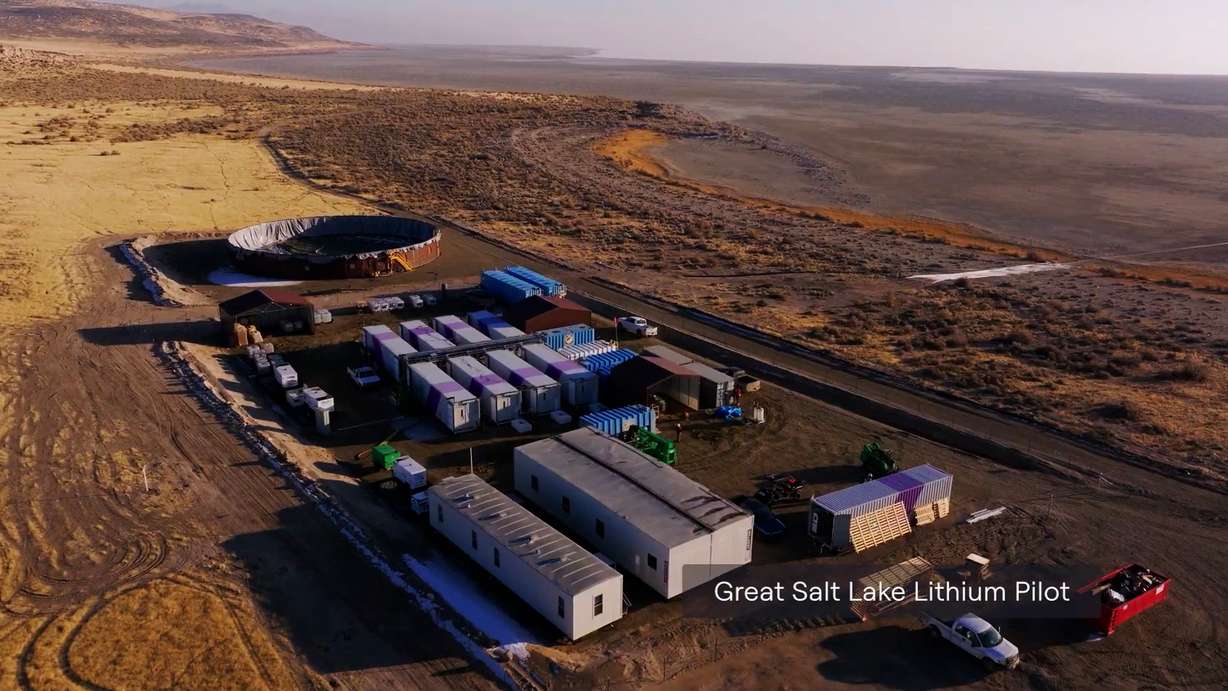
A similar portable plant was set up on the northeastern shore of Great Salt Lake for seven months while the company tested its proposed method to mine the lake for lithium, without consuming any of the lake's water.
"The Great Salt Lake is a very sensitive ecosystem," said Mulligan, the vice president of engineering and projects at Lilac. "We want to make sure that we're not adjusting or changing the water quality, except for obviously the lithium that gets extracted."
The U.S. Department of Energy recently awarded the company a $100 million federal grant as part of an effort to expand the production of critical minerals in the U.S.
"The federal government's putting a lot of money towards not just our projects, but various critical minerals projects as well," Mulligan said. "We've been working very closely with not just Utah state regulators, but at (the) federal level as well, and really the drive to the U.S. becoming more self-sufficient in terms of critical minerals production."
If the Lilac's plant is fully permitted, state laws outline royalties that the company will need to pay as lithium is sold, which will follow current market values. The full-sized plant will span about 20 acres, generating about six megawatts of power from propane.
The plant would produce hundreds of jobs in construction, about 65 permanent positions afterwards, with a plan to mine from Great Salt Lake for a couple of decades.
"The full-scale facility will be 5,000 tons per annum of lithium carbonate equivalent," Mulligan said. "And that will then match the current U.S. production of lithium."
While the U.S. has the 3rd largest cache of natural resources containing lithium in the world, the nation's production of the mineral falls around ninth worldwide, representing only 2 percent of the world's supply, according to the U.S. Geological Survey.
"The facility will use about 20 acres of space and will operate the site for 20 years," Mulligan explained. "And at the end of that 20 years, we are required to then dismantle and remove the equipment from (the) site."
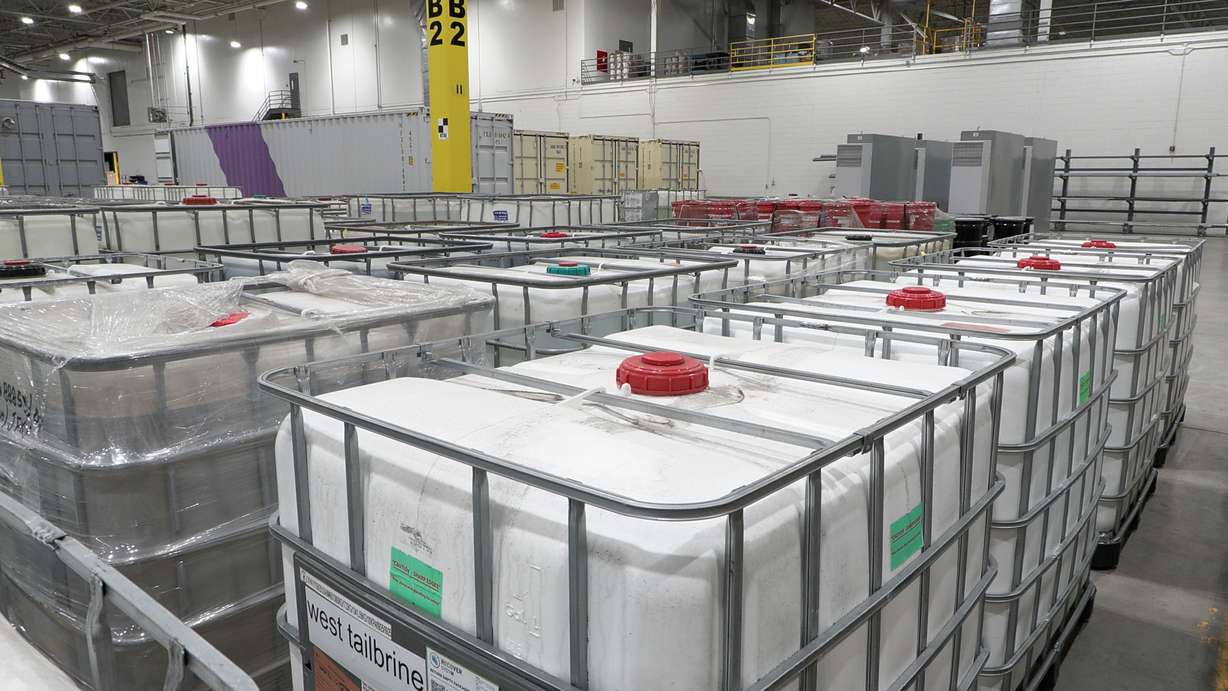
Unlike older systems that use evaporation ponds to extract minerals, Mulligan said Lilac's now fifth-generation proprietary system is able to send brine back into the lake after the lithium is extracted. Some ceramic-type beads bond with the lithium ions, leaving other materials from the brine behind. The company has spent several years developing the system, collecting a warehouse-sized library of brine from around the world in the process.
"There's more than 80 different brines," Mulligan said. "They're all a little different."
Ben Abbott, an ecologist and the executive director at Grow the Flow, said he's seen and studied similar mineral-extraction technologies to the one Lilac would use.
"It is a real proven technology," he said. "It's just a question of scaling it up, and we haven't yet seen that anywhere in the country."
He believes the newer methods could help save water on the lake, and he'd like to see other companies employ them, with permitting agencies helping open the path forward.
"Imagine if we shift some of the current evaporative mineral extraction from the lake to this technology," Abbott explained. "That's where you could get the real gains right in the tens or even maybe a couple of hundred thousand acre feet of water."
Still, he adds a warning.
"One of our ecological laws is 'there ain't no such thing as a free lunch,'" Abbott said. "That emphasizes there's always going to be an environmental impact. We need to be really careful to try to minimize the downside, while still providing the minerals and other things that society needs."
The Key Takeaways for this article were generated with the assistance of large language models and reviewed by our editorial team. The article, itself, is solely human-written.
Ver nota original ↗
¿Querés un resumen rápido de esta noticia, hecho por nuestra IA?