Wyoming voters soundly rejected a major property tax cut. Here’s why.
No county more soundly rejected Prop 1 — the sweeping statewide property tax cut — on Wyoming’s ballot this year than Niobrara, the least populated county in the nation’s least populated state.
Rep. JD Williams lives in Lusk, Niobrara’s county seat, and represents his home county along with neighboring Weston and Goshen counties. The Republican lawmaker, who frequently communicates with constituents via social media, describes his community bordering Nebraska and South Dakota as deeply conservative.
That means residents are OK with paying their own way, he said. One way they do that is through special districts, which collect property taxes in exchange for providing services such as the senior center, fire department and weed and pest control.
Proposition 1 would have hit their special districts hard, which Williams called a “deal breaker.”
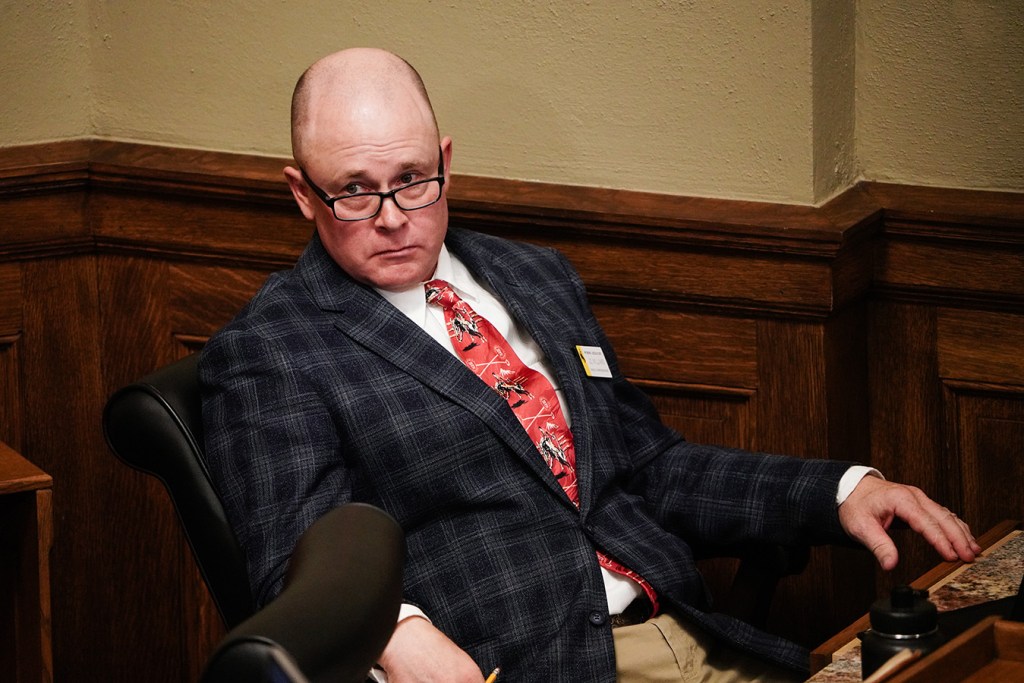
“I would say that’s why Niobrara County rejected it at a higher percentage than any other county in the state,” he said. “Just because we are not interested in giving any more control, decision-making authority or taxing authority to the state of Wyoming, and that’s what it would have done.”
As Williams sees it, the ability to fund special taxing districts keeps power closer to home.
“It would have moved local decision-making authority to the Legislature, away from local boards, specifically our county commission,” Williams said.
On Nov. 3, Wyoming voters soundly rejected Prop 1, which received less than 42% support. Even in a deeply conservative state, only one county backed the measure: Lincoln County, with support from 57% of the voters. On the other end was Niobrara County, where less than 30% of voters wanted to enact this type of tax relief.
WyoFile teamed with partner publications to examine why Wyoming’s disparate counties voted the way they did on Proposition 1. Also known as The People’s Initiative to Limit Property Tax in Wyoming through a Homeowner’s Property Exemption, the initiative landed on the Nov. 3 general election ballot with the backing of more than 30,000 valid signatures collected around the state. If passed, it would have exempted 50% of a primary residence’s assessed value from property taxation, causing Wyoming’s annual property tax revenues to drop.
The state’s first citizen initiative to land on the ballot in 30 years, Prop 1 needed approval from more than 50% of those voting in the general election to pass.
Although many expected a close vote, the measure’s failure caught some by surprise. Along with a potential loss of local control and services, voters remained leery of Prop 1 for many reasons, including worries that it would raise other types of taxes, benefit Teton County billionaires and unleash unintended consequences.
Lincoln County lone yes
While Niobrara County anchors Wyoming’s eastern flank, Lincoln County sits on the opposite side of the state, bordering Idaho. Former Rep. Marti Halverson, a Republican who represented northern Lincoln County and southern Teton County for six years, rallied for Prop 1 in the only county that ultimately supported it.
Halverson described her own community as split before Election Day. But in Star Valley, in the northern part of the county, she said, people “voted for it overwhelmingly enough to override the undervotes, overvotes and the no votes in Opal, Kemmerer, Diamondville, Frontier and Cokeville.”
In places like Star Valley, the real estate market caught fire amid the COVID-19 pandemic, as people from around the country escaped to rural communities. As buyers snapped up properties, home prices — and property tax bills — soared.
“I have two close neighbors who saw their property taxes double,” Halverson said. “Now, these are working families with mortgages, and their mortgages went up $400 to $500 a month.”
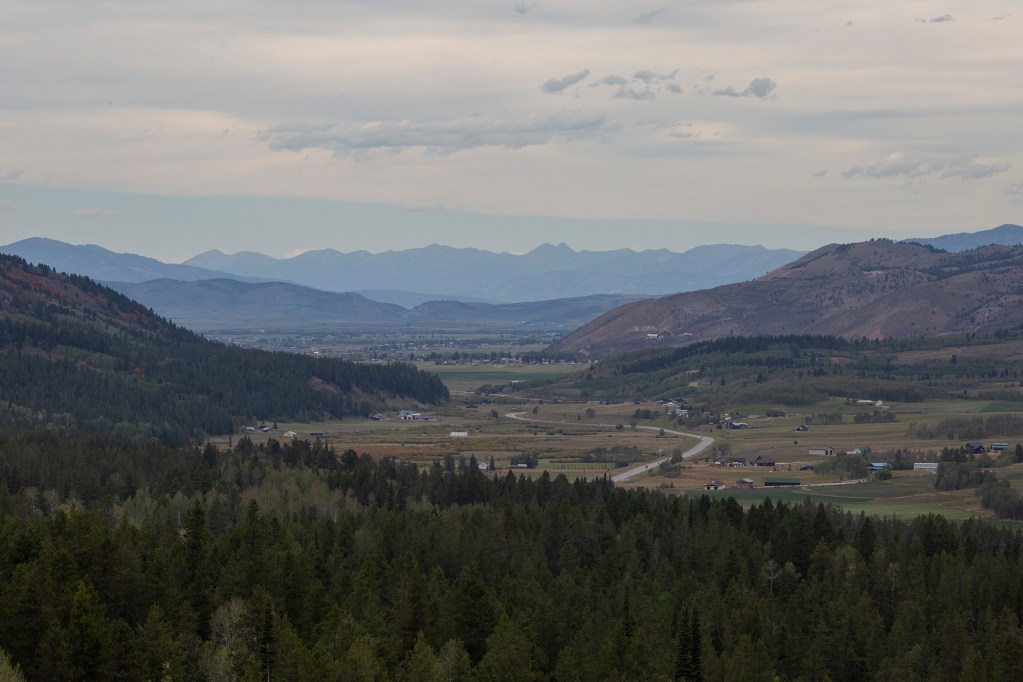
The rise in property values varies widely across the state. Historical average residential fair market value jumped 257% (183% after exemptions) and 186% (116%) in Teton and Lincoln counties respectively, the two highest increases, followed by Sheridan at 109% (48%). In contrast, Niobrara saw a 44% increase, which dropped to just 6% once tax exemptions were applied, during the same period from 2015 to 2025, according to a Legislative Service Office analysis. Campbell and Big Horn counties saw similar increases of 65% (12%) and 67% (19%), respectively during the same period.
State lawmakers heard homeowners’ concerns and responded with a slew of new and expanded tax breaks. But Prop 1 supporters saw more room to cut. While disappointed Prop 1 didn’t pass, Halverson said she “wasn’t surprised with over $2 million being spent against it.”
Property tax vs. sales, income tax
The initiative’s failure has given Halverson “hope” that talk of increasing sales tax or imposing a state income tax is now “off the legislative table.”
“I don’t think with the failure of Prop 1 that the Legislature can, in good conscience, raise any taxes,” she said.
The risk that sales tax or a state income tax could eventually backfill revenue lost from the property tax cut drove some of the opposition to Prop 1.
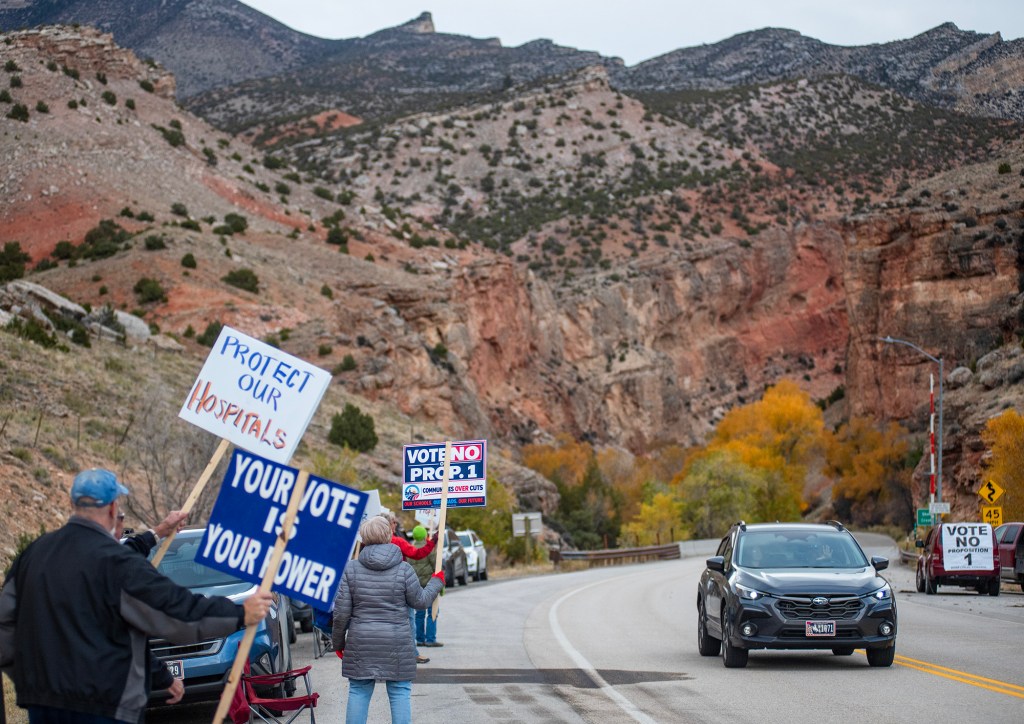
Tom Harrington spearheaded “Concerned Citizens of Big Horn County,” a group that rallied against Prop 1, waving signs at motorists traveling through Shell Canyon in north central Wyoming every Sunday for about six weeks ahead of the election. He shares Halverson’s desire to avoid sales and income taxes.
“I’m against both of them, especially the sales tax, which is regressive and will unfairly impact the lower income people in our community,” Harrington said. “And income tax, I think, is just anathema to Wyoming, and I don’t think that’ll ever fly.”
Harrington served as a judge in Big Horn, Hot Springs and Washakie counties before retiring. These days he helps out with the Greybull and Basin wrestling program. He still sees room for targeted property tax reform, especially for longtime Wyoming residents and specifically, single people, be they widowers or widows on fixed incomes and over age 65.
But he saw Prop 1 as a chainsaw approach that would damage local services.
Likewise, Steve Helburn voted against Prop 1, in part, because of potential cuts to libraries, Meals on Wheels and law enforcement. He also didn’t like that the “benefit was primarily for the billionaires in Teton County, and little benefit to much less benefit to other parts of the state.”
The Greybull resident already qualifies for property tax relief as a veteran and senior who has paid property taxes for more than 25 years in Wyoming. “I can get both of those,” Helburn said. “I don’t always, but they’re available to me.”
Harrington also qualifies for existing tax relief programs, and has used them in the past. But he’s considering not applying in the future to support local services.
The Wyoming Taxpayers Association, which opposed Prop 1, estimated that Big Horn County alone had lost more than $2 million in revenue from 2025 tax exemption programs, excluding the veteran’s exemption and refund and deferral programs. Had Prop 1 passed, the association estimated the county could have lost nearly $1.9 million more.
Big Horn County Commissioner Bruce Jolley, a Lovell Republican, also qualifies for the relatively new exemptions. But Jolley typically opts instead for the veterans discount because it doesn’t pinch the county budget since the state reimburses the county for that relief program, he said. Gov. Mark Gordon included $16.6 million to extend property tax relief programs in his supplemental budget announced Monday.
Jolley fielded many calls from constituents asking his position on Prop 1, which he opposed. Most were concerned about the county, towns, schools and special districts losing funding, Jolley said. “I see firsthand how it affects the budget of the county.”
He’s also leery of one tax cut opening the door to raising other types of taxes.
“I am especially against any kind of tax backfill because that means our sales tax will rise, which in northern Wyoming, especially in Washakie, Hot Springs and Big Horn counties, that is going to directly affect our small business,” he said. “More people will utilize the option of going to Montana to buy their goods and services.”
Tax-rich county declines cut
In the county with the highest property tax values in Wyoming, voters not only opposed giving themselves a property tax break this general election but also decided to increase taxes for the local hospital and maintain a tax for environmental conservation.
Roughly 63% of Teton County voters opposed Prop 1. Some voters coming out of the polls Nov. 3 were conflicted.
“I ultimately voted against it,” Austin O’Bryhim, 33, said. “Not because I don’t agree with property tax relief — because I think in this county, specifically, it’s well needed — but they did not demonstrate the ability to make up for that budget deficit elsewhere.”
The estimated financial impact was significant. The Wyoming Department of Revenue and Legislative Service Office estimated there could be roughly $109 million to $125 million exempted from residential property tax bills statewide in the first year. In Teton County alone, nearly $37 million could have been exempted, according to the Wyoming Taxpayers Association.
Residential property tax dollars don’t go to the state’s general fund, but rather to public education and local governments. Roughly two-thirds of residential property taxes pay for Wyoming schools. The remaining one-third funds county government such as administration, roads and general operations; special districts, including fire protection, hospital districts, weed and pest control and water/sewer; and city and town budgets, according to the revenue department.
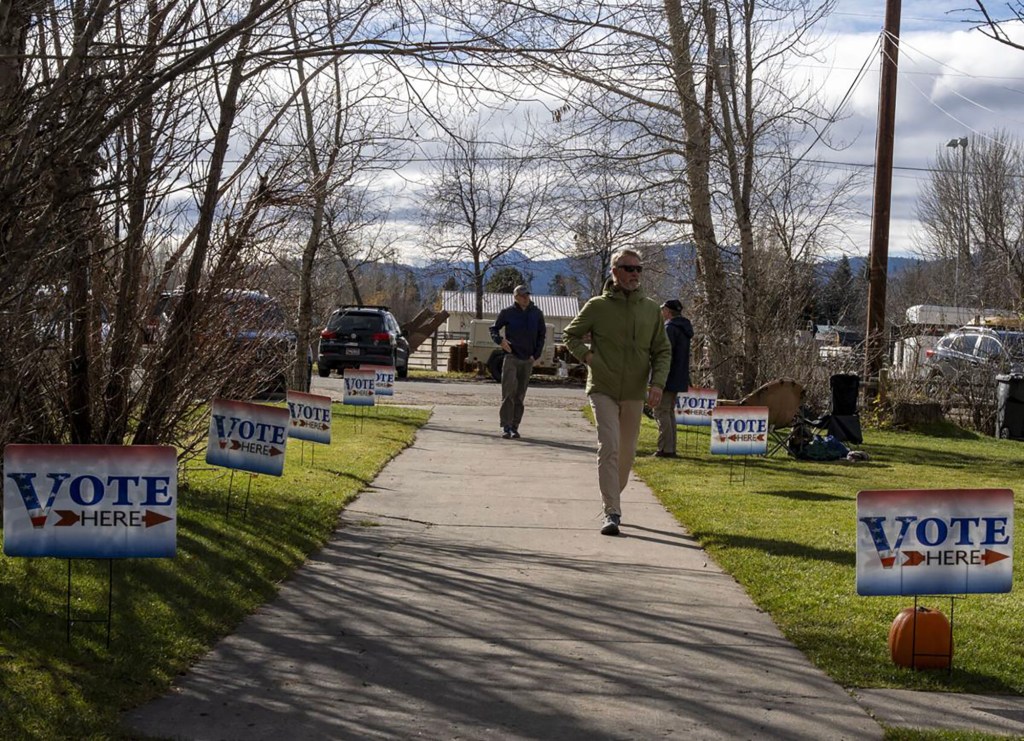
Margo Krisjansons, who has lived in Teton County since 1973, also voted against property tax relief.
“I’m a little guy. I’m not a billionaire,” Krisjansons said, “so I got to think about the long-term for what’s good for me as a homeowner in Kelly.”
The death of Prop 1 took some Teton County voters like Republican Werner E. Minshall by surprise. He’s frustrated by the lack of overarching tax relief, and although he said he could afford his high tax bill at around $36,000, others couldn’t.
“It’s extremely unfortunate,” Minshall said about Prop 1 failing. “So, now we’re going to have a bloated government in Teton County.”
Big Horn County conservatives, who also supported Prop 1, blamed scare tactics for its failure.
“I believe that it’s humanitarian in the way that it helps families that are buying property, families that are trying to hold on to property and older folks and even regular folks trying to pay their bills,” said Gordon Preis, a Republican committeeman who lives in Emblem. Preis joined other conservative voters in Big Horn County to buy an advertisement in the Greybull Standard urging fellow citizens to support Prop 1.
“The real issue is they don’t want to lose their tax money, the state, the county,” Preis said.
Preis compared it to how he pens his cows, getting them a little hungry and then leading them into the pen. “People fall into the trap every time.”
‘Prop 1’ splits two ways in Campbell County
Campbell County voters were close to evenly split on the ballot initiative. After Lincoln and Park counties, Campbell County came the closest to passing Prop 1. That it failed, winning about 48% of the vote, shocked many in a county where mineral taxes bankroll many services. Minerals generate about 78% of Campbell County’s property tax revenue.
Even though he opposed Prop 1, Campbell County Commissioner and former Republican legislator Scott Clem said it’s hard to say why the initiative didn’t pass.
“Being able to pay less (in property tax) is certainly appealing,” Clem said. “I still wonder how much the public is aware about the tax remedies that have been implemented in the past couple of years.”

Only 40% of eligible Campbell County taxpayers have applied for the relatively new exemptions for the 2026 tax year, Assessor Erin Slattery wrote in an email. The other 60% may choose to pay property taxes to fund local services or not know their options.
Governments can do a better job informing taxpayers about existing tax exemptions and relief options, Clem said.
Gillette real estate agent Josh McGrath gave multiple presentations about initiatives called Prop 1. There was Prop 1, the statewide initiative.
But Campbell County also had its own local Prop 1, asking voters to renew a penny sales tax to fund local services for another four years. The penny tax was promoted in Gillette with signs of Abraham Lincoln, reminding voters the local tax funds more than $18 million in infrastructure, maintenance, public safety and other programs around town.
While the statewide initiative failed, voters renewed the penny tax by nearly 68%.
Messaging from Campbell County groups combined with campaigning from outside organizations, such as the Wyoming Taxpayers Association, could have impacted the results, McGrath said.
“I think it’s because they saw the benefit of the (penny tax), and I think that maybe had a bit of a residual effect. Like, ‘Hey, I’ve seen what this has done as a benefit,’” McGrath said. “They’re both named Prop 1, but I don’t have a great reason for why it’s split. It was one of those hot topics where you’re either for it or against it, and there’s not any middle ground.”
Wanda Lieneman was a regional campaign manager for Cody Republican Brent Bien’s gubernatorial run and helped gather some of the more than 30,000 signatures for the initiative he helped get on the ballot. She pointed to negative ads from groups like the Wyoming Education Association and Wyoming Taxpayers Association as the biggest reason it didn’t pass.
She called the results of her petition work “devastating.” Lieneman started working on the initiative after seeing friends get taxed out of their homes, she said. Her own property tax bill on her home has more than doubled in the past five years, but she takes advantage of the 50% exemption for seniors.
She disagreed that local services would suffer, suggesting local governments could be supported by interest income generated from the state’s and other rainy day funds. Revenue for school districts, law enforcement and other public services doesn’t have to come from property taxes, she said.
Lieneman said Prop 1 could be the last time Wyoming residents see a ballot initiative like it.
“What can I do? We did everything we could to get it through, and the lies went out that we were not telling people the truth,” Lieneman said. “I’m going to continue to fight for it, I’ll go down to the Legislature and do my part there, but as far as the initiative goes, it’s dead.”
For Commissioner Clem, a lack of relief for renters and the potential for unintended consequences added to the list of reasons he voted against Prop 1.
“All taxes suck. No one likes them, not even me, but they are a necessary evil for a functioning 21st Century society,” he said. “In this case, the devil you know is better than the devil you don’t know.”
The post Wyoming voters soundly rejected a major property tax cut. Here’s why. appeared first on WyoFile .
Ver nota original ↗
¿Querés un resumen rápido de esta noticia, hecho por nuestra IA?