City Council mandates that city redeploy gunshot detection technology
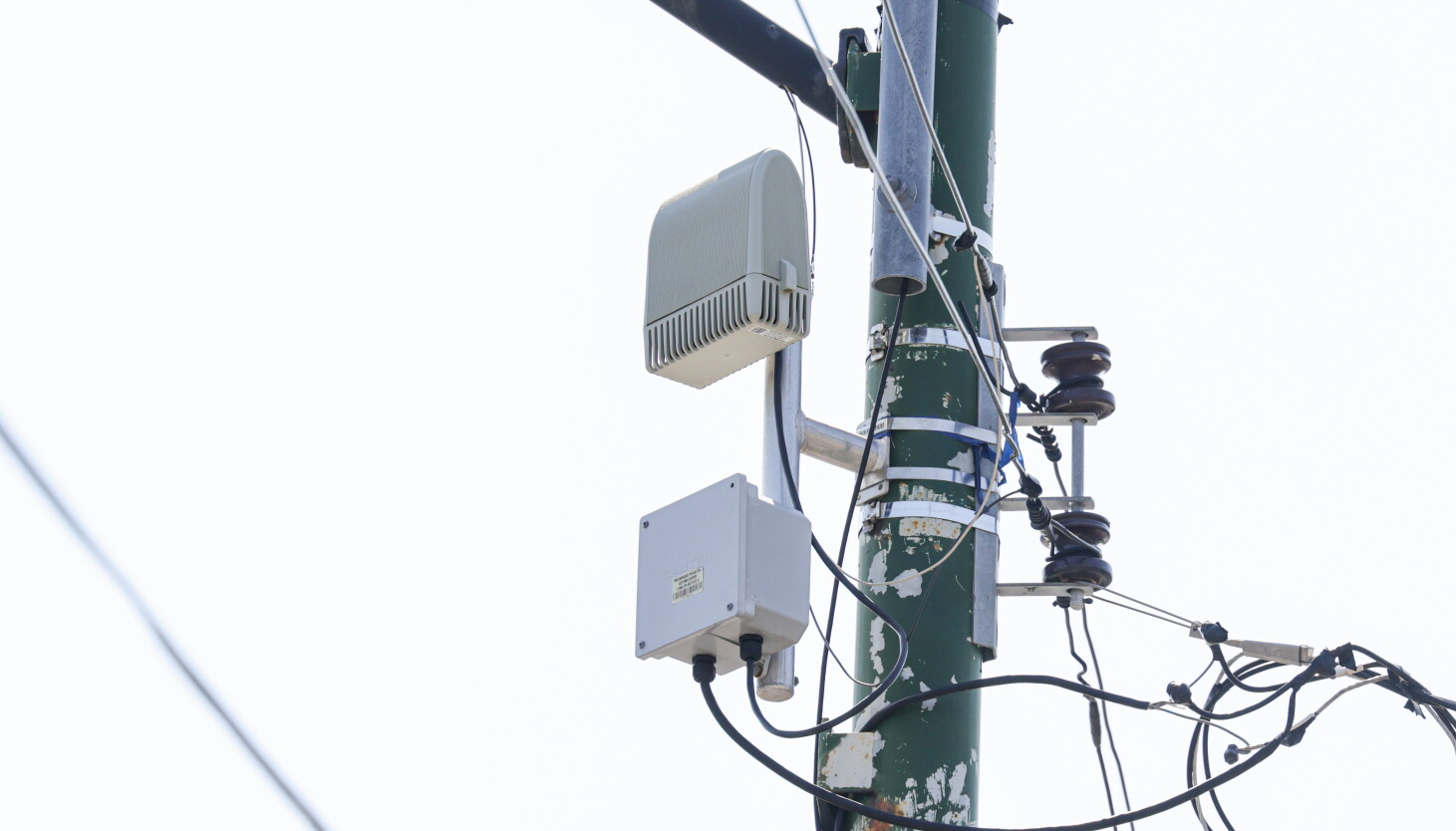
More than 72% of Chicago voters want to bring back gunshot detection technology to fight violent crime and speed emergency response times to gunshot victims.
On Wednesday, a defiant City Council responded to that advisory Nov. 3 referendum by lighting a political fire under Mayor Brandon Johnson’s administration.
By a 43 to 7 vote, alderpersons approved an ordinance that gives Chief Procurement Officer Sharla Roberts 30 days to finalize the new gunshot detection contract that Johnson promised more than two years ago but has failed to deliver.
If a replacement for the technology once provided by ShotSpotter is not in place within 60 days, Roberts must provide the Council’s Committee on Contracting Equity and Oversight with a written explanation for the delay.
"Our commissioner, hopefully is listening, who has ... the authority to move this thing along and not play games with the procurement process," said Ald. Anthony Beale (9th), one of Johnson's most outspoken City Council critics.
"Because we all know that he was being stonewalled and prolonged and delayed. We know the script. But the time to act is now, because we're sick and tired of being sick and tired. ... The people have spoken in volume to turn this technology back on while we're waiting for the pilot that will probably never materialize."
West Side Ald. Emma Mitts (37th) said 82% of her constituents voted to bring back gunshot detection technology.
"We asked and they answered. Now, it's our turn," Mitts said. "Every minute counts. If somebody gets shot and nobody calls 911, an alert can help police and paramedics get there sooner."
Mitts noted the City Council voted twice to keep ShotSpotter, but the system was turned off anyway.
"Nine companies put in a bid by April of last year. Nineteen months later, we still don't have a contract. What are we waiting on? Let's finish this job," Mitts said.
"When we bring it back, I want us to start in the districts with the most shootings. Don't make people wait on another test."
Ald. David Moore (17th) has been among ShotSpotter's chief proponents. Nevertheless, he voted against the ordinance, saying he wanted to avoid a legal battle.
"We cannot force ... the procurement officer to select a vendor in 30 days when the process is not complete," Moore said.
"I'm not comfortable doing that while we're in the middle of a process. If this ordinance said turn ShotSpotter on until we find someone, I'd be the first one to say yes."
In February 2024, Johnson honored a campaign promise to progressive supporters by canceling the contract with ShotSpotter, technology he derisively called a “walkie-talkie on a stick.”
Johnson and his supporters viewed the technology as costly, ineffective and a contributor to overpolicing in Black and Brown communities where the majority of gun violence occurs.
Even so, the mayor did negotiate a costly extension to retain the technology through the 2024 Democratic National Convention in Chicago.
The Council also at one point empowered then-Chicago Police Supt. Larry Snelling to sign a new contract with ShotSpotter, but Johnson declared that ordinance illegal. Johnson then launched an open competition to replace ShotSpotter. SoundThinking, the company that owns ShotSpotter, was one of 15 firms responding to the request for information and one of nine companies responding to a follow-up request for proposals.
Nothing has happened since then — even though the last two city budgets set aside a combined $13.9 million for the replacement technology. Another $5 million is included in Johnson’s reelection budget.
Council hearings have done nothing to pressure the mayor to deliver a replacement contract.
Roberts was a no-show at the most recent hearing. She infuriated Council members by sending a letter informing them a pilot gunshot-detection program was about to begin in six police districts: Wentworth, Calumet, Englewood, Deering, Ogden and Harrison.
When the chief procurement officer finally did make an appearance at Council budget hearings, she disclosed that the 72% vote had prompted the Johnson administration to alter the upcoming test.
Roberts said her office initially planned a pilot program with one vendor that wasn’t involved in a lengthy, competitive bidding process. But the Johnson administration has now decided to let all “short-listed” bidders, including ShotSpotter, showcase their violence prevention strategies in the pilot, Roberts said.
The mystery program still will test a variety of ideas, including more violence intervention, “drone-based situational awareness, license plate recognition and incident response systems for evidence preservation.”
Gunshot-detection technology remains only part of the pilot.
ShotSpotter proponents called the mystery test a stalling tactic to get past the mayoral election.
During a City Hall news conference Tuesday, Johnson said he has “always been in favor of gunshot detection,” but only after a field test to prove the technology will deliver crime-fighting results.
The mayor reiterated his long-standing claim that ShotSpotter “was proven to be ineffective” and failed to deliver on its promise to drive gun violence down.
“I said, 'Let’s do the responsible thing. Let’s cancel that one. Let’s open up the process so that we can actually see together as a city what actually works and then we can make a determination from there,'” he said.
Ver nota original ↗
¿Querés un resumen rápido de esta noticia, hecho por nuestra IA?