THE BREAKDOWN: Pacific Decadal Oscillation (PDO)
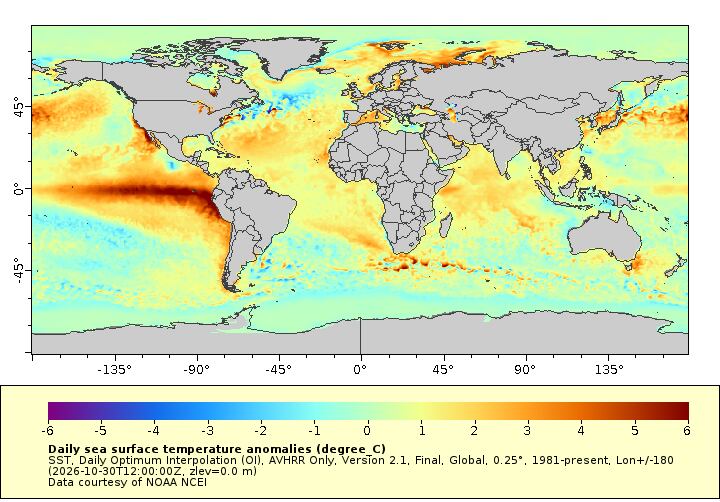
MEMPHIS, Tenn. (WMC) - The 1997 El Nino may look very similar to what the 2026 one is on pace for at first glance, but there is a striking difference to take note of.
Notice the waters off the west coast of the United States. Here in 2026, you can see the below average sea surface temperature spots. But the stretch from Japan to south of the Alaskan Aleutian Islands? It’s warmer than average.
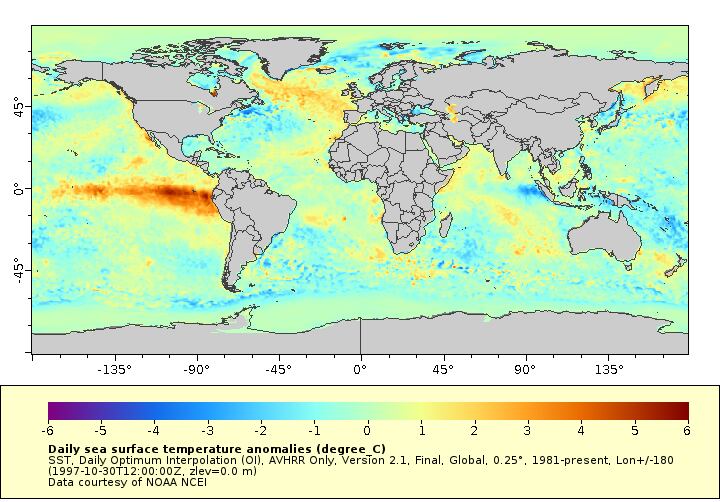
In 1997, that was flipped. The same stretch from Japan to south of the Alaskan Aleutian Islands saw below average sea surface temperatures. Some of the warmest sea surface temperature anomalies in the Northern Pacific were near the west coast of the United States.
This is related to an important global phenomenon called the PDO, short for Pacific Decadal Oscillation.
It deals with sea surface temperature anomalies primarily north of the 20 degrees north latitude.
In a positive PDO phase, warmer than average sea surface temperatures are typically seen in the eastern Pacific, extending northwards off the coast of Alaska. In the central and western Pacific, you typically see cooler than average sea surface temperatures.
A positive PDO works with and helps to enhance El Niño conditions.
Looking at 5 of the strongest El Niño events since 1950, each had a positive PDO during the month of October. But 2026 stands out with a negative PDO.
A negative PDO sees the warmer than average sea surface temperatures in the western Pacific, with cooler than average sea surface temperatures centered in the eastern Pacific.
That can help pull back on the most extreme El Niño impacts.
It’s worth noting that the 2026-27 El Niño is on its way to being the strongest ever recorded, meaning impacts from the PDO can end up more limited.
It’s still important to note, just because this year’s El Niño is going to end up stronger than 1997 doesn’t mean its impacts will be as clear cut and textbook.
Click here to sign up for our newsletter!
Click here to report a spelling or grammar error. Please include the headline.
Ver nota original ↗
¿Querés un resumen rápido de esta noticia, hecho por nuestra IA?