
Buresh Blog: Aquifers respond to recent wet weather...Water restrictions...Carbon Monoxide Awareness

This blog is written & updated weekly by *me* - Mike Buresh.
See & read updates on the tropics every day during the Atlantic hurricane season at “Talking the Tropics With Mike”.
To become a part of the First Alert Neighborhood weather station network powered by Tempest - scan below &/or click * here *:
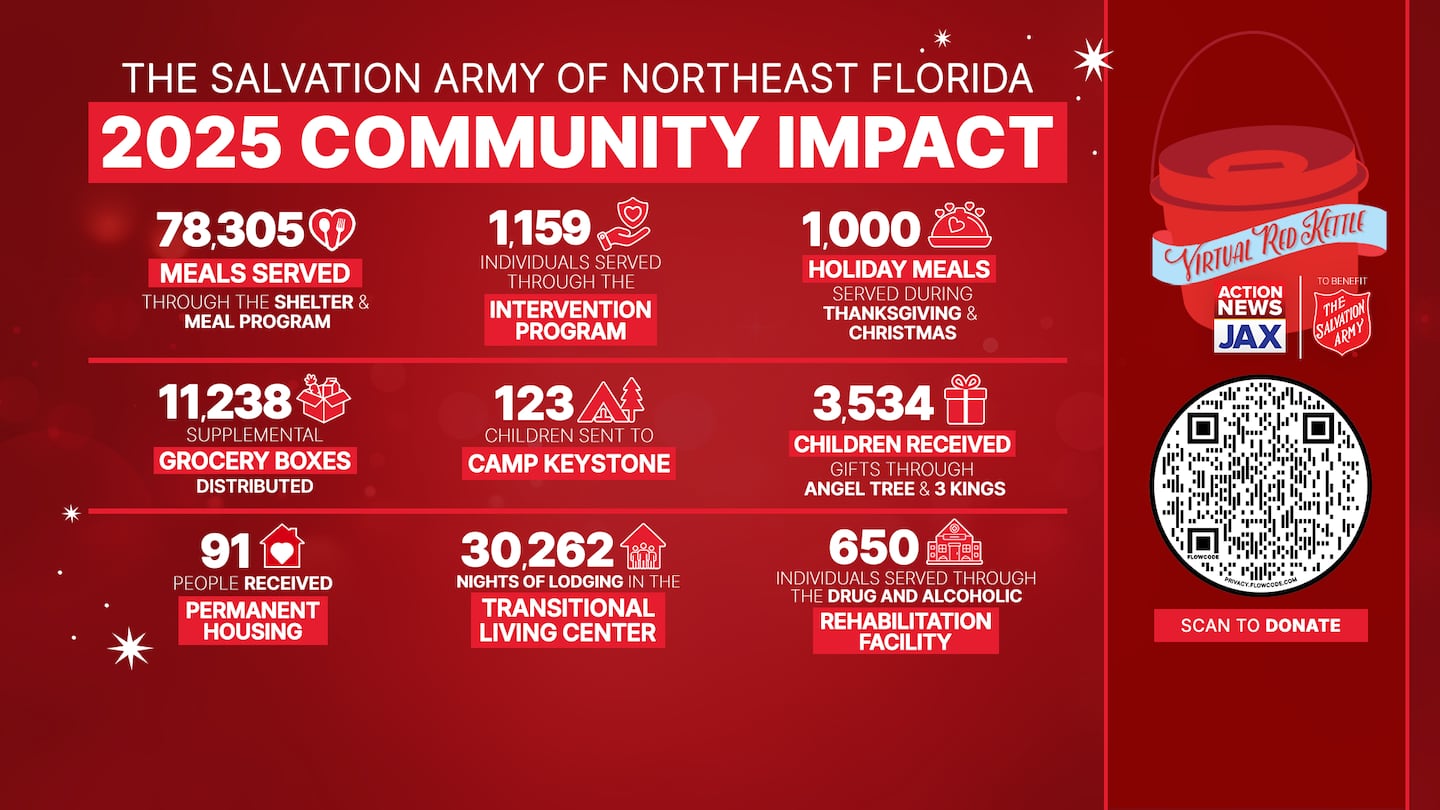
Action News Jax has a virtual Red Kettle online through Christmas Eve benefiting the Jacksonville & Northeast Florida Salvation Army. Donations will benefit the year-round services provided by the Salvation Army. All donations stay local & are fully tax deductible. THANK YOU in advance!

Good news continues when it comes to the local long term drought. Aquifers are in the best shape of the year! And spring flows have improved dramatically too. There are still some dry pockets in some inland areas but overall Florida’s drought situation is steadily & rather quickly improving. From the St. Johns River Management District:
Groundwater
- Most monitoring stations across the Upper Floridan aquifer were above normal range at the end of October, and nearly all sites recorded increases in their percentiles.
- Districtwide groundwater levels, expressed as a single index, were in the 15th percentile for October, which is in the low range.
Spring flows
- Silver Springs recorded a monthly mean flow of 443 cubic feet per second (cfs), or 286 million gallons per day (mgd), an increase of 43 cfs from September, which is in the very low range for this time of year.
- In Volusia County, the Blue Spring station reported flows within the normal range.
- Rock Springs had a monthly mean flow of 59 cfs (38 mgd), which is in the normal range.
- Wekiwa Springs recorded a monthly mean flow of 65 cfs (42 mgd), continuing to be in the normal range.

And keep in mind the once a week watering schedule continue during standard time. Also from St. Johns River District:
The District’s seasonal irrigation schedule remains in effect during Eastern Standard Time, which runs from November through mid-March. During this period, landscape irrigation is limited to one day per week:
- Saturday for residential addresses ending in odd numbers or with no address
- Sunday for residential addresses ending in even numbers
- Tuesday for nonresidential properties
- Water only on your designated watering day and during the allowed hours: before 10 a.m. or after 4 p.m.
In addition to following the once-weekly irrigation schedule, residents in Alachua, Baker and Bradford counties should be aware that the Modified Phase II Severe Water Shortage restrictions remain in effect.
Under a Modified Phase II Severe Water Shortage, all water users are encouraged to voluntarily reduce water use and conserve water to the maximum extent possible. Wasteful and unnecessary water use is prohibited. The order encourages voluntary reductions across all water use sectors, including public supply, commercial, industrial, institutional, agricultural, landscape, recreation and aesthetic uses.

November is Carbon Monoxide Awareness Month:
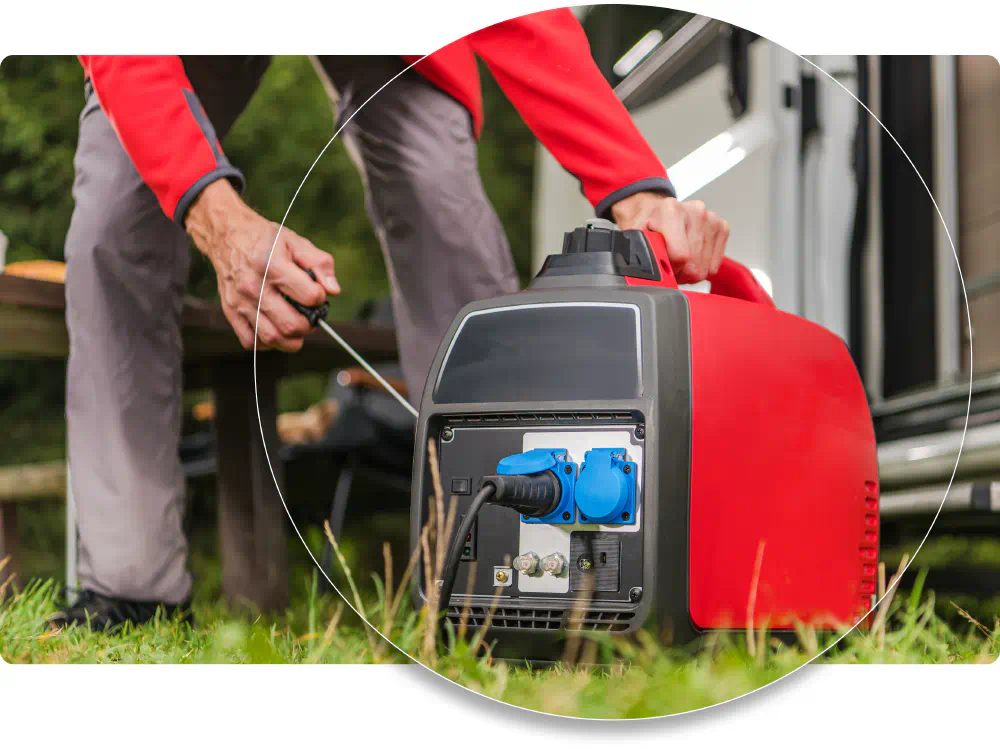
As Carbon Monoxide (CO) Awareness Month kicks off, the Portable Generator Manufacturers’ Association (PGMA) is calling on media, first responders, and public safety officials to help save lives by promoting generator safety.
Carbon monoxide is invisible, odorless — and potentially deadly. Portable generators, often relied upon during power outages or used recreationally, can emit dangerous levels of CO if used improperly. With winter weather and seasonal storms approaching, now is the time to educate the public.
“Every year, lives are lost due to portable generator misuse — and most of those tragedies are preventable,” said Guillermo Rodriguez, PGMA’s Marketing Committee Chair and national spokesperson. “Carbon monoxide awareness begins with proper generator use: always outside, always far from any dwelling.”
Visit the Safety Resource Hub * here *.
November is Pancreas Cancer Awareness Month & Nov. 19th is World Pancreatic Cancer Awareness Day. Cancer of the pancreas accounts only for about 3% of all new cancer diagnoses but is the third-leading cause of cancer deaths (8.4% of all cancer deaths). The pancreatic cancer action network is a good source for more info. Jacksonville is home to some of the most advanced pancreas cancer research being done in the world - at Mayo & MD Anderson. My mom was diagnosed with Stage 4 pancreatic cancer & battled gracefully for 9 months. I posted in my blog about the “journey” in 2008 - “A Very Personal Journey: My mom’s fight against terminal cancer.”

Ver nota original ↗
¿Querés un resumen rápido de esta noticia, hecho por nuestra IA?


