Conservation programs in the Colorado River’s Upper Basin inch forward, despite thorny questions
This article originally appeared on Inside Climate News, a nonprofit, non-partisan news organization that covers climate, energy and the environment. Sign up for their newsletter here.
New voluntary water conservation programs in the Upper Colorado River Basin appear on track after the 320th meeting of the Upper Colorado River Commission concluded last week. But Colorado, New Mexico, Utah, Wyoming and the federal government have yet to agree on how any conserved water would be credited and stored.
These questions, experts say, may not come with easy answers.
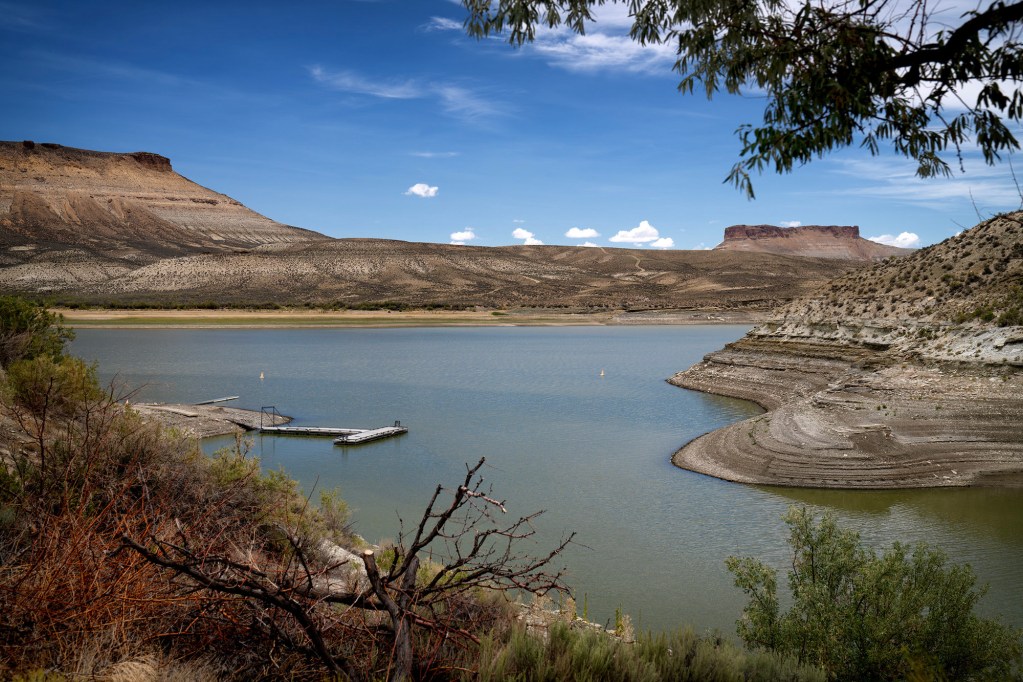
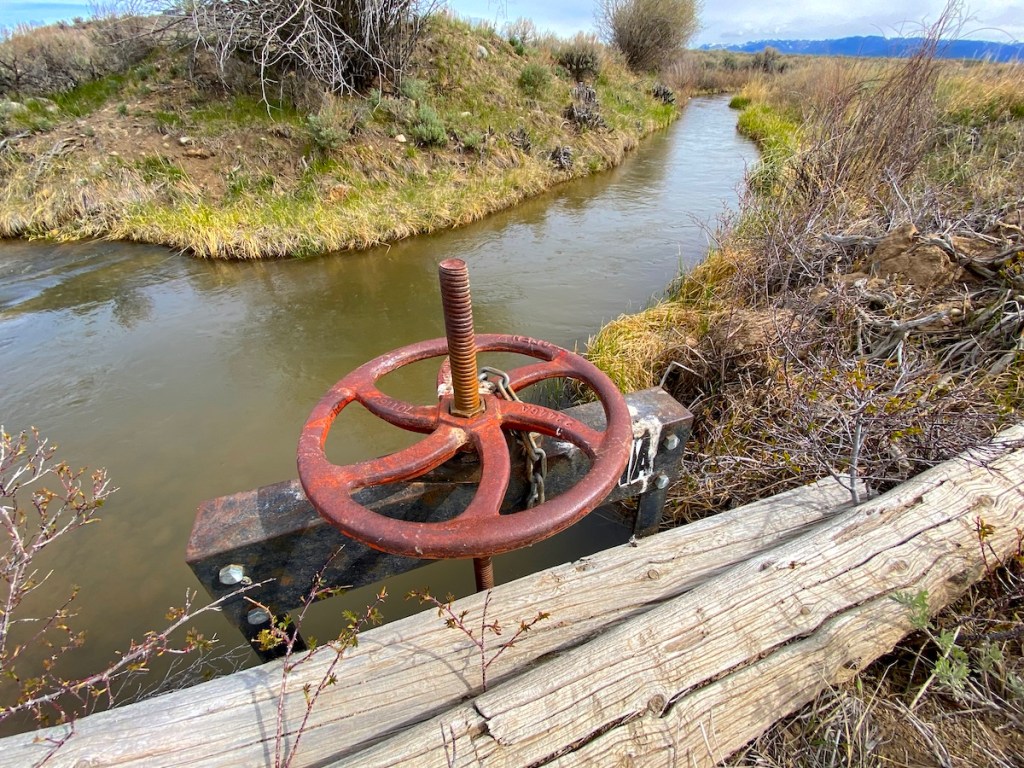
This June, the federal Bureau of Reclamation put $100 million on the table for the four states in the Upper Basin to fund their own voluntary water conservation programs, which usually entails paying ranchers and farmers to use less water. Overuse and drought-diminished flows on the Colorado River threaten the water supply of roughly 40 million people, 30 tribes, seven states and Mexico.
Most Upper Basin states are planning to implement programs in 2027 (Utah already has one running), and their success could be crucial to the states’ assertion that they should only have to ease the pressure on the Colorado River through voluntary measures. This fall, the federal government implemented new mandatory reductions on the Lower Basin, and Nevada, later joined by Arizona, sued over the potential for even deeper cuts.
“It’s … important to recognize, and I say this in a positive way, a complimentary way, the audacious ambition of attempting to put this together in the time frame that we have,” Wayne Pullan, the Bureau of Reclamation’s Upper Colorado Basin regional director, told negotiators from the Upper Basin states at the virtual meeting.
Colorado made it clear that its program can only move forward with an agreement from Reclamation that conserved water would remain under the state’s jurisdiction.
“We really need to get some credit for the upper division states through a program like this,” said Amy Ostdiek of the Colorado Water Conservation Board, who presented the state’s conservation program. “What that means in Colorado is seeing that that water is treated as operationally neutral, and not simply passed downstream.”
“Operationally neutral” water is conserved by one state and stored in federal reservoirs for future use by that state. Arizona, California and Nevada, the Lower Basin states, have banked water in Lake Mead, the largest reservoir in the United States, with the option to withdraw it for future use. But the Interior secretary is the legal water master in the Lower Basin and has the ability to allocate surplus water there. The secretary does not play the same role in the Upper Basin.
Pullan said that Reclamation is “able and willing” to keep working on how the government would credit and handle water conserved by the Upper Basin. Some observers wondered how the Upper Basin’s condition would sit with the federal government, which built and financed the dams that store the water.
“They don’t like to turn over the keys of the car to the states,” said James Eklund, a partner at Taft Law and Colorado’s Colorado River negotiator from 2013 to 2019.
The Lower Basin would also need to agree that water conserved in the Upper Basin could be stored for the upstream states’ use, something Kathryn Sorensen, director of research for Arizona State University’s Kyl Center for Water Policy, had a hard time envisioning.
The Lower Basin states “would expect some sort of quid pro quo for that type of arrangement,” she said.
The Upper and Lower basin negotiators from each of the seven Colorado River states had years to agree on new guidelines for the federal government to implement. After they missed several deadlines, Reclamation implemented its own new operating plan this year, and the states appear no closer to an agreement.
The possibility of one of the seven basin states suing another before the Supreme Court looms over the basin.
Various conservation programs in the Upper Basin are in different phases of development. Utah’s program saved about 5,500 acre-feet of water in 2025, Amy Haas, executive director of the Colorado River Authority in Utah, announced at the meeting.
One acre-foot of water can supply anywhere from three to six homes for a year, depending on the region’s climate and urban density.
New Mexico and Wyoming made their programs compatible with other funding sources, like state appropriations or grants from nonprofits, should they become available, state representatives said.
The Upper Basin uses less water than the Lower Basin, which recently reined in its consumption after years of drawing more water than it was allocated, though it has plans to divert yet more water from the river. In its operating guidelines released this summer, Reclamation modeled up to 200,000 acre-feet of voluntary conservation annually in the Upper Basin — if hydrology allows.
Eklund, who attended the virtual meeting, said it’s disappointing the seven basin states still can’t agree on a solution to the problems plaguing the Colorado River. “If this system collapses, it doesn’t really matter what we’re legally entitled to,” he said.
“If Phoenix sneezes, the Upper Basin catches a cold,” he added. “We’re very, very connected economically to each other, and if we don’t start governing the system like we’re all part of one country and not seven different sovereign countries, then we’re A: only going to have ourselves to blame, and B: we’re not going to like the results.”
The post Conservation programs in the Colorado River’s Upper Basin inch forward, despite thorny questions appeared first on WyoFile .
Ver nota original ↗
¿Querés un resumen rápido de esta noticia, hecho por nuestra IA?