How to make it work when parents move in with adult children
(Aging Untold) — When a parent moves in with an adult child, it can bring comfort along with adjustments like new routines, boundaries and expectations.
It’s happening more often: Parent Herald reports a “reverse boomerang effect,” with more parents moving in with their children, driven in part by rising housing costs and caregiving needs.
The Aging Untold hosts talked through where to begin.
Start with why you’re moving in together
Gerontologist Sam Cradduck said the answer begins with the reason for the move.
“First off, I want to know why we’re moving in,” Cradduck said. “Are we moving in so Mom and Dad can help us? Maybe with childcare. Maybe because we’re a dual working family and childcare expenses are astronomical and we need some help. Or are they moving in because Mom and Dad need some help?”
Finances are part of that conversation because expenses go up when more people live in the home, she said.
Families should also decide what the arrangement looks like today and what it will look like in the future.
“Mom and Dad aren’t going to get younger and the kids are going to get older, so the kids are going to need less care, and Mom and Dad are going to need more,” Cradduck said. “So we need to know how we’re going to balance that and who’s going to be responsible for what in this house.”
Expect the relationship to change
“You’re going to have to set expectations and boundaries so you don’t get that resentment,” Dr. Rhea Rogers, a board-certified physician, said. “And then you have to realize that relationship is going to change for both. So you have your children who now maybe are going to be the caregivers, and then the adults who are maybe losing some control.”
Aging expert Amy O’Rourke described how that can feel on both sides. A grown child may feel their space is changing. A parent may feel they are losing independence.
“It’s weird and it’s awkward, and it’s an emotionally, acutely hard to process feeling,” O’Rourke said.
Talk through the details, including privacy
She said everyday details can test a household, including who does the dishes, who cleans, who shops for groceries and what the thermostat is set to.
“I would say designate an area that’s private for you, the child and the parent, so that you have your own place,” O’Rourke said. “And then are you going to knock before you enter? These things have to be talked about.”
Put it in writing and meet weekly
She likes the idea of a “town hall meeting” each week to check in on how everyone is doing.
Aging well coach Katherine Ambrose suggests having something in writing.
“Miscommunication happens because people remember details differently,” she said. “So you put it in writing together and sign it. Now you start your weekly family meeting, and that way you can stay on the same page, because there will be things you don’t think about, like the thermostat, or sounds, how loud someone plays TV, or what they play.”
Ambrose said dating can come up too, including whether adults will feel judged about who they spend time with and where.
Cradduck said the adult children and parents need to treat each other as adults.
“The top of the list on that written out contract or agreement has to say, ‘We are all adults. Do not treat me like I’m a child,’” Cradduck said. “I’m now 40-plus years old. You’re in your late 60s, early 70s, 80s, wherever those ages fall. We’re all adults, and we have to be able to treat one another like adults. So that’s the first rule here.”
Give each other grace
O’Rourke pointed out that slipping into old habits is likely.
“Grace, I think, goes a long way here,” she said. “If you happen to slip into an old behavior, then just kind of wave your hand and say, ‘I’ve just slipped into bad behavior, I apologize,’ or ‘You’re using that tone again.’ Be real direct, because it happens. You know you get around your parent, all of a sudden, you’re thinking, why am I acting like I’m 7 years old again?”
And old wounds can resurface, from childhood or the teenage years.
“You’re going to pop open some old scars,” Cradduck said.
O’Rourke said small acts of generosity matter, such as calling a parent from the grocery store to ask if they need anything.
“A lot can be grown out of compassion and generosity and care for each other,” she said.
An adjustment that can become a gift
While there may be some angst at the beginning, the arrangement can benefit the whole family, especially when younger children are in the home.
“Empathy is learned by helping, by the intergenerational activities and allowing your younger kids to be around their grandparents,” Cradduck said.
“It can be an unexpected blessing, and it’s part of the human journey,” Ambrose said.
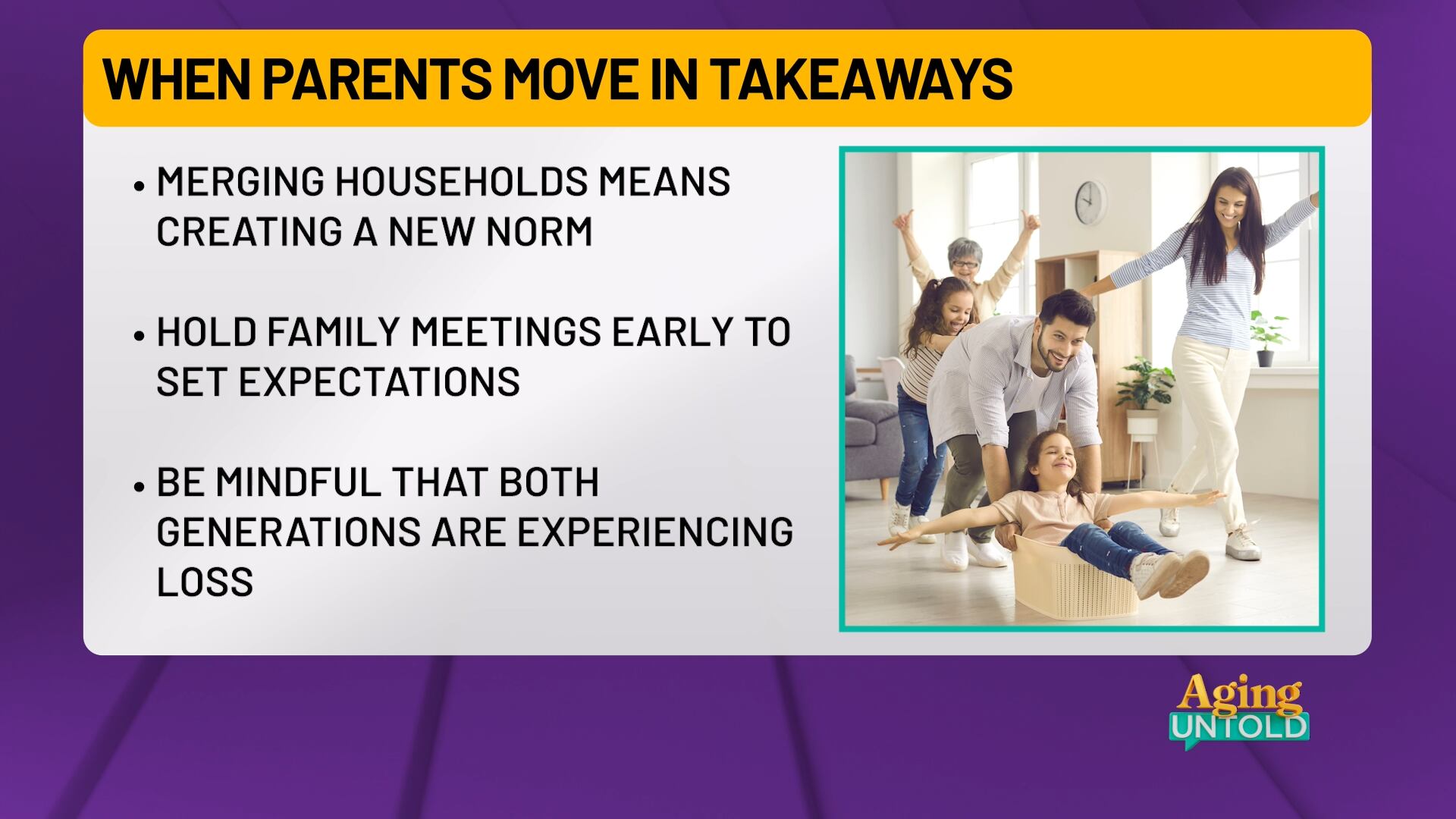
Key takeaways
- Create a new norm. Merging households means creating a new way of living together rather than deciding who is right.
- Hold family meetings early. Set expectations about routines and secure private spaces for everyone. Put agreements in writing and check in weekly.
- Treat each other as adults. Make “we are all adults” the first rule of the household agreement.
- Remember that both generations are experiencing loss. Be patient, and respect each other’s autonomy to help everyone coexist in harmony.
Ver nota original ↗
¿Querés un resumen rápido de esta noticia, hecho por nuestra IA?