Ole Miss turns campus food waste into fertilizer through revolutionary composting program
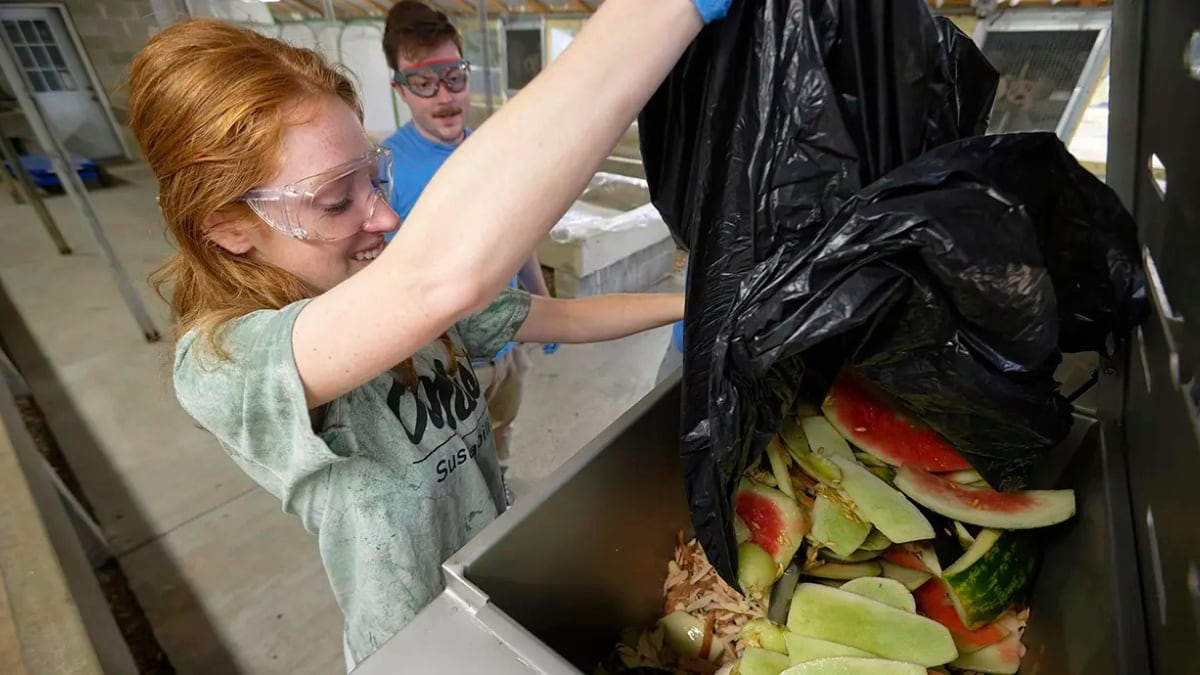
OXFORD, Miss. (WMC) - Ole Miss has become the first school in Mississippi to launch a campus food waste recycling program that operates with help from a tiny insect species.
The university is now hoping to establish its groundbreaking composting program in schools across the state.
The University of Mississippi’s Office of Sustainability recently partnered with the Mississippi Department of Environmental Quality (MDEQ) and Aramark, the school’s food supplier, to create a composting facility that uses black soldier flies to break down campus food waste.
“Our goal was just to reduce food waste on campus, but because this is the first of its kind in the state, MDEQ will build the regulatory process based on what we create,” said John Brugge, director of the Office of Sustainability. “We’re helping develop these processes for Mississippi, and we want to build a process that any farmer in Mississippi can replicate.”
Thanks to a $50,000 grant from Aramark, Brugge and students of the program have converted the Biology Department’s greenhouse on Vaught Lane into a facility where they have raised an army of black soldier flies that feast on food waste, turning it into nutrient-rich compost that will be used for campus flower gardens and ecology projects.
The Office of Sustainability began breeding black soldier flies this summer.
The initial goal is to recycle one ton of food monthly as the population grows, with a long-term target of up to 10 tons per month.
Black soldier flies are non-disease-carrying insects indigenous to Mississippi. Despite their wasp-like appearance, they neither bite nor sting and are considered essential decomposers, well known for their natural ability to break down organic waste.
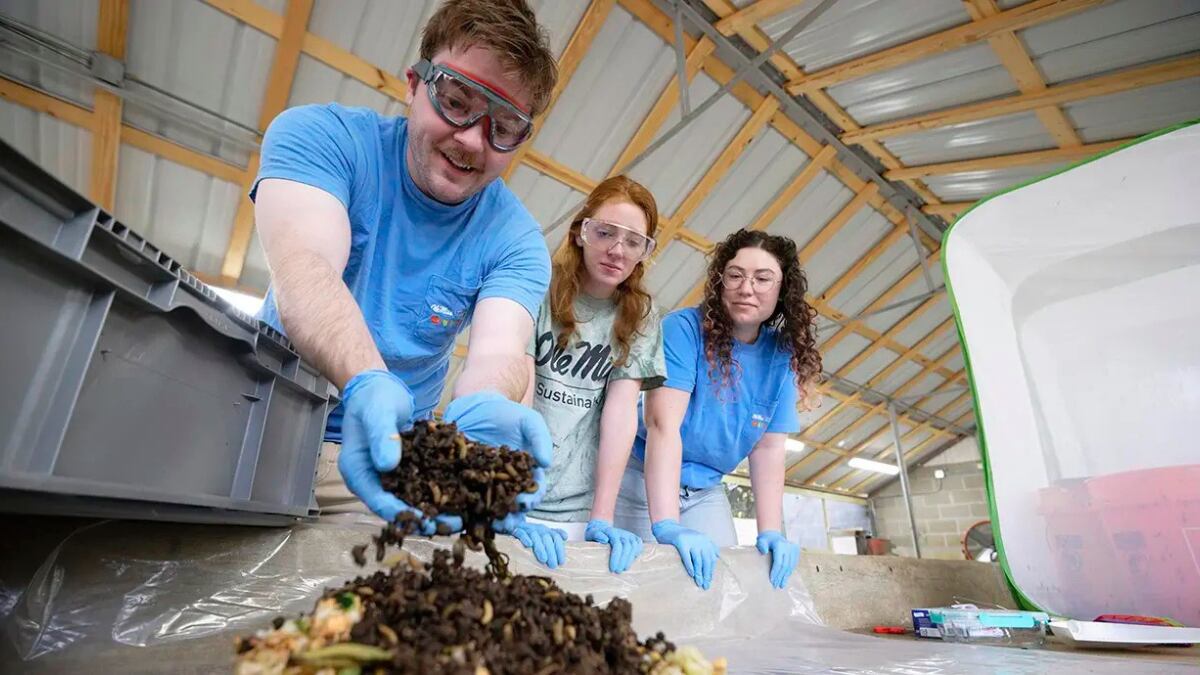
Both the adults and larvae are also commonly used as feed for insect-eating livestock and pets.
The U.S. Food and Drug Administration estimates that between 30 and 40% of the U.S. food supply is wasted or thrown away every year.
Jennifer Wells, state recycling coordinator at MDEQ, said her department has been working to make it easier to create new composting programs in Mississippi, a process that is currently challenging because of present governing regulations.
“We are still in the process of revising those regulations, but we have authorized composting facilities throughout the state under (a) pilot program,” she said. “However, [Ole Miss’] new composting facility plan of using black soldier flies is not something we have encountered before.”
Wells says MDEQ is treating Ole Miss’ black soldier fly program “as a research project of sorts.”
MDEQ will work alongside the university’s Office of Sustainability to learn how the state can apply composting mandates that allow projects like this to grow and thrive, while also protecting the environment and public health.
Click here to learn more about the university’s black soldier fly composting project.
Click here to sign up for our newsletter!
Click here to report a spelling or grammar error. Please include the headline.
Ver nota original ↗
¿Querés un resumen rápido de esta noticia, hecho por nuestra IA?