What factors could influence Connor Bedard's surgery vs. rehab decision for shoulder injury?
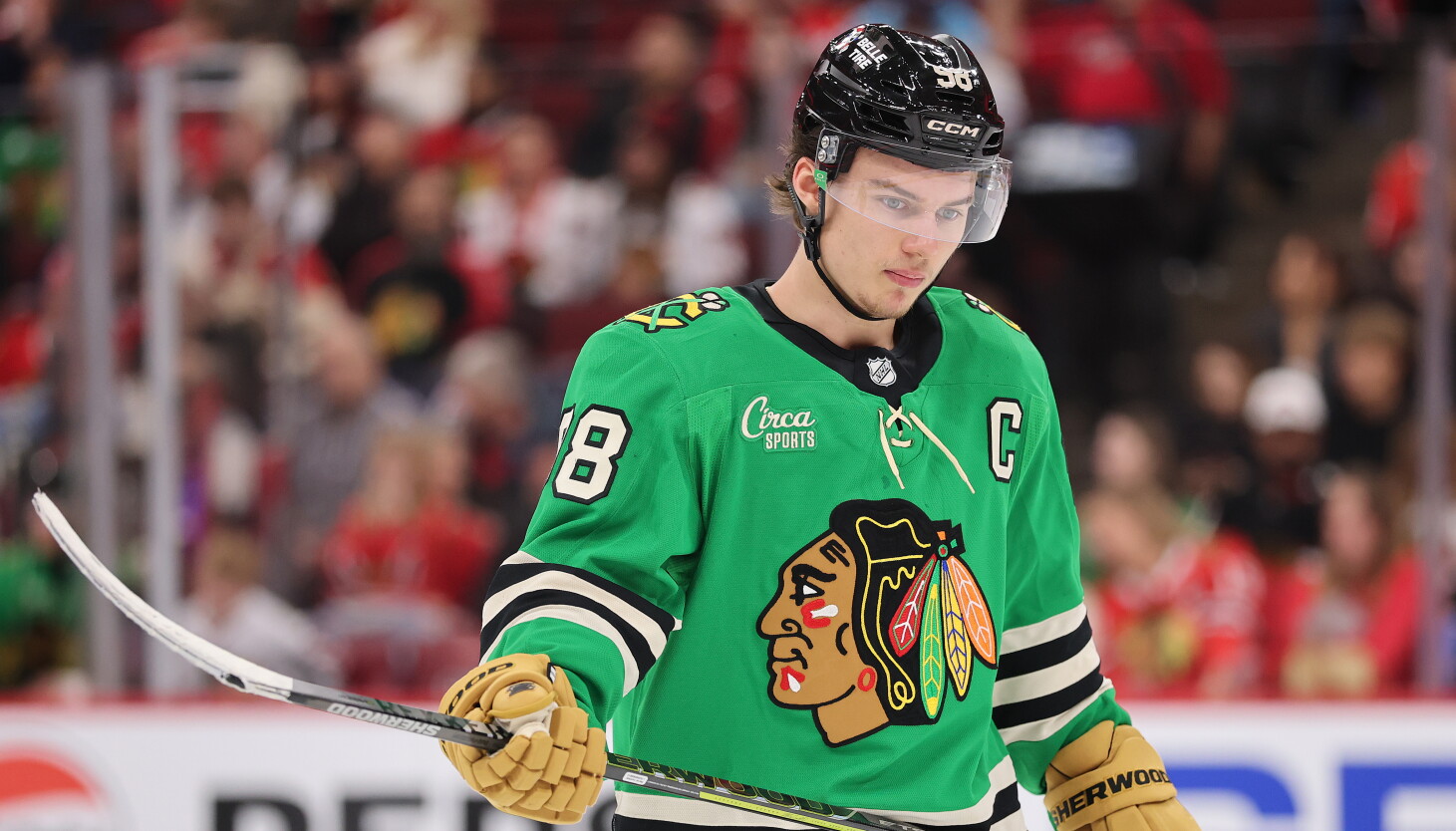
Blackhawks star Connor Bedard's next step — after suffering another injury to his right shoulder — is deciding whether or not to undergo surgery.
"Collectively, as a group, I would say we’re still gathering information, weighing the different decision processes between rehab and surgery," coach Jeff Blashill said Thursday.
Blashill ruled out Bedard for the Hawks' upcoming three-game road trip against the Flames, Canucks and Kraken, but it's clear the 21-year-old forward will miss considerably more time than that.
The question is how much more time. Last December, when he injured his right shoulder and opted for a rehab-only recovery process, he was cleared to return after four weeks.
In July, when he injured his left shoulder and opted for surgery, he was cleared after three months. Both of those timelines were faster than initially estimated.
Bedard's agent, Don Meehan, said in July that Dr. Peter Millett, the Colorado-based surgeon who operated on Bedard's left shoulder, recommended surgery in that instance because he determined the left shoulder had suffered more damage than the right previously had.
It's unknown how much damage the right shoulder suffered from this new injury; that's presumably what Bedard is currently determining.
But in July, Bedard knew most of the three-to-four-month recovery time would fall during the offseason, costing him only a small portion of the regular season.
In this case, that same timeline would knock him out until February or March, costing him most of the rest of the season. That could motivate him to consider at least putting off surgery until after the April 10 season finale.
Dr. Jorge Chahla, a sports medicine surgeon at Midwest Orthopaedics at Rush, explained Thursday that several factors influence the surgery vs. rehab decision after a shoulder injury.
One is which direction the shoulder is dislocating (to the front is most common). Another is the size of the tear in the labrum, a ring of fibrocartilage that lines the shoulder socket.
Then a third and perhaps most important factor is bone loss from the socket itself.
"Bone loss is what actually makes these tears more dangerous," Chahla said. "The socket is kind of a like a pear: bigger on the bottom, thinner on the top. As soon as you start losing some bone, which usually happens with multiple dislocation episodes, you start to have bigger issues with dislocating with less force."
Once as little as 13.5% of the socket has been lost — and especially once 20% has been lost — patients can suffer permanent reductions in range of motion, strength or functionality. For a pro athlete like Bedard, that would be a particularly major problem.
It typically takes multiple dislocations, not just one, to reach the 13.5% bone-loss threshold, Chahla said. But every subsequent dislocation has a chance of causing more damage.
Chahla referenced a 2017 study by Jonathan Dickens in the American Journal of Sports Medicine that found 90% of collegiate athletes who underwent shoulder surgeries returned to play without recurrence of the injury, whereas 40% of athletes who only underwent rehab returned to play without recurrence.
However, 40% isn't nothing. For many other types of injuries, that percentage would be much lower.
"It's a decision as to whether he wants to face some time off now vs. delaying it, playing the recovery card and seeing how far he can go," Chahla said. "Sometimes, athletes can get lucky."
That same 2017 study also found athletes who underwent surgery before their next season were nearly six times more likely to complete that next season without recurrent shoulder instability.
That finding is relevant to Bedard's already surgically repaired left shoulder, and it would presumably be something for him to consider come April regarding his right shoulder.
Still, Chahla clarified that even a surgically repaired shoulder isn't as strong as a normal, never-dislocated shoulder. The risks increase no matter what.
Ver nota original ↗
¿Querés un resumen rápido de esta noticia, hecho por nuestra IA?