
St. George cancer center expansion brings specialized care closer to home

ST. GEORGE — For cancer patients, treatment can mean countless appointments and sometimes hours on the road. An expansion at St. George Regional Hospital aims to make more specialized care available closer to home.
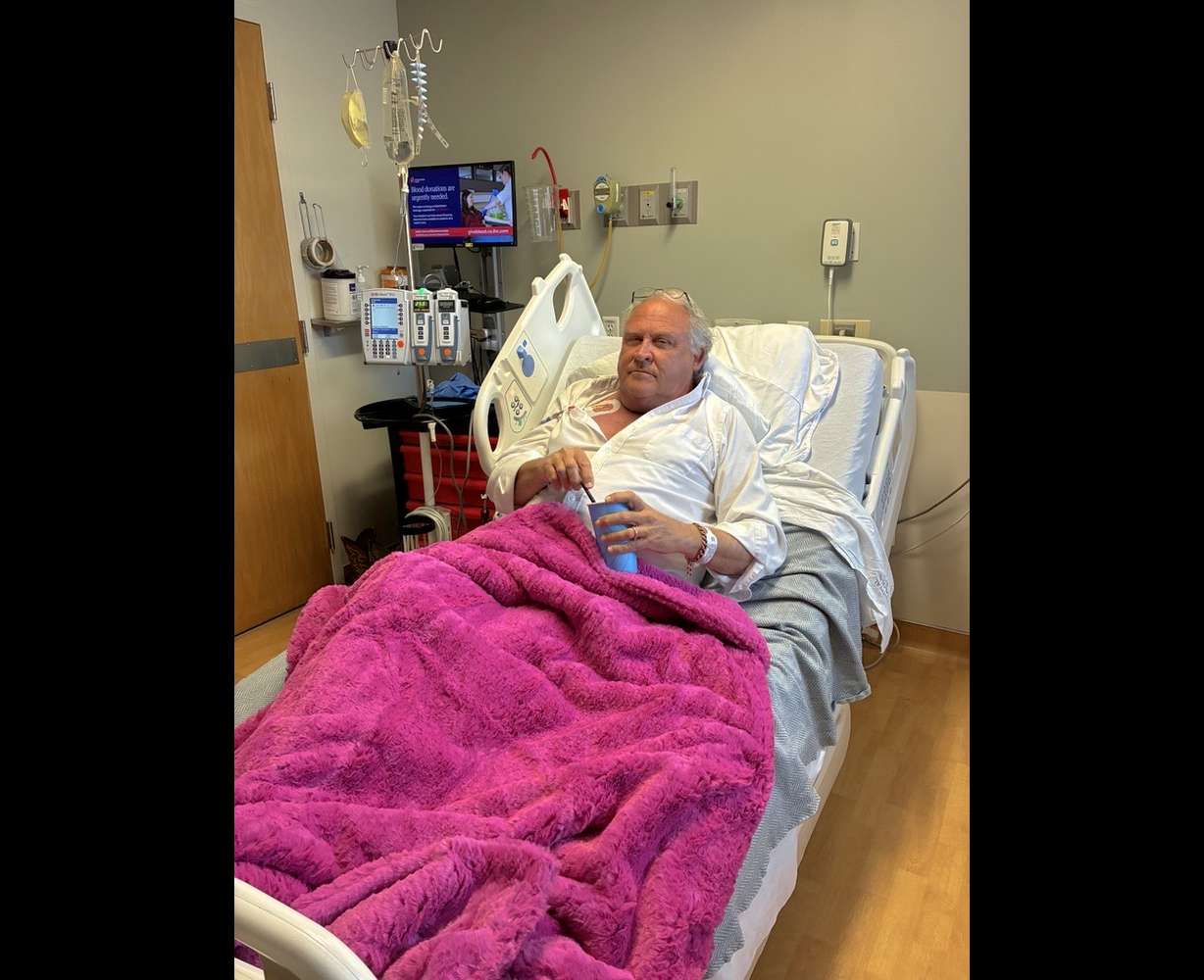
For Dana Rowley, staying active has always been a big part of life. He enjoys hiking and working in his family's orchard.
But that changed when he began experiencing unexplained pain in his left leg.
After several trips to the emergency room, doctors discovered a problem with his femur. Rowley underwent emergency surgery to stabilize the bone and was eventually diagnosed with multiple myeloma, a type of blood cancer.
"It set off a whirlwind of events for us," his wife, Glenda Rowley, said.
Most of Dana's cancer treatment has taken place in St. George, about 40 minutes from the couple's home in Pine Valley. But when he needed a stem cell transplant, they had to travel to Salt Lake City.
"It means a lot to stay in your own home instead of having to find arrangements somewhere else," Glenda said.
That's something Intermountain Health hopes to make possible for more patients in southern Utah.
The health system expanded its cancer center at St. George Regional Hospital in September, adding more space for treatment and supportive care.
"What this expansion does is (it) allows us to take it to the next level and to evolve even further, to bring even more subspecialty-type cancer care here to our community," said Dr. Derrick Haslem, a medical oncologist and associate chief medical officer of specialty care for Intermountain Health's Desert Region.
The additional space lets cancer specialists work more closely with nurses and support staff who help patients through treatment. The new space will also allow for more infusion treatments and expanded palliative care services.
The hospital has also added a neuro-oncologist, a specialist who treats brain tumors and cancers affecting the nervous system. Haslem said recruitment is continuing for additional specialists.
"At the end of the day, if we can keep people close to home and they can have access to those latest and greatest treatments, they're going to be so much better off physically, mentally and emotionally," Haslem said.
Some specialized treatments may still require patients to travel to larger hospitals. However, Haslem said certain consultations, preparation and follow-up care can be handled locally, reducing the number of trips patients need to make.
While the expansion hasn't directly changed Dana's treatment so far, Glenda hopes the additional services will make a difference for other families.
"Knowing that there's going to be treatments here so that possibly us and other people won't have to travel as far will be really good," she said.
For Dana and Glenda, having a care team they know and trust has made all the difference.
"You've got to trust them and rely on them," Dana said.
"You didn't feel like you were just coming in for treatment, that you were seeing friends at that point," Glenda added.
The Key Takeaways for this article were generated with the assistance of large language models and reviewed by our editorial team. The article, itself, is solely human-written.
Ver nota original ↗
¿Querés un resumen rápido de esta noticia, hecho por nuestra IA?


