Memphis files 17 blight lawsuits in push to hold property owners accountable, UoM law students help
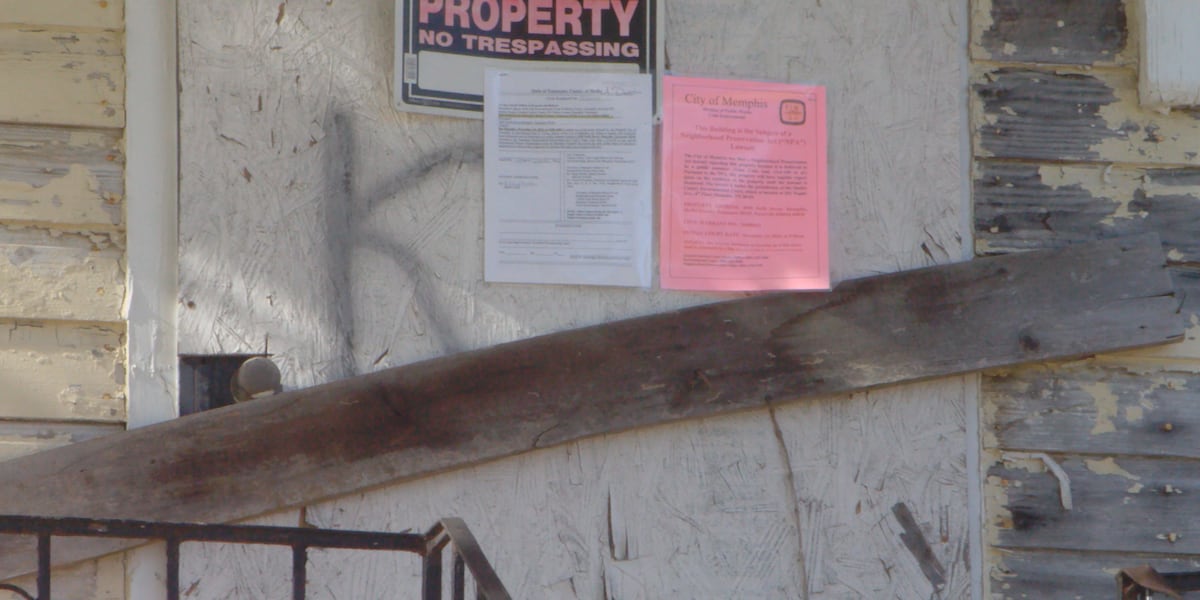
MEMPHIS, Tenn. (WMC) - Seventeen Memphis properties are the subject of new lawsuits as the city works with University of Memphis law students to address deteriorating properties and hold owners accountable for bringing them up to code.
The lawsuits were filed in September, and the first appearances in Environmental Court were held Thursday, Nov. 19. Lani Lester, the city’s anti-blight litigation manager and lead prosecutor, said there is still a long road ahead in court.
The city says the cases are intended to address nuisance conditions and restore properties, not to automatically tear down homes. They are filed against the properties themselves under the Tennessee Neighborhood Preservation Act, rather than against individual owners, and do not seek monetary damages.
How the cases began
The city’s Code Enforcement Division referred the properties to the University of Memphis Neighborhood Preservation Clinic after complaints came in through 311, according to city officials.
The city said the referrals generally involved properties where owners had not corrected code violations despite repeated notices, or where an owner appealed a condemnation order. The clinic represents the city in the cases.
Four third-year law students, Abigail Deniston, Brenden King, Charles Woodman and Julia Springfield, researched the properties, drafted and filed the lawsuits, and coordinated required legal notices, the city said.
PREVIOUS COVERAGE: City of Memphis completes campaign to tear down 100 blighted homes in 60 days
For Deniston, a Memphis native, the clinic offers an opportunity to learn outside a lecture hall while working on a problem close to home.
“It’s a way to get technical experience where you’re actually getting to work with people hands on that you don’t normally get sitting in a lecture hall,” she said.
Deniston said the students’ work goes beyond appearing in court.
“It’s wonderful to work with judge but we also get experience drafting these motions corresponding with property owners and managing those kind of relationships as well,” said Deniston.
Lester, who said she is an alumna of both the university and the clinic, called the program an important part of the city’s anti-blight work. She said students bring fresh ideas to complicated property cases while gaining courtroom experience.
“The legal clinic is like the crown jewel of part of our anti-blight process,” Lester said. “It’s not only training lawyers like myself … to practice in court and to do the good work but familiarizing them with the issues that we need help kind of tackle,” said Lester.
A history behind the properties
Brigid Welsh, the clinic’s faculty director, said understanding a property’s history can help determine the right solution.
“The stories behind the properties are really important to finding appropriate solutions property to property,” said Welsh.
Welsh pointed to a long history of redlining and a lack of investment in neighborhoods, along with predatory lending, foreclosures and other factors.
“So many different legal mechanisms policies and processes that different entities have put in place all come together sometimes in a single property,” she said.
Welsh said ownership can also be complicated. In some cases, multiple generations of heirs may not know they own a Memphis property, or a bank may not have completed a foreclosure. Those are general examples Welsh described of issues that can arise in blight cases; she did not identify them as the circumstances of any specific property among the 17.
Welsh said the clinic began in 2015 as a partnership between the city and law school to expand the city’s capacity to address vacant and deteriorating properties, particularly in the aftermath of the foreclosure crisis. Alongside researching properties and preparing filings, she said, students learn to communicate with compassion and consider equity and ethics in their work.
Accountability and preservation
Lester said owners have a responsibility to address conditions at their properties, and the court process gives them a chance to present a plan to bring those properties into compliance.
“The neighborhood preservation act is about preserving properties,” said Lester. “We want to get the property owners into court and into compliance. We want to bring those properties up to neighborhood standards.”
Lester said owners have an opportunity to tell the court how they plan to turn a property around and how much time the work will take. The city says these cases seek to resolve nuisance conditions rather than collect monetary damages from individual owners.
If an owner is unwilling or unable to rehabilitate a property, a court may appoint a third-party receiver, following notice and a hearing, to take possession and oversee the work, according to the city.
Lester said an owner has an opportunity to pay the receiver back after the work is done. If the owner cannot do so, she said, the property may be sold. She said that process can help revitalize neighborhoods and preserve property values.
Lester said the preferred outcome is for owners to complete the necessary work and bring their properties into compliance so the cases can be dismissed.
“We’re at the beginning and we’re very very hopeful that property owners will show up they will take accountability they will do the work that’s necessary to bring their properties into compliance,” she said.
A neighborhood impact
Welsh said the people who live near deteriorating properties are central to the clinic’s work.
“The best thing about the clinic for me along with getting to train students and see them grow as young attorneys is how we get to impact the neighbors,” said Welsh. “We want to make sure that we’re giving them a voice and that we’re representing them.”
Deniston said the work is meaningful to her as a Memphis native, both because of the experience students gain and the potential benefit to the city.
“It’s incredible and it’s like you heard today it is the main goal of the clinic and the main goal of the MPA actions is to get these properties to a place where people can live in them and neighborhoods can be improved,” she said.
The 17 properties
The city listed the following properties in its September filings:
Ver nota original ↗
¿Querés un resumen rápido de esta noticia, hecho por nuestra IA?